Book An Appointment
 Virtual Consultation

Why Brain Stroke Risk Rises in Winter?

FACT CHECKED
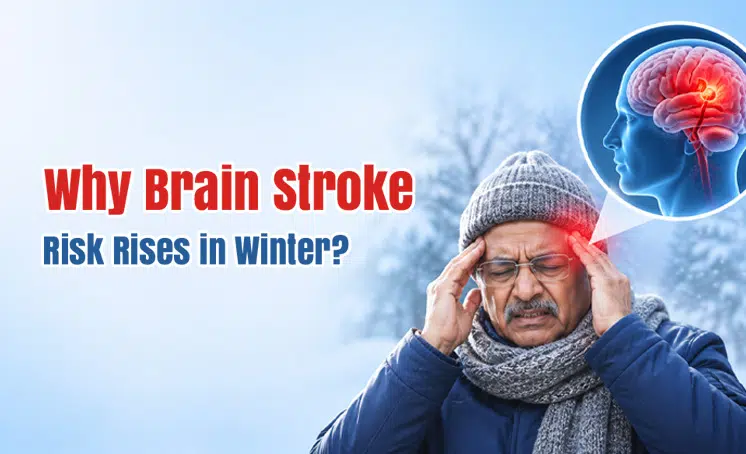
Your father has high blood pressure. On a cold morning he says he feels a little off, then goes for his walk anyway. Should you worry?
For some people, yes. Brain stroke risk rises in winter, mostly in older adults, because cold weather may push blood pressure and cholesterol up. A stroke is a sudden loss of blood supply to part of the brain. The research is mixed and mostly from outside India, so we’ll show you what it says.
At PSRI Hospital, Sheikh Sarai, New Delhi, an emergency call reaches a 24 hour helpline, and our neurosciences team uses a dedicated Neuro ICU and a 1.5 Tesla MRI. We’ve cared for patients since 1996, and NABH and NABL accredit us. As explained by our expert neurologists, this blog covers why brain stroke risk rises in winter and what helps.
Does Brain Stroke Risk Really Rise in Winter?
Research suggests it does, mainly in older adults, but the evidence is mixed. A 2024 systematic review in Frontiers in Neurology covered 23 studies. Its authors concluded that lower temperatures were more likely to raise illness and death from both types of stroke in older people.
Two figures from studies inside that review show the size of the effect:
- One linked cold exposure to a relative risk of 1.1 for stroke, which means about 10% higher odds.
- Another estimated that cold accounted for about 14.9% of stroke deaths in people aged 65 to 74.
Why Does Brain Stroke Risk Rise in Winter?
Cold weather may raise blood pressure and cholesterol, and both strain the blood vessels in the brain. That’s the explanation the review’s authors suggest. Hypertension is blood pressure that stays higher than normal. Cholesterol is a fatty substance in the blood that can build up inside artery walls.
Strokes come in two types. An ischaemic stroke happens when a clot blocks an artery in the brain. A haemorrhagic stroke happens when a blood vessel in the brain bursts.
Who Is at Higher Risk of a Winter Stroke?
Older adults with other risk factors carry the most risk. The review’s cold-related figures were highest in people 65 and over, and one included study found more strokes in winter and spring in people 75 and over.
You may be at higher risk if you or your parent has any of these:
- High blood pressure, especially if it isn’t well controlled
- Diabetes
- A past stroke or a TIA, a mini-stroke where symptoms clear within minutes or hours
- High cholesterol
- A habit of skipping or running out of regular medicines
A stroke can still happen at any age.
What Are the Warning Signs of a Stroke?
Sudden one-sided weakness, a drooping face or slurred speech are the main warning signs. Doctors use a checklist called BE-FAST to spot them quickly:
- Balance: sudden loss of balance or dizziness
- Eyes: sudden blurred or lost vision
- Face: one side of the face droops
- Arm: one arm or leg feels weak or numb
- Speech: words slur, or the person can’t find them
- Time: note when it started and act at once
A sudden, severe headache unlike any you’ve had also needs urgent care. If you see any of these signs, don’t wait to see if they pass. Call +91 84 84 84 84 17 or go to the nearest emergency department. Our 24×7 emergency service handles these calls.
Signs that fade within minutes can still be a TIA. Get checked the same day.
What Can You Do to Lower Your Winter Stroke Risk?
Keep your blood pressure checked and your prescribed medicines on schedule. Since cold may push blood pressure up, that’s where you can act.
- Check Your Blood Pressure: Measure it at home through the cold months and note the readings for your doctor.
- Take Medicines as Prescribed: Never stop or change a dose for blood pressure, diabetes or cholesterol without asking your doctor.
- Ease Into the Day: A Gurgaon neurologist quoted by India TV in January 2026 advised people with high blood pressure to avoid cold showers and sudden early morning exertion. Ask your own doctor what suits you.
- Keep Your Follow Ups: A missed visit can hide a rising reading.
- Know Your Numbers: A preventive health check-up shows your blood pressure, sugar and cholesterol in one visit.
When Is It an Emergency, and When Can You Book a Visit?
Sudden warning signs are an emergency. Book a regular visit if your blood pressure readings keep running high, you’ve had a TIA, or a close relative has had a stroke. In an emergency, doctors examine the patient first. Then they order a CT scan, which uses X-rays to image the brain, or an MRI scan, which uses magnets to do the same. The scan shows whether a clot or bleeding caused the stroke, and that decides the treatment. Blood and heart tests often follow.
While you wait for help, keep the person comfortable and still, and don’t give food, drink or medicine.
Book a Neurology Consultation at PSRI Hospital, New Delhi
You may be searching for the best hospital in New Delhi or a top 10 hospital in Delhi. A ranking can’t tell you how a team handles a stroke at 2 am, so ask each hospital directly:
- Is emergency care open all night?
- Are CT and MRI scans on site?
- Is there a neuro ICU, an intensive care unit for brain and nerve patients?
- Is rehabilitation available after the emergency?
If you’re comparing the best neuro hospital in Delhi or the best neurologist in South Delhi, use those questions first. Our neurology and neurosurgery department also lists recovery rooms, two dedicated neuro operation theatres and rehabilitation support.
You’ll find us at Press Enclave Marg, Sheikh Sarai II, near Saket Court. Saket, Malviya Nagar and Hauz Khas are close. A pressure check this month can show you where you stand.
Call +91 84 84 84 84 17 to book an appointment at PSRI Hospital.
Frequently Asked Questions
Is Brain Stroke More Common in Winter?
Research suggests so, mainly in older adults with other risk factors. A 2024 review of 23 studies found lower temperatures were more likely to raise stroke illness and death in older people.
Can Cold Weather Trigger a Stroke?
Cold may contribute, but it works alongside other risks such as high blood pressure, diabetes and age. It may raise blood pressure and cholesterol. For someone with uncontrolled blood pressure, that extra strain can matter. Controlling blood pressure is the practical response.
Does a Winter Headache Mean a Stroke?
Most headaches aren’t strokes. A sudden, severe headache unlike any you’ve had needs emergency care, especially with weakness, speech trouble or vomiting. A mild, familiar headache doesn’t usually need one. Mention recurring headaches to your doctor.
Which Doctor Treats a Stroke?
A neurologist, a doctor for brain and nerve conditions, diagnoses and treats stroke. A neurosurgeon operates when bleeding or pressure in the brain needs surgery. Rehabilitation therapists then help with movement and speech during recovery.
Can a Stroke Be Prevented?
Not every stroke can be prevented. Controlling blood pressure, sugar and cholesterol, and taking medicines as prescribed, lowers the chance. Your doctor can explain your own risk after reviewing your history and test results.
Should Older Parents Stop Morning Walks in Winter?
Not necessarily. Many people keep walking. Dress warm and avoid sudden hard effort. If blood pressure runs high, ask the doctor what’s safe before you change the routine.