Alcoholic Liver Disease develops gradually due to long-term alcohol exposure and often shows no clear symptoms in the early stages. Many individuals continue heavy drinking or daily consumption for years and seek medical attention only when fatigue, nausea, abdominal discomfort, or jaundice begin to affect daily life. Early assessment is important because liver damage caused by alcohol hepatotoxicity can be reversible in the initial stages, and timely care helps prevent serious complications later.
Alcoholic liver disease occurs when ethanol damage leads to inflammation, fat accumulation, and scarring within the liver. This process may begin as liver steatosis, also known as fatty liver, and can progress if chronic alcohol intake continues. Regular consumption of beer, whiskey, spirits, or vodka over several years increases the risk of progression across different disease stages.
At PSRI Hospital, best liver treatment hospitals in India, the Gastroenterology and Hepatology team evaluates alcoholic liver disease, confirms the disease stage, manages complications, and explains treatment options in a clear and structured manner. If you are looking for the best liver treatment hospitals in Delhi, our team of experts at PSRI explains what alcoholic liver disease is, how it is diagnosed, and what treatment usually involves, so you can make informed decisions with confidence.
Early symptoms of ALD can be mild, non-specific and easy to ignore. Whereas, the advanced warning signs of alcoholic liver disease require urgent medical attention. Here’s the list of alcoholic liver disease symptoms, from early to advanced.
 New Delhi
Press Enclave Marg, J Pocket, Phase II,
Sheikh Sarai, New Delhi, Delhi 110017


Alcohol exposure is the primary cause, but several factors increase the risk and speed of alcoholic liver disease progression.
Complications usually develop after cirrhosis or decompensated liver disease.
Our team of gastroenterologists and hepatologists in Delhi, at PSRI confirm alcoholic liver disease by combining medical history, tests, scans, and severity assessment.

Blood tests show raised AST, ALT, GGT, and alcohol-related liver stress markers.

AST to ALT ratio helps doctors identify alcohol-related liver injury patterns.

Low albumin, high bilirubin, and prolonged INR show reduced liver function.

Blood count changes like raised MCV and low platelets indicate advanced disease.

Ultrasound and Fibroscan assess fatty liver presence and liver stiffness severity.

MELD, Child Pugh scores, or biopsy assess disease stage and future risk.
Trust the specialists at PSRI Hospital, where experienced gastroenterologists and hepatologists provide structured evaluation and comprehensive care for Alcoholic Liver Disease. Backed by hospital-based diagnostics and multidisciplinary support, patients receive clear guidance for every stage of liver disease, from early assessment to advanced care planning.
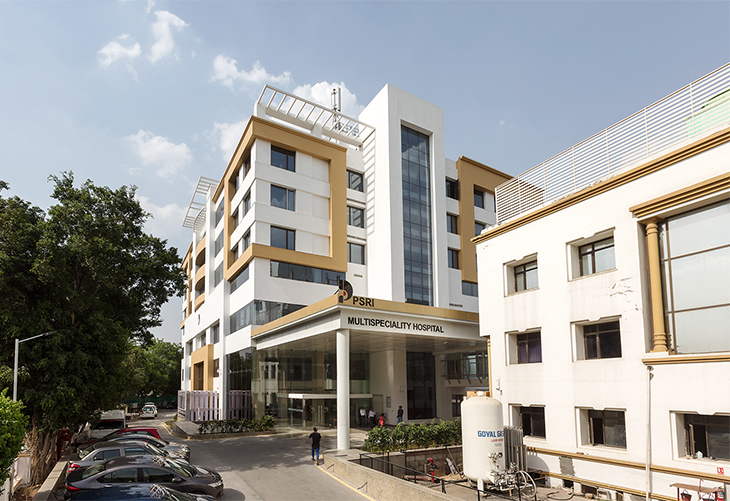
PSRI Hospital was established in the year 1996 as South East Asia’s first and India’s foremost institute providing advanced and comprehensive medical and surgical treatment for digestion-related diseases. Since its inception, many more specialties have been added and presently it is a multi-specialty Hospital.
PSRI Hospital is backed by the JK Group one of the leading business houses in India, PSRI was established to provide curative and preventive medical care through a caring environment.
Our team of highly skilled and experienced doctors in Delhi is committed to delivering the highest level of care by using cutting-edge technology & state of art infrastructure to get the best possible results for our patients.
From diagnosis to treatment, we deliver a wide range of services to address all type of diseases. Our team of expert works together to provide a customized and complete care plan for each patient.
Being the best multispecialty Hospital, our primary focus is to provide patient well-being. Therefore, our doctors takes the time to hear patients concerns, answer their questions and offer expert knowledge and support throughout their journey.
Consult NowTreatment depends on the stage of liver damage, existing complications, and the risk of alcohol relapse. Care is planned in clear steps so patients understand what starts immediately and what is monitored over time.
Alcohol Abstinence
Stopping alcohol intake is the most important part of treatment. Continued alcohol use leads to ongoing inflammation and scarring of the liver.

Alcoholic liver disease is not a single condition. It progresses in stages. Treatment depends on the stage, the severity of liver function loss, and the presence of complications.

Managing Liver-Related Complications
Liver transplant evaluation may be considered in decompensated liver disease or end-stage disease when liver failure progresses or complications recur despite treatment.
Our team of expert hepatologists and gastroenterologists in Delhi, at PSRI, follows a structured approach for alcohol liver disease treatment planning. People searching for the best liver treatment hospitals in Delhi appreciate our step-by-step clarity, because it reduces confusion and delays.

At PSRI Hospital, Alcoholic Liver Disease care is led by experienced Gastroenterology and Hepatology specialists who focus on accurate diagnosis, disease staging, and step-by-step treatment planning. Patients receive hospital-based evaluation for complications such as internal bleeding, infections, fluid buildup, or confusion, so problems are identified early and managed safely. When needed, care is coordinated with kidney, heart, lung, or critical care teams under one roof, ensuring continuity during complex situations. Clear explanations, structured follow-up plans, and long-term monitoring help patients and families understand what to expect at every stage of treatment.
If you are shortlisting options and searching for the best liver treatment hospitals in India, it is important to choose centres that offer structured staging, complication screening, and long-term disease monitoring, not just short-term medicines.
 Patient
Being a fitness and disability trainer, He was diagnosed with osteoporosis after his arthritis worsened and augmented pain even during sleep. At PSRI Hospital's Orthopaedic and Joint Replacement Department, he received dedicated and comprehensive treatment under the observation of Dr Gaurav Bhardwaj through a total hip replacement surgery using minimally invasive technology, which helped him recover from post-operative pain in a single day and be ready for discharge within 2 days itself.
 Patient
A kidney exchange, also known as a “kidney swap”, occurs when a living kidney donor is incompatible with the recipient, so exchanges kidneys with another donor. In a rare case, 3 couples swapped kidneys with identical blood groups saving 3 lives. PSRI Hospital, the best hospital in New Delhi, gave hope to 3 patients who did not find a solution to an ailing problem elsewhere. With support from multispeciality departments, the 3 couples are now leading a happy and healthy life.
 Patient
Jasmeet, a young girl, was born without her left thumb. Her parents were worried about her leading a normal life, so they decided to opt for the reconstruction of her thumb. Dr PP. Kotwal, chairman of orthopaedics and joint replacement at PSRI, a top hospital in Delhi, explains how reconstruction is possible by transposing the index finger, also called 'pollicization'. He explains how a multispeciality hospital aids any surgery with support from a cardiologist, a good anaesthetist, a child specialist and an interventionist during an operation. Watch Jasmeet's inspiring story here.
Stay updated with the latest advancements in healthcare, gain valuable insights from our experts, and discover tips for maintaining a healthy lifestyle. Let us be your trusted source of knowledge on all things related to well-being.
Most liver problems do not begin with a dramatic symptom. You may feel more tired than usual or...
Cervical cancer often develops quietly, without obvious warning signs in the early stages. That’s...
Early stomach cancer symptoms can look like everyday acidity. You change your food, take antacids....

A small shake in one hand or walking feels slower than before. These symptoms mostly get brushed...
A small amount of urobilinogen in urine is normal and is not a problem. The concern starts when the...

Fever and pain start late at night, before work or during school runs. You feel tired, hot, or...

After eating sometimes, the stomach feels heavy, tight and swollen. Some people start burping,...

A menstrual delay can throw your whole week off. You keep checking the calendar, wondering if...

Brain surgery requires exact target localisation, controlled access, and continuous anatomical...

Knee or hip arthritis can slowly take over daily life. Walking becomes painful. Climbing stairs...


In case of emergency, please contact us directly at 84 84 84 84 17.

 Book An Appointment
 Virtual Consultation
 Get Direction