Book An Appointment
 Virtual Consultation
Liver Damage: Symptoms, Causes and Risk Factors

FACT CHECKED
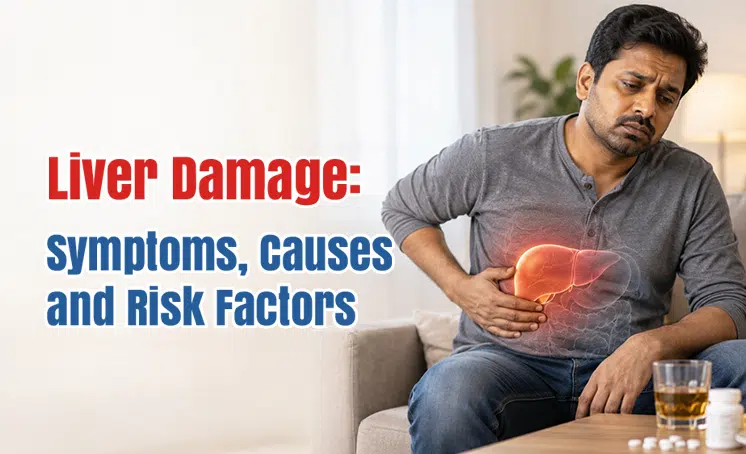
Tiredness that won’t lift, a dull ache under the right ribs, skin that looks a shade more yellow than usual. None of these scream emergency, and that’s exactly why liver damage often goes unnoticed for months.
The liver can lose a significant share of its function before symptoms show up at all. A 2023 study from AIIMS Bhopal found fatty liver changes in 43.6 percent of Indian adults tested, most of them unaware anything was wrong until the scan showed it.
Dr J C Vij, Chairman of Gastroenterology and Hepatology at PSRI Hospital, has spent more than 56 years treating liver conditions at every stage, from mild and reversible to advanced. Catching it early usually changes everything.
What Are The Symptoms Of Liver Damage?
Liver damage: symptoms are often quiet at first, sometimes absent entirely until the damage has already progressed. Common early symptoms include:
- Ongoing tiredness that doesn’t improve with rest
- Mild discomfort under the right ribs
- Loss of appetite
- Nausea
Signs of more advanced damage:
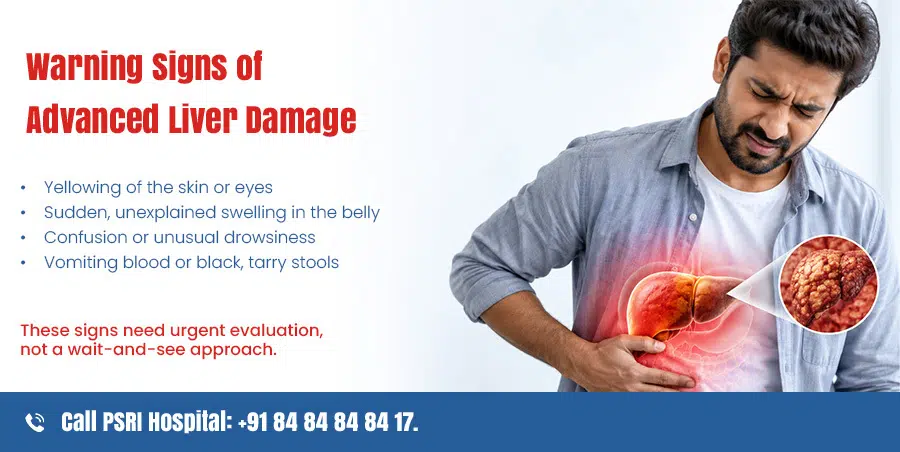
- Yellowing of the skin or eyes, called jaundice
- Swelling in the belly or legs
- Easy bruising or bleeding
- Dark urine and pale stools
- Confusion or difficulty concentrating
Someone can carry mild liver damage for years without a single obvious symptom, going about daily life exactly as before. Routine blood tests at the best liver transplant hospital in India matter more than waiting to feel unwell.
What Causes Liver Damage?
Liver damage falls into a handful of categories, and most trace back to something ongoing rather than a single event. Fat buildup in liver cells, unrelated to alcohol, is now the most common liver damage causes in India, tied closely to obesity and diabetes. It’s often called fatty liver disease, and in most people, it starts out completely silent.
- Heavy, long-term alcohol use damages the liver directly, progressing from fatty liver to inflammation to scarring if it continues unchecked.
- Viral hepatitis, particularly hepatitis B and C, causes ongoing inflammation that can lead to serious damage over years.
- Certain medications, taken in high doses or over long periods, add to the liver’s workload in ways that eventually show up on scans and blood tests.
- Painkillers and some long-term prescriptions are common culprits, especially without regular monitoring at the best hospital for liver transplant in Delhi.
Who Is Most At Risk Of Liver Damage?
Liver damage risk factors overlap heavily with two common conditions: obesity and type 2 diabetes, both of which push the liver to store more fat than it can handle.
Regular heavy drinking raises the risk substantially, and so does an untreated hepatitis B or C infection picked up years earlier, sometimes without any symptoms in between.
A family history of liver disease matters too. Some conditions run in families no matter how careful someone’s lifestyle is otherwise. High cholesterol and metabolic syndrome round out the list.
Mild vs Advanced Liver Damage
| Feature | Mild Damage | Advanced Damage |
|---|---|---|
| Symptoms | Often none | Jaundice, swelling, confusion |
| Reversibility | Usually reversible with lifestyle change | Scarring is often permanent |
| Liver function | Largely normal | Significantly reduced |
| Typical management | Diet, weight loss, treating the cause | Specialist care, sometimes transplant evaluation |
Where Can You Get Liver Damage Treatment In Delhi?
PSRI, a liver transplant hospital in India, has a Gastroenterology and Hepatology department which diagnoses liver damage through blood tests, ultrasound, and FibroScan, then builds a treatment plan around exactly how far it’s progressed.
As one of the options families search for under multispeciality hospital near me, PSRI runs the full range of liver diagnostics on one campus. Mild cases and advanced ones both start with the same first visit, blood work and imaging on the same day rather than spread across separate appointments. For cases that turn out to need more than lifestyle changes, continuity matters a great deal, since switching hospitals partway through usually means repeating tests that already gave a clear answer.
More than 1,200 liver transplants have been completed at PSRI Hospital since the hospital’s founding. This kind of volume is part of why PSRI’s recognized as the best hospital for liver transplant in Delhi for families facing advanced disease. Living donor and deceased donor transplants are both handled by the same surgical team.
Ongoing fatigue or appetite loss lasting more than a few weeks is worth a mention at the next check-up. So is discomfort under the ribs that hasn’t gone away. Call +91 84 84 84 84 17 to book a consultation with PSRI Hospital.
Frequently Asked Questions
Can liver damage be reversed?
Mild damage often can, especially fatty liver caught early. Advanced scarring, called cirrhosis, usually can’t be undone. It can only be managed from there.
What is the first sign of liver damage?
Often there isn’t a noticeable one at all. Fatigue and mild appetite loss are common early clues, though plenty of people don’t notice anything.
Does liver damage always lead to a transplant?
No, most cases don’t reach that point. Transplant becomes an option only when the liver’s function drops severely and doesn’t recover.
Can liver damage happen without drinking alcohol?
Yes. Fatty liver disease unrelated to alcohol is now the most common cause of liver damage in India.