Book An Appointment
 Virtual Consultation
Food Poisoning: Symptoms, Treatment, and Prevention

FACT CHECKED
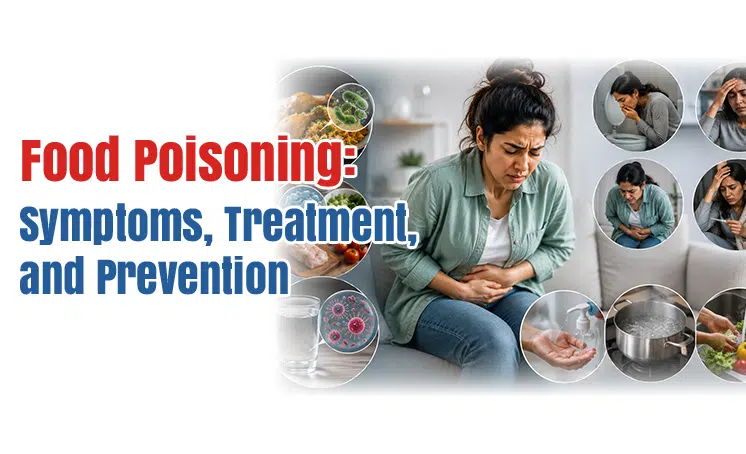
Lunch tasted fine a few hours ago. Now the stomach’s making its own decisions, cramps that won’t let up and a bathroom trip every twenty minutes.
Food poisoning is what happens when something eaten was carrying a harmful germ or a toxin, and the body wants it gone as fast as possible. For most people, a day or two of rest and fluids sorts it out. But for some it doesn’t work out that fast, especially for children and older adults, or anyone who can’t keep water down for long.
Food poisoning shows up in over 13 percent of Indian households at some point, and Delhi’s seen it firsthand too, including a 2025 outbreak that sent around 200 people to hospital after one festival meal. Dr Manish Mohil, Internal Medicine at PSRI Hospital, sees a milder version of this same story every week.
What Are The Symptoms Of Food Poisoning?
Food poisoning symptoms usually start within a few hours of eating something contaminated, though it can take a day or two depending on the cause.
Common symptoms include:
- Nausea and vomiting
- Watery diarrhea
- Stomach cramps or pain
- Mild fever
- Feeling tired or weak
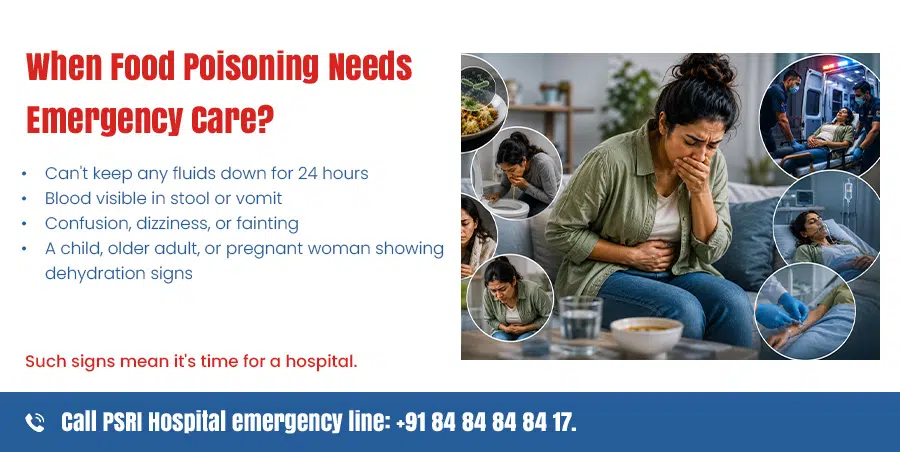
Symptoms that need urgent medical attention:
- Blood in vomit or stool
- A fever above 102°F
- Signs of dehydration, like a dry mouth or very little urination
- Diarrhea lasting more than three days
- Severe pain that keeps getting worse
What Causes Food Poisoning?
Bacteria cause most food poisoning cases, picked up from food that wasn’t cooked properly or sat out too long before being stored. Salmonella often comes from undercooked eggs or poultry. E. coli spreads through contaminated water or unwashed produce. Both can survive on a kitchen counter.
Viruses cause a smaller share, spreading easily when someone handles food without washing their hands first. Norovirus is the most common one, and it moves fast through shared meals, exactly the pattern seen in outbreaks tied to weddings and festivals. A single infected person serving food at a large gathering can pass it on to dozens of others before anyone realizes what’s happening.
Parasites are rarer in everyday cases but show up more often with untreated water or food grown in contaminated soil. Street food sitting out in the heat comes up constantly when doctors at the multispeciality hospital New Delhi, trace where an infection started.
How Is Food Poisoning Treated?
Most food poisoning cases don’t need medication at all. The main job is replacing lost fluids faster than the body’s losing them, since dehydration is what actually turns a bad stomach into a hospital visit.
- Small sips of water work better than a full glass at once.
- Oral rehydration solution or clear broth are good alternatives too, better than trying to force down a full meal too soon.
- The stomach needs bland foods, rice, toast, bananas, once appetite starts coming back.
For food poisoning treatment doctors may prescribe antibiotics if a bacterial cause is confirmed, usually after a stool test identifies which one.
How Can Food Poisoning Be Prevented?
Food poisoning prevention comes down to a few consistent habits around food and water, most of which take seconds to follow and don’t require any special equipment or expense.
- Wash hands before cooking and eating, every time
- Cook meat, eggs, and seafood all the way through
- Keep raw and cooked food on separate surfaces and utensils
- Refrigerate leftovers within two hours, not the next morning
- Drink boiled or filtered water, especially from unfamiliar sources
- Skip food that’s been sitting out at room temperature for hours
A Bad Stomach That Won’t Quit Needs More Than Rest: : Get Same-Day Care at PSRI Hospital, Delhi.
A stomach bug that clears up in a day rarely needs more than rest and water. One that keeps getting worse is a different story. So is one that shows up in a child or an older adult. Dehydration moves faster than expected in those cases, and that’s exactly why they need a closer look instead of more waiting. The PSRI hospital Internal Medicine team can tell the difference quickly, usually before dehydration becomes the bigger problem.
We use IV fluids for anyone too dehydrated to drink their way back to normal, along with tests to confirm the actual cause when symptoms don’t fit the usual pattern. A stool test can identify what’s actually behind a case that’s dragging on longer than expected, whether it’s bacterial or something else entirely, which shapes exactly what treatment comes next.
As a Delhi multispeciality hospital, PSRI keeps Pediatrics on hand for children, who dehydrate faster than adults do, and Gastroenterology available for cases that turn out to be something more than a simple stomach bug, like a chronic condition uncovered along the way. That matters after a shared meal, since it’s rarely just one person affected. A family recovering together doesn’t need to split up across different clinics to get everyone checked on the same day.
If vomiting or diarrhea hasn’t let up in a day, or fluids just won’t stay down, that’s the moment to act, not wait it out further.
Call +91 84 84 84 84 17 or visit: Press Enclave Marg, Sheikh Sarai II, Near Saket Court, New Delhi – 110017 to reach PSRI Hospital Internal Medicine team for guidance.
Frequently Asked Questions
How long does food poisoning usually last?
Most cases clear up within 24 to 48 hours. Some bacterial infections can take longer, especially without proper fluids and rest, sometimes stretching to a full week.
Can food poisoning be treated at home?
Mild cases often can. Rest and steady fluids handle most of it, with bland food added back in slowly. Severe symptoms like blood in stool or ongoing vomiting need a doctor instead.
When should a child with food poisoning see a doctor?
See a doctor if a child can’t keep fluids down. Unusual drowsiness or noticeably fewer wet diapers are also reasons to go in.
What foods are most likely to cause food poisoning in the monsoon?
Street food tops the list in monsoon season. Cut fruit left out and untreated water are the cause because of the heat and moisture which help bacteria to grow fast.