Book An Appointment
 Virtual Consultation
Folliculitis: Types, Symptoms, Self-Care and Treatment

FACT CHECKED
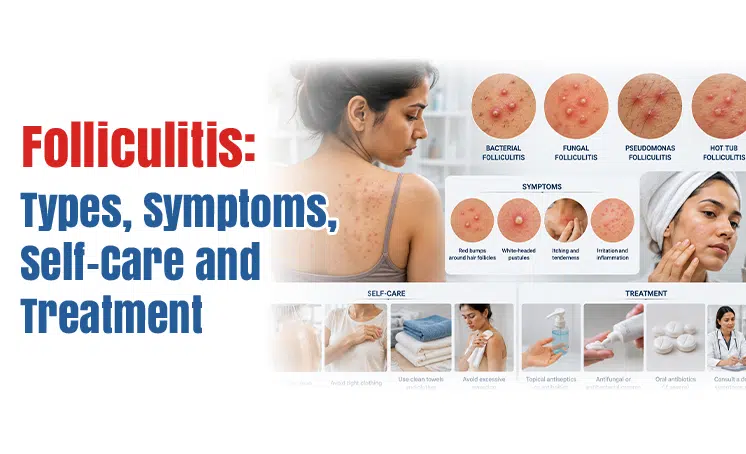
Small red bumps after a shave. A sweaty gym session leaves the same mark. Most people call it acne right away. It usually isn’t. There’s a hair follicle under each bump, the tiny opening a hair grows out of, and it’s gotten irritated or infected.
The two look alike enough that acne cream gets reached for first, week after week, with no results. Mild folliculitis just needs basic care at home.
But the recurring kind, the same spot flaring up over and over, is what PSRI Hospital dermatology team sees walk in the door. By then, a patient has often spent months on the wrong treatment without realizing it.
Is It Folliculitis Or Acne?
Location and timing usually solves the confusion, more than the look of the bump itself. Folliculitis tends to show up right after shaving or a heavy sweat session, and each bump sits centered on a hair, sometimes with a visible hair poking through the middle. Acne isn’t tied to a specific trigger the same way. It shows up on the face whether someone’s shaved recently or not.
- Folliculitis bumps also tend to feel tender or itchy rather than the deeper, sometimes painful nodules acne can produce.
- Acne tends to come with blackheads and whiteheads mixed in, something folliculitis rarely shows.
A dermatologist at the best hospital in Delhi can tell the two apart with a quick look.
What Are The Types Of Folliculitis?
Folliculitis types mostly come down to what’s irritating the follicle. Bacteria are the most common culprit, especially the same kind behind many minor skin infections. Fungus and just physical irritation from shaving or tight clothing account for the rest.
- Bacterial folliculitis, usually from Staphylococcus bacteria, is the most common type
- Pseudofolliculitis barbae, known as razor bumps, comes from hair curling back into the skin after shaving
- Hot tub folliculitis develops after time in a poorly chlorinated hot tub or pool
- Fungal folliculitis comes from yeast, so it doesn’t respond to the same creams
- Eosinophilic folliculitis is rarer, and it tends to appear in people whose immune system isn’t working at full strength
What Are The Symptoms Of Folliculitis?
Folliculitis symptoms start small and centered around one or more hair follicles, often in a cluster rather than spread evenly. Most people notice it first on the face or scalp, though it can show up anywhere hair grows close to the skin, the back and thighs included.
Common symptoms include:
- Small red or white bumps, sometimes with a visible hair right in the center of each one
- Itching or mild tenderness around the bumps
- Pus-filled blisters that can break open and crust over as they heal
- Warmth around the affected area, noticeable to the touch even without pressing hard
Signs that need medical attention:
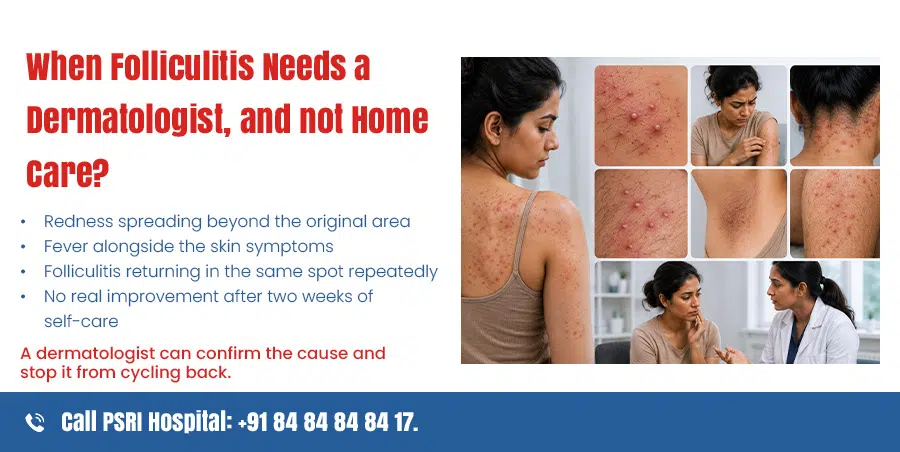
- Spreading redness beyond the original patch
- Fever along with the skin symptoms
- Bumps that keep coming back in the same spot
- No improvement after one to two weeks of self-care
Mild vs Infected Folliculitis
| Feature | Mild Folliculitis | Infected Folliculitis |
|---|---|---|
| Size and spread | Small, stays in one area | Growing or spreading |
| Pain level | Mild itching or tenderness | Increasing pain |
| Fever | Absent | May be present |
| Response to self-care | Improves within a week | No change or gets worse |
How Is Folliculitis Treated, And What Self-Care Actually Helps?
Folliculitis self-care and treatment for mild cases often work together well, since the goal is just calming the irritation and keeping the area clean while it heals. Most people see improvement within a week without needing a prescription at all.
- Apply a warm, damp cloth to the area a few times a day
- Wash gently with a mild antibacterial cleanser, without scrubbing too hard
- Avoid shaving or waxing the area until it clears
- Wear loose clothing over the area, since tight fabric rubbing against it doesn’t help
- Skip shared towels, razors, or pool equipment while healing
If self-care doesn’t help within a week or two, that’s usually the signal to stop guessing. A doctor may prescribe an antibiotic or antifungal cream depending on what’s actually causing it. Persistent or widespread cases sometimes need oral medication.
How Can Folliculitis Be Prevented?
A few habits lower the odds of it coming back, especially for anyone who’s dealt with it more than once.
- Showering soon after a heavy sweat session keeps bacteria from sitting on the skin too long.
- Loose, breathable clothing helps too, since tight fabric rubbing against damp skin is one of the most common triggers.
- A sharp, clean razor makes a real difference for anyone prone to razor bumps
- Skipping shared towels or razors cuts down on the bacterial types specifically, and steering clear of shared pool equipment does the same for the fungal ones.
None of this guarantees folliculitis won’t ever show up again, but it does mean fewer flare-ups and less time spent treating the same spot on repeat.
Get Folliculitis Treatment At PSRI Hospital, One Of The Best Hospitals In Delhi
PSRI hospital dermatology department examines the affected skin and, when needed, takes a sample to confirm what’s actually behind a stubborn case. It could be bacteria. It could be fungus.
Getting the type right the first time saves weeks of trial and error, since the wrong cream won’t do much good. Being a Delhi multispeciality hospital, PSRI also connects dermatology with internal medicine for cases where recurring folliculitis points to something bigger, like diabetes, which can make skin infections a lot harder to shake off on their own.
If bumps haven’t improved after a week of home care, or keep returning in the same spot, it’s worth having a dermatologist take a look before another cream gets tried and fails.
Visit : Press Enclave Marg, Sheikh Sarai II, Near Saket Court, New Delhi – 110017 or call +91 84 84 84 84 17 to book a consultation with PSRI Hospital Dermatology team.
Frequently Asked Questions
Is folliculitis contagious?
Bacterial and fungal types can spread through shared razors or pool water. Simple irritation from shaving isn’t contagious at all.
Can folliculitis be cured permanently?
Most cases clear up completely with the right care. Recurring cases are different. They need the underlying trigger fixed, or the bumps just won’t stay gone.
Does shaving cause folliculitis?
Shaving can irritate hair follicles and lead to razor bumps, especially with a dull blade or shaving against the grain.
When should folliculitis be seen by a dermatologist?
See a dermatologist if it spreads or comes with fever. The same goes for cases that don’t improve after two weeks of home care.