Book An Appointment
 Virtual Consultation
Monsoon Disease: Prevent Typhoid, Dengue and Other Illnesses

FACT CHECKED
Monsoon disease starts small. A headache, a bit of a fever, yet nothing serious that is worth a doctor’s visit. But if by day three, the fever still hasn’t gone down, it becomes the moment a parent starts to worry.
Stagnant water gives mosquitoes a place to breed, and heavy rain often mixes straight into drinking water sources. That’s the real reason typhoid and dengue cases climb every monsoon, along with a few other infections.
Dr Manish Mohil, an Internal Medicine specialist at PSRI Hospital in South Delhi, sees this same pattern walk through his door every monsoon. A same-day blood test is often the only way to tell an ordinary fever apart from one that needs quick treatment.
How Can You Prevent Typhoid, Dengue And Other Diseases In Monsoon?
You can prevent most common diseases in monsoon by removing exactly what germs need to spread: dirty water, standing water, and poor hygiene. Each illness group below needs one or two extra steps, but this is where prevention starts.
Typhoid And Cholera, Spread Through Water:
These come from eating or drinking something touched by dirty water.
- Boil your drinking water
- Skip cut fruit that has sat out
- And wash hands before every meal
Dengue, Malaria And Chikungunya, Spread By Mosquitoes:
These spread through mosquito bites, and the mosquitoes breed in clean water that sits still, like in coolers or flower pots.
- Empty any standing water around the house
- Use repellents
- Wear full sleeves in the evening
Leptospirosis, Spread Through Floodwater:
Bare feet in floodwater aren’t safe, since even a small cut can let the bacteria in.
- Avoid walking through flooded water when possible
- Cover any wound with a waterproof bandage
Fungal Infections, Spread Through Damp Skin:
Skin that stays wet for hours lets fungus grow, especially between the toes and in skin folds.
- Dry off fully after getting wet
- Change out of damp clothes quickly
Why Do Typhoid, Dengue And Other Common Diseases In Monsoon Rise Every Year?
Common diseases in monsoon rise every year because rain gives germs and mosquitoes exactly what they need to spread fast. Dirty water, high humidity, and open spaces for mosquitoes to breed all go up during the rainy months.
- Drains overflow and mix into drinking water.
- Food also spoils faster in the wet heat
- A dish that is safe in winter can turn unsafe within a few hours in monsoon.
In India, typhoid and dengue are the two illnesses this affects most. One study of typhoid cases across India counted close to 4.9 million cases in a single year, with Delhi among the worst-hit states.
Both typhoid and dengue start the same simple way, with a fever. That is what makes them tricky to spot early. A blood test by the best hospital in New Delhi is the only sure way to sort typhoid, dengue, or other diseases from an ordinary fever.
Typhoid vs Dengue vs Other Monsoon Illnesses
The table below puts all four monsoon illnesses side by side, so the differences are easy to spot at a glance.
| Illness | How it spreads | Key sign | Test used by Best Hospital Delhi |
|---|---|---|---|
| Typhoid | Contaminated food or water | Fever that climbs slowly over days | Blood culture test |
| Dengue | Mosquito bite | Sudden high fever with body pain | Platelet count and NS1 test |
| Malaria | Mosquito bite | Fever that comes in cycles, with chills | Blood smear test |
| Viral fever | Spreads person to person, like a cold | Short fever with cold and body ache | Usually no test needed unless it lasts |
Where Can You Get Treatment For Monsoon Illnesses In Delhi?
PSRI Hospital, one of the best hospital in New Delhi, has an Internal Medicine department which performs tests for typhoid, dengue and other monsoon infections the same day, so treatment can start without waiting for results to trickle in over several days.
PSRI Hospital runs blood culture, NS1, and platelet tests on site, so a diagnosis doesn’t depend on sending samples elsewhere and waiting. Reports are usually ready within hours.
As a multispeciality hospital in Delhi, we have Pediatrics on hand for children running a high fever and Critical Care ready for the rare case that turns severe, doctors here coordinate on the same campus, so a family doesn’t have to explain the same history twice.
Most monsoon fevers turn out to be ordinary viral infections. But the ones that are not, typhoid and dengue especially, can turn serious fast if they are missed. Testing early costs far less than treating a complication later.” Call +91 84 84 84 84 17, or search a multispeciality hospital near me.
Frequently Asked Questions
How is typhoid different from viral fever?
Typhoid fever climbs slowly over several days and stays high, while viral fever usually peaks fast and settles within 3 to 5 days. A blood test tells them apart for certain.
Can dengue be treated at home?
Mild dengue can be managed at home with rest, fluids, and paracetamol, under a doctor’s guidance. But falling platelet counts or bleeding signs need hospital care right away.
When should a child with fever during monsoon see a doctor?
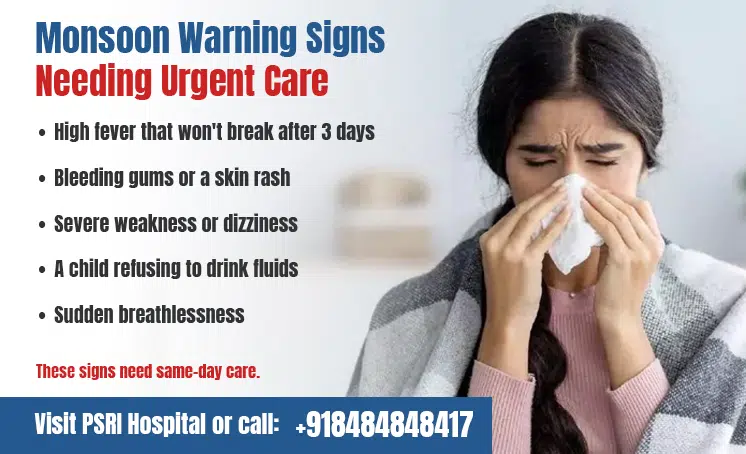
See a doctor if a child’s fever crosses 102°F, lasts more than two days, or comes with rash, vomiting, or refusal to drink fluids. Don’t wait it out.
Is there a vaccine for typhoid or dengue?
A typhoid vaccine exists and is often recommended before monsoon season. Dengue has no widely available vaccine in India yet, so mosquito control remains the main protection.