Book An Appointment
 Virtual Consultation
World Hepatitis Day 2026: Raise Awareness & Prevention

FACT CHECKED
Hepatitis often stays silent in the early stages. Many people do not know they have it until the liver has already been affected.
That is why World Hepatitis Day matters. It helps people understand the risks, the warning signs, and the value of timely testing, vaccination, and treatment.
In 2026, this message is even more important as global health efforts continue to push toward hepatitis elimination by 2030. At PSRI, a multispeciality hospital in New Delhi, patients with liver-related concerns can consult the Gastroenterology & Hepatology team and access further evaluation under one roof.
This blog explains what World Hepatitis Day stands for in 2026, what the global focus is, how hepatitis spreads, what symptoms to watch for, and when to seek care.
When Is World Hepatitis Day 2026 And Why Is It Observed?
World Hepatitis Day is observed every year on 28 July. It marks the birth anniversary of Dr Baruch Blumberg, who discovered the hepatitis B virus and helped develop its diagnostic test and vaccine.
The day is observed to raise awareness of viral hepatitis and to encourage prevention, early testing, and timely treatment before the disease leads to cirrhosis, liver failure, or liver cancer.
What Is The World Hepatitis Day 2026 Theme And Focus?
The 2026 global hepatitis conversation is strongly shaped by the World Hepatitis Summit 2026 in Bangkok, taking place from 28 to 30 April 2026.
Its theme is “Elimination for everyone, everywhere, right now!” This reflects the urgency of taking action now if the world wants to stay on track for the 2030 elimination goal.
In practical terms, the 2026 focus includes:
- Wider hepatitis testing
- Stronger hepatitis B vaccination coverage
- Faster treatment access
- Lower stigma
- Earlier action before advanced liver damage develops
Why Is World Hepatitis Day Still Important In 2026?
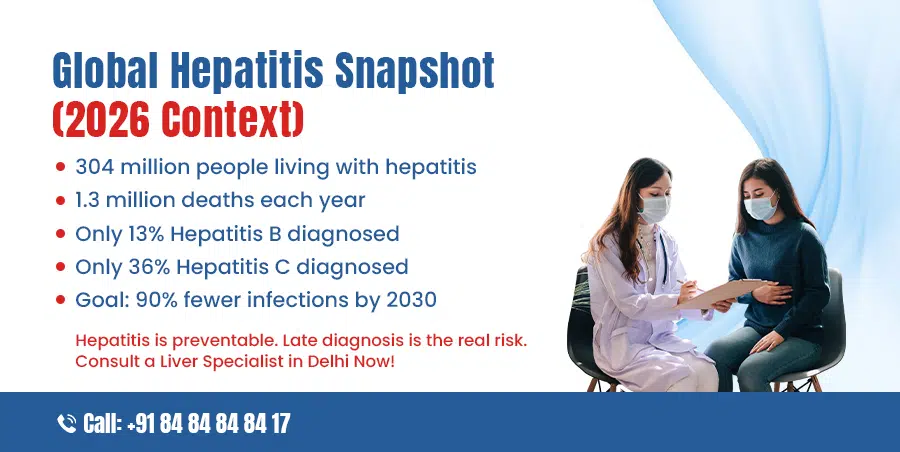
Hepatitis remains a major global health problem. WHO reports that 304 million people were living with chronic hepatitis B or C in 2022, and viral hepatitis caused 1.3 million deaths that year.
WHO also reports a major diagnosis gap:
- Only 13% of people with hepatitis B had been diagnosed in 2022
- Only 36% of people with hepatitis C had been diagnosed in 2022
These numbers show why World Hepatitis Day is not only about awareness. It is also about finding infection earlier and reducing preventable liver damage.
What Is Hepatitis?
Hepatitis means inflammation of the liver. The main viral types are hepatitis A, B, C, D, and E. Some cause short-term illness, while others can remain in the body for years and slowly damage the liver.
The liver helps the body process nutrients, store energy, and remove waste. When hepatitis affects it for too long, the result may be fibrosis, cirrhosis, liver failure, or liver cancer.
What Are The 5 Types Of Hepatitis?
Hepatitis does not refer to one single infection. Each type spreads differently and affects the body in a different way.
Hepatitis A
Hepatitis A usually spreads through contaminated food or water. It is usually an acute infection, and most people recover fully.
Hepatitis B
Hepatitis B spreads through infected blood and body fluids. It can also pass from mother to baby during birth.
It may become chronic and is a major cause of cirrhosis and liver cancer. Vaccination is available and remains one of the strongest prevention tools.
Hepatitis C
Hepatitis C mainly spreads through blood-to-blood contact. It can become chronic if not diagnosed and treated.
There is no vaccine, but effective treatment can cure most patients.
Hepatitis D
Hepatitis D occurs only in people who already have hepatitis B. It can worsen liver damage and increase the risk of severe liver disease.
Hepatitis E
Hepatitis E is often linked to contaminated water. It is usually self-limiting, but some cases can be more serious, especially during pregnancy.
How Does Hepatitis Spread?
Different hepatitis viruses spread in different ways. Knowing the route of transmission is one of the most important parts of prevention.
The main routes are:
- Hepatitis A and E: contaminated food and water
- Hepatitis B: infected blood, body fluids, and mother-to-child transmission
- Hepatitis C: mainly blood-to-blood contact
- Hepatitis D: only in people who already have hepatitis B
Clear awareness helps people reduce avoidable risk in daily life and seek testing when exposure is possible.
What Symptoms Of Hepatitis Should Not Be Ignored?
Hepatitis may not cause symptoms early on. That is one reason many infections are missed for years.
When symptoms do appear, they may include:
- Fatigue
- Nausea
- Poor appetite
- Abdominal discomfort
- Dark urine
- Yellowing of the skin or eyes
- Weakness
- Swelling in advanced liver disease
These symptoms can also appear in other liver or digestive conditions, but they should not be ignored, especially if they continue.
Who Should Get Tested For Hepatitis?
Testing is important for people with risk factors and also for those with unexplained liver-related findings.
A doctor may advise screening if a person has:
- Abnormal liver function tests
- A family history of hepatitis B
- Pregnancy-related risk
- A past blood exposure risk
- Unsafe needle or non-sterile procedure exposure
- Symptoms that suggest liver disease
Early diagnosis matters because hepatitis B and hepatitis C can stay silent for years while liver damage continues.
Can Hepatitis Be Prevented?
Yes. Prevention is one of the most important messages of World Hepatitis Day.
The most relevant prevention steps are:
- Hepatitis B vaccination
- Hepatitis A vaccination where advised
- Safe food and water practices
- Sterile instruments for medical and procedural care
- Avoiding shared needles, razors, or blood-contact items
- Timely testing after known exposure risk
WHO also reports that only 45% of newborns globally received the hepatitis B birth dose within 24 hours in 2022. That makes stronger vaccination coverage one of the most relevant prevention priorities in 2026.
Why Does Early Diagnosis for Hepatitis Matter?
Hepatitis can continue to damage the liver even when symptoms are mild or absent. A delayed diagnosis may allow the disease to progress to cirrhosis, liver failure, or liver cancer.
Early testing improves the chance of timely treatment, better monitoring, and prevention of further complications. That is why awareness must lead to action.
Where To Get Tested And Treated For Hepatitis In Delhi?
Hepatitis care usually begins with Gastroenterology & Hepatology. This is the department that evaluates liver infection, investigates abnormal liver function, and guides further treatment or long-term monitoring when needed.
At PSRI, a multispeciality hospital in New Delhi, this department is supported by diagnostic and endoscopic services such as:
- Capsule endoscopy
- Single balloon enteroscopy
- Endoscopic ultrasound (EUS)
- Endoscopic retrograde cholangiopancreatography (ERCP)
- High-resolution esophageal and anorectal manometry
- Hydrogen breath test
These are not routine tests for every hepatitis patient. They support broader liver and digestive evaluation when required.
If you have abnormal liver reports, symptoms of liver disease, or a known hepatitis risk, timely evaluation matters. At PSRI, patients can access specialist consultation and liver-related diagnostic work-up with wider multispeciality support where needed. This is one reason readers often look for a multispeciality hospital in New Delhi when liver care needs proper follow-up in one place.
For those searching for the best hospital in Delhi for structured liver evaluation, access to the right department, timely testing, and coordinated care are what matter most.
Conclusion
World Hepatitis Day 2026 carries a clear message. Do not wait for symptoms to become severe.
The global 2026 focus on elimination, wider testing, stronger vaccination, and faster treatment access makes prevention more relevant than ever.
If there is a risk factor, an abnormal liver report, or signs of liver disease, timely evaluation matters.
At PSRI Hospital, a multispeciality hospital in New Delhi, Gastroenterology & Hepatology offers the right starting point for hepatitis-related consultation, supported by diagnostics and specialist care when needed. For many families comparing options for the best hospital in Delhi, this kind of connected care can make a real difference. To book an appointment, call +91 84 84 84 84 17.
Frequently Asked Questions
What Are The Early Symptoms Of Hepatitis?
Early hepatitis symptoms may include fatigue, nausea, poor appetite, abdominal discomfort, dark urine, and yellowing of the skin or eyes. Some people have very mild symptoms or no symptoms at all, which is why testing becomes important when there is risk or unexplained liver-related illness.
Can Hepatitis Be Prevented?
Yes. Hepatitis can often be prevented through hepatitis A and B vaccination, safe food and water, sterile medical instruments, avoiding shared needles or razors, and timely testing after known exposure. There is no vaccine for hepatitis C, but it can often be cured with treatment.
When Should You Get Tested For Hepatitis?
You should consider hepatitis testing if you have abnormal liver function tests, a family history of hepatitis B, pregnancy-related risk, past blood exposure risk, unsafe needle exposure, or symptoms that suggest liver disease. Testing also matters because hepatitis B and C can remain silent for years.
Can Hepatitis C Be Cured?
Yes. Hepatitis C can be cured in most patients with the right antiviral treatment. This is one reason early diagnosis matters, as treatment can prevent further liver damage when infection is found in time.