Book An Appointment
 Virtual Consultation
Cervical Cancer Symptoms, Early Detection & Prevention Guide

FACT CHECKED
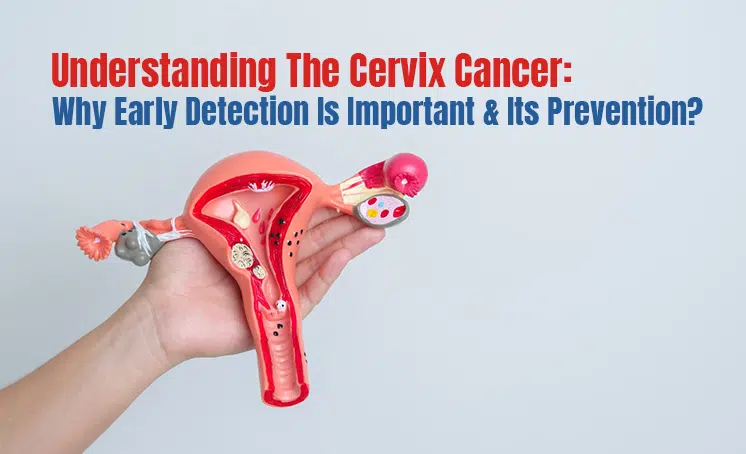
Cervical cancer often develops quietly, without obvious warning signs in the early stages. That’s why it’s important to stay alert and never ignore symptoms like unusual bleeding, abnormal discharge, or persistent pelvic discomfort.
Early cervical changes can remain silent for years, making delayed screening one of the biggest risks. Regular check-ups can help detect problems early—when they are easiest to treat.
However, early detection and prevention can change that outcome. Certain tests like pap smear and colposcopy can detect abnormal cervical cells early, that is, before they turn cancerous.
At PSRI, we focus on early detection and prevention through cervical screening, pap tests, HPV testing and colposcopy evaluation with expert women’s health guidance. In this guide, you will learn what cervical cancer is and why its early detection matters, along with some expert prevention tips.
What Is Cervical Cancer?
Cervical cancer develops in the lining of the cervix, which is the lower part of the uterus. In several cases, it starts after an old persistent infection that affects the cells and causes them to change. Initially, women do not see it as risky and ignore the cervical cancer symptoms. This is what has made it the world’s 4th most common cancer in women all around the world.
There are two main types of cervical cancer:
- Squamous cell carcinoma: This starts in the thin surface cells of the cervix and accounts for most cases.
- Adenocarcinoma: This starts in the glandular cells that line the cervical canal.
At PSRI, a multispeciality hospital New Delhi, the focus stays on identifying these changes early through screening so women can take action before the disease reaches an advanced stage.
Why Does Early Detection of Cervical Cancer Matter?
Early detection matters because cervical cancer cells build up slow. Doctors find abnormal cell changes long before they can turn into cancer. Yet, many women wait for pain or unusual bleeding, but it is vital to note that early disease may not cause clear warning signs.
This is why ignoring regular tests can delay care until cervical cancer symptoms appear at a later stage. At PSRI, a cancer hospital in Delhi, we focus on finding these changes early so treatment stays simpler, safer, and more effective.
There are several clear benefits of early detections. To name a few:
- Stops cancer before it even starts.
- Improves chances of survival.
- Reduces the cost of treatment
Because your survival chances and hospital bills will depend on the stage your cervical cancer gets diagnosed:
| Stage of Detection | Treatment |
|---|---|
| Precancerous changes detected | Doctors remove or treat abnormal cervical cells before cancer even develops. |
| Early-stage cervical cancer detected | Treatment stays simpler and may involve limited surgery. |
| Cancer detected after symptoms appear | Treatment requires more care and combined therapies. |
| Cancer detected at advanced stage | Treatment becomes longer, more intensive and recovery may take a lot of time. |
This is why it is never a good idea to self diagnose when your body screams for professional attention.
What Are the Early Cervical Cancer Symptoms Women Should Not Ignore?
Early cervical cancer may not cause obvious problems at first, which is why many women miss the warning signs until the disease moves further. Yet, some changes should never be ignored. If you notice unusual bleeding or an irregular discharge, do not wait for it to settle on its own. These can be cervical cancer symptoms that need proper medical evaluation. At PSRI, a multispeciality hospital New Delhi, we advise women to take these signs seriously:
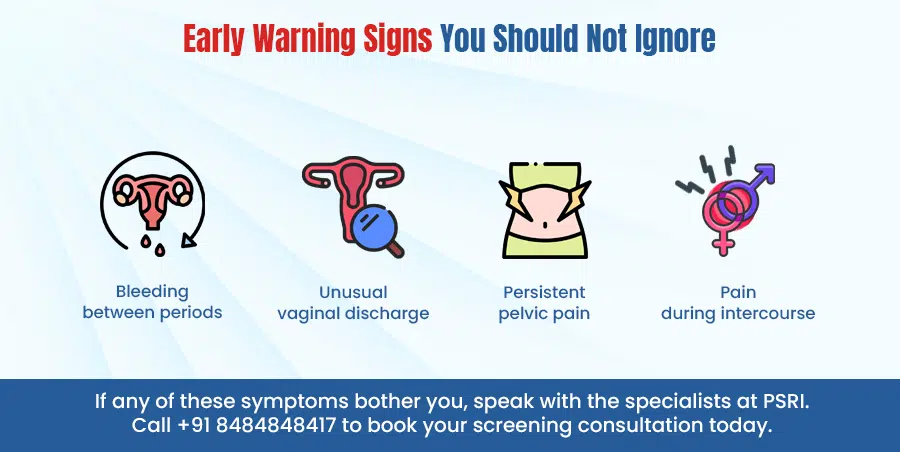
Can Cervical Cancer Be Present Even Before Clear Symptoms Appear?
Yes, it can. Cervical cancer can stay present for a long time before it causes any visible symptoms. This is one of the biggest reasons women miss the disease in its early stage. The abnormal cell changes are painless but they do bleed. This means that at first, the discomfort is only visible. Many women only start looking up cervical cancer symptoms after experiencing physical pain or discomfort.
This silent phase is exactly when screening is important! A Pap test can detect abnormal cervical cells, and an HPV test can check for any high risk virus. These tests help doctors find changes years before they get any more serious. At PSRI, one of the best hospital in Delhi for integrated specialist care, we encourage women to be careful and alert about any visible discomfort.
Which Tests Help Detect Cervical Cancer Early?
Many women assume they need to wait for symptoms before getting checked, but that is not how early detection works. Doctors find early cervical changes through tests, not through pain or visible signs. This matters because the infection linked to most cervical cancer causes can affect cervical cells long before a woman notices anything unusual. The tests that help detect cervical cancer early are:
- HPV test: This checks for the high risk HPV types linked to most cervical cancer cases.
- Pap test: This looks for abnormal cervical cells that may turn into cancer later.
- Colposcopy: Doctors use this when a test result looks abnormal and the cervix needs a closer check.
- Biopsy: Doctors may take a small tissue sample during colposcopy to confirm what the cell changes mean.
More often than not, these test results face unnecessary delays that can make you restless.
But at PSRI, a cancer hospital in Delhi, you can get a same day HPV DNA testing. This enables a quick detection of high risk HPV infection.
How Can Cervical Cancer Be Prevented Through Vaccination and Regular Screening?
The most effective approach to prevent cervical cancer combines HPV vaccination with regular screening. The vaccine helps protect against the high risk HPV types linked to most cervical cancer cases.
Secondly, regular tests then help doctors find abnormal cervical cell changes before they turn into cancer. This is why prevention does not depend on one step alone. Some experts suggested common prevention measures are:
- HPV Vaccination
- Regular Tests
- Timely Follow Up
- Safer Sexual Practices
- Avoiding Smoking
When Should You See a Doctor for Cervical Cancer Symptoms or Screening?
You should see a doctor without delay if you notice unusual bleeding, discharge that does not feel normal for you. Pelvic pain that keeps coming back is a red flag too. Many women wait because they think these changes will settle on their own, but that delay can push diagnosis further.
Some cervical cancer symptoms can look mild in the beginning which is why regular tests matter even when you feel well and so does staying alert. Consult a doctor right away if you:
- Bleed abnormally between period cycles.
- Bleed after intercourse.
- Bleed after hitting menopause.
- Encounter unusual vaginal discharge
- Experience persistent pain in the pelvis region.
Women between screening ages of 21 and 65 should also keep up with Pap tests or HPV testing as advised. If you live somewhere around Delhi, regular consultation with specialists at a multispeciality hospital New Delhi nearby is very much possible!
Regular Screening Periods:
- Age 21 to 29: Pap test every 3 years helps detect abnormal cervical cell changes early.
Age 30 to 65: HPV test every 5 years, Pap test every 3 years or HPV and Pap co-testing every 5 years. - Age 25 to 29 (in some cases): Doctors may consider HPV testing, though Pap testing remains more common in this group.
- Even without symptoms: Regular screening remains vital as early signs are often small and slow.
Choose PSRI for Trusted Cervical Screening and Women’s Cancer Care in Delhi
At PSRI Hospital, you can access cervical screening, Pap testing, same-day HPV DNA testing, a dedicated colposcopy clinic and expert care in gynaecology. You can also avail oncology support when further evaluation is needed. PSRI is a multispeciality hospital New Delhi that also offers on site labs and appointment access that help reduce delays in the early detection pathway.
Noticed any irregular bleeding or discharge recently and unsure what to do? Take the next step with PSRI today. Call +91 84 84 84 84 17 and book your cervical screening and consultation before warning signs get a chance to grow.
FAQs
1. What are the main cervical cancer causes and risk factors?
The main cause is a long lasting infection with high risk HPV. Smoking, weak immunity, and missed screening can also raise the risk.
2. What does an abnormal Pap smear or HPV test mean next?
It does not always mean cancer. It usually means doctors need a closer look or follow up to check for early cell changes.
3. At what age should cervical cancer screening start?
Most women should start screening at 21. The exact test and timing can change with age and health history.
4. Can cervical cancer be prevented completely?
Not always completely, but it is one of the most preventable cancers. HPV vaccination and regular screening lower the risk in a big way.
5. How often should women get a Pap smear?
Women aged 21 to 29 usually need it every 3 years. From 30 to 65, doctors may advise a Pap test, HPV test, or both based on the screening plan.