Book An Appointment
 Virtual Consultation
World Tuberculosis Day 2026: Uniting In The Fight Against TB

FACT CHECKED
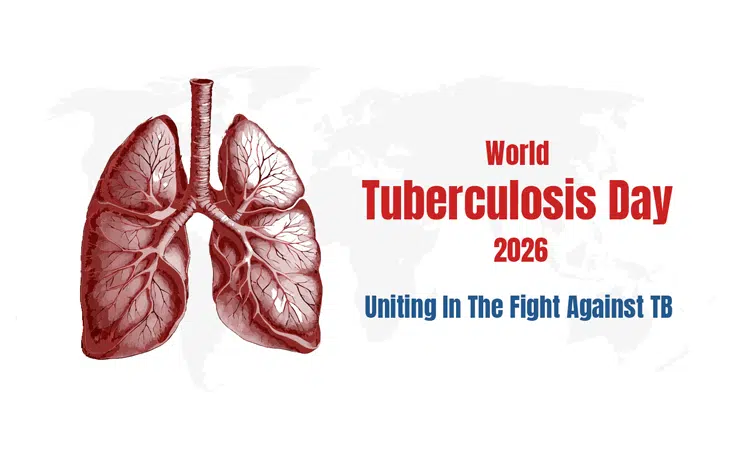
Cough that stays for weeks is easy to ignore. Most people blame it on weather, dust, smoking, or sometimes weakness. But when clubbed with fever that comes and goes, weight that drops a little and energy keeps falling, the problem can be bigger. WHO says early TB treatment is important because it helps stop the spread and improves recovery.
That is why world tuberculosis day is celebrated on 24 March every year. World TB day is a reminder to people that TB is not an old problem that has disappeared. It is still serious, but it is also diagnosable when actions are taken early.
To help, PSRI brings pulmonology, chest disease care, advanced respiratory evaluation, and critical care support under one system. If you want to understand TB as a threat, its types, warning signs, risk factors, treatment and prevention, this guide by our experts is a must read.
What Is World Tuberculosis Day 2026, And Why Does It Still Matter?
World tuberculosis day is observed on 24 March each year. It marks the day in 1882 when Dr. Robert Koch announced the discovery of the bacterium that causes TB. WHO’s 2026 campaign makes the message clear through the theme: “Yes! We can end TB: Led by countries, powered by people.”
The real problem today is delayed diagnosis, missed care, and treatment that starts too late. That is why awareness should lead to one simple action: get checked if the symptoms fit.
Why Is Tuberculosis Still A Serious Global Health Threat?
Tuberculosis is a serious global health threat because still millions continue to fall ill, diagnosis is delayed in many places, and treatment gaps keep the transmission ongoing. WHO’s global TB reporting describes TB as one of the top infectious killers worldwide.
India remains important in this conversation. That is why World TB day in India should not feel like a symbolic observance. But should feel like a reminder to take a long cough, fever, weight loss, and exposure risk seriously.
What Are The Main Types Of Tuberculosis People Should Know About?
The main types of tuberculosis people should know about are, latent TB infection, active TB disease, pulmonary TB, and extrapulmonary TB. As not every TB case looks the same, here is why each TB type is different. .
- Latent TB infection means the bacteria are present but inactive. There are no symptoms and no spreading of the disease.
- Active TB disease means the bacteria are causing illness and the person may spread TB, mostly when the lungs are involved.
- Pulmonary TB affects the lungs and is the most common form of TB in patients.
- Extrapulmonary TB affects parts of the body outside the lungs, such as lymph bones, nodes or other organs.
This distinction helps because many people only associate TB with coughing.
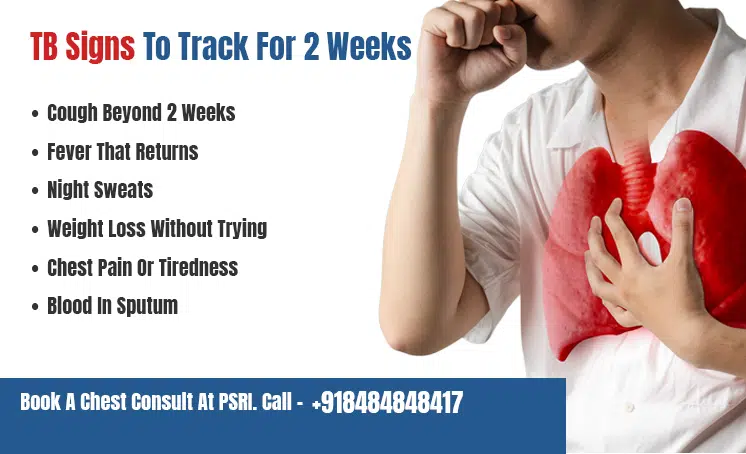
What Signs And Symptoms Of TB Should Never Be Ignored?
The signs and symptoms of TB that should not be ignored are : cough lasting more than 2 weeks, fever, night sweats, weight loss, chest pain, weakness or fatigue, and sometimes blood in sputum. WHO’s recent TB symptom guidance also makes it clear that these symptoms can be mild at first and develop slowly.
Who Is At Higher Risk Of Developing Tuberculosis?
People who are at higher risk of developing tuberculosis include close contacts of someone with TB, people with HIV, people in crowded or high-exposure settings and people with weak immunity.
Risk is not only medical, it can be social and environmental. The more contact a person has with active TB in a shared environment, along with a weak immune system, the higher the chance that infection may progress to disease.
How Is Tuberculosis Diagnosed, Treated, And Managed Today?
Tuberculosis at a multispeciality hospital in New Delhi is diagnosed with sputum testing, molecular testing, imaging, and sometimes biopsy, and it is treated with a full course of anti-TB medicines that must be completed properly. WHO explains that standard TB disease is curable and treated with a 6-month course of 4 antibiotics.
The sputum examination is a primary test for lung TB, that other forms of TB may be diagnosed through tissue or biopsy, and that molecular tests can detect TB genetic material within around two hours.
The management part is just as important as the diagnosis. Symptoms improving does not mean treatment should stop. TB treatment works when the full course is completed and follow-up is maintained.
What Are The Key Strategies To Prevent TB And Reduce Its Spread?
The key strategies to prevent TB and reduce its spread are early diagnosis at the best hospital in Delhi, full treatment completion, screening of high-risk contacts, and public education without stigma.
At home, prevention starts with not ignoring a long cough. In healthcare settings, it means timely testing and correct treatment. In the public-health sense, it means contact screening, better awareness, and reducing fear around diagnosis so people do not hide symptoms.
Book A TB And Chest Consultation At PSRI, A Best Hospital In Delhi
PSRI Hospital offers pulmonology, critical care and advanced medicine departments, with holistic care for diagnosis, treatment, and prevention of respiratory disorders, including tuberculosis and chest diseases.
This matters if your symptoms are not settling, because care becomes simpler when chest evaluation, testing, and follow-up sit in one place. PSRI have senior pulmonology expertise, including doctors who have more than 41 years of experience and an AIIMS background.
If you are comparing options for the best hospital in Delhi, or want a multispeciality hospital in New Delhi that can handle diagnosis, chest disease care, and critical care support together, PSRI is built for that kind of coordinated pathway. To book a consultation, call +91 84 84 84 84 17.
FAQs
What is the difference between latent TB and active TB?
Latent TB means the bacteria are present but inactive, so the person has no symptoms thus not spread TB. Whereas active TB means the bacteria are causing illness and may be contagious, when lungs too are involved.
Can TB happen without symptoms?
WHO notes that TB infection can exist without symptoms until the patient’s immune system can no longer keep it under control.
Is TB curable?
TB is curable when the right medicines are started on time and completed with the full prescribed course.
What tests confirm TB?
Sputum testing is a key test for lung TB whereas molecular tests can detect TB faster. Also biopsy may be needed when TB is outside the lungs.
What happens if TB treatment is stopped halfway?
Stopping TB treatment early increases the risk that treatment will fail and makes management more difficult.
When should I see a pulmonologist?
You should see a pulmonologist if the cough lasts more than 2 to 3 weeks, or if you have fever, night sweats, chest pain, or blood in sputum.