Book An Appointment
 Virtual Consultation
World Kidney Day: Understanding Kidney Health and Disease Prevention

FACT CHECKED
Kidney problems do not start with pain. Most people feel fine, keep working, and then find out something is wrong when a routine report shows raised creatinine or protein in urine. That delay is exactly why world kidney day matters. It pushes one simple habit to check early before you feel unwell.
This year world kidney day falls on Thursday, March 12, marking 20 years of the campaign that began in 2006. If you want a complete kidney check in one place, PSRI’s nephrology services include dialysis and renal transplantation support making it the best hospital in Delhi.
This guide by experts at PSRI explains the world kidney day theme, early signs that people should not miss, the tests that catch kidney disease early, and the daily habits to protect kidneys.
What Is The World Kidney Day Theme?
The world kidney day theme for 2026 is “Kidney Health for All: Caring for People, Protecting the Planet.” It means kidney care should not start when someone needs dialysis but start with basic screening for all the people at risk.
Also, the environment affects kidneys, heat, dehydration,repeated illness and unsafe water, can add stress over time. That is why the theme talks about protecting people and the planet.
Why 90% Of Kidney Disease Goes Undetected And Who Should Get Checked First?
Kidney disease goes undetected because early stages have no clear symptoms, and many people do not get the right tests done timely. Thus, instead of waiting for pain, screening should start with the people who are most likely to develop kidney damage.
Get checked if you have:
- Diabetes or prediabetes
- High blood pressure, even if controlled with medicines
- A family history of kidney disease
- Heart disease or stroke history
- Obesity, especially around the waist
- Repeated kidney stones or urine infections
- Long-term, frequent use of painkillers without medical supervision
- Age 60+ with new fatigue, swelling, or urine changes
The right time to meet a nephrologist is not when you feel very sick. It is when your blood pressure, sugar, or kidney reports start drifting the wrong way.
Top 10 Early Kidney Disease Warning Signs That Need Attention
Kidney disease can be silent, but there are warning signs that should push you to test. The National Kidney Foundation lists symptoms such as foamy urine, swelling, fatigue, itchy skin, and changes in urination. Here are 10 signs to take seriously, especially if they repeat.
- Foamy urine that happens repeatedly points to protein leaking into urine.
- Blood in urine, even one episode of it should be checked.
- Swollen feet or ankles when the body holds extra fluid.
- Puffiness around the eyes in the morning is linked to protein loss in urine.
- Needing to urinate more at night.
- Very little urine or sudden drop in urine.
- Ongoing fatigue and low energy.
- Dry, itchy skin that persists worsens kidney function.
- Poor appetite or nausea.
- Recurring muscle cramps at night with swelling or urine changes deserves testing.
If you notice two or more signs, do not self-diagnose. Just do the basic tests, they will give clarity quickly.
Which Simple Tests Catch Kidney Disease Early?
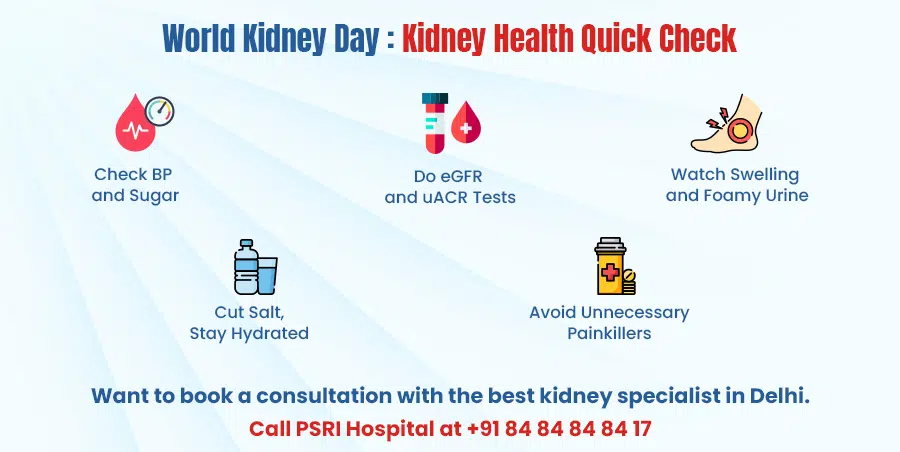
The simplest way to catch kidney disease early is a mix of blood pressure check, a blood test for kidney filtering, and a urine test for protein leakage. The National Kidney Foundation highlights two key tests: eGFR and uACR.
| Test | What It Tells You | Why It Matters |
|---|---|---|
| Blood pressure | Pressure stress on kidney filters | High BP damages kidneys over time |
| eGFR blood test | How well kidneys filter waste | Detects reduced function early |
| uACR urine test | Whether albumin protein is leaking | Protein leak can be an early warning |
| Urine routine | Blood, sugar, infection signs | Helps spot UTI, stones, other causes |
| Blood sugar testing | Diabetes control level | Diabetes is a major driver of kidney damage |
5 Daily Habits To Protect Your Kidneys
Kidney protection is boring, as it involves daily stuff done consistently. The goal is to reduce the two biggest long-term drivers: high blood pressure and high blood sugar.
- If you have diabetes or hypertension, regular follow-up is kidney prevention.
- Cut down salt without starving your food
- Drink water throughout the day. If your doctor has not restricted fluids, steady hydration helps.
- Avoid frequent painkiller use. If you need pain control often, ask for a safer plan.
- Move daily and manage weight slowly
This is where the world kidney day theme fits in real life. Caring for people means early screening and safer habits. Protecting the planet means supporting clean water, avoiding dehydration during heat waves, and not trusting random detox products that can strain kidneys.
Protect Your Kidneys With Routine Check-Ups At PSRI, A Best Hospital In Delhi
If you are at risk, the safest move is a routine kidney check before symptoms get serious. PSRI’s Nephrology department manages kidney conditions including hypertension-related kidney disease, nephrotic syndrome, electrolyte disturbances, dialysis, renal replacement, and renal transplantation.
PSRI holds kidney transplant expertise, including thousands of successful live-related kidney transplants since 2004 and best kidney specialist in Delhi. For patients who travel for care, PSRI’s International Patient Centre supports international patients and also provides services like airport pick-up and drop-off. To book your kidney evaluation at PSRI, the best hospital in Delhi for coordinated kidney care, call +91 84 84 84 84 17.
FAQs
When Is World Kidney Day 2026?
This year world kidney day is celebrated on March 12, 2026, that is the second Thursday of March.
Why Do So Many People Not Know They Have Kidney Disease?
Early kidney disease mostly has no symptoms, and many people do not get the basic blood and urine tests done. Thus do not find out about the kidney disease they are suffering from.
What Are The Two Most Important Kidney Tests?
A blood test for eGFR and a urine test for uACR are two most important and useful early detection tests.
Is Foamy Urine Always A Kidney Problem?
Foamly urine can happen from dehydration or urine force too. But if it is frequent or worsening, a urine test for protein is the best step to take.
Who Should Get Kidney Tests Every Year?
People with diabetes, high blood pressure, heart disease, obesity, or a family history should discuss regular screening for kidney with their doctor.
Does Drinking More Water Fix Kidney Disease?
Hydration supports kidney health, but chronic kidney disease needs proper medical management. Some people also need fluid restriction, so follow your doctor’s advice on whether you should drink more water.