Book An Appointment
 Virtual Consultation

How Does Winter Smog Impact Lungs? Signs and Prevention Tips

FACT CHECKED
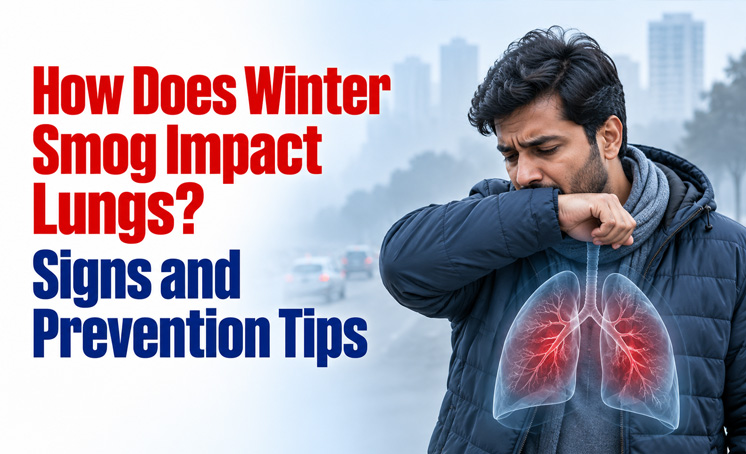
The cough started after your first morning walk of November. By evening your chest feels tight and your eyes sting. Everyone at the office has the same cough, so you call it “Delhi cough” and carry on.
So how does winter smog impact lungs? It inflames the airways, narrows them and slows the lungs’ natural cleaning. Many healthy adults recover as the air clears. People with asthma, COPD, heart disease, young children and older adults can end up in hospital.
Here’s a number worth knowing. Six central hospitals in Delhi recorded over 200,000 acute respiratory illness cases from 2022 to 2024. The Union Health Ministry shared this figure in Parliament. Air pollution is one of the triggers, but the data can’t prove it’s the cause.
Not sure whether your cough needs a doctor? We can help you work that out. PSRI Hospital in Sheikh Sarai, New Delhi, has treated patients since 1996, and we hold NABH and NABL accreditation. Our pulmonologists treat asthma, COPD and chronic cough, our emergency team runs 24×7, and our medical team reviewed this guide.
What Happens Inside Your Lungs When Delhi’s Winter Smog Hits?
Winter smog is a mix of fine particles and gases trapped near the ground by cold, still air. When you breathe it in, it irritates your airways. They swell, narrow and make extra mucus. The smallest particles, called PM2.5, travel deep into the lungs, reach the tiny air sacs called alveoli and can enter the bloodstream.
Delhi typically sees severe smog from November to January. Vehicles, crop burning, construction dust and industry all add to it. PM2.5 means particles 2.5 micrometres or smaller, about 30 times thinner than a human hair.
| Pollutant | What It Is | What It Does to Your Lungs |
|---|---|---|
| PM2.5 | Particles 2.5 micrometres or smaller | Reach deep into the lungs, inflame tissue and can enter the blood |
| PM10 | Larger dust and smoke particles | Irritate the nose, throat and upper airways |
| Nitrogen Dioxide | A gas from vehicle exhaust | Irritates airways and can worsen asthma |
| Ozone | A gas formed from vehicle and industrial fumes in sunlight | Can trigger asthma attacks |
Years of exposure can reduce lung function and raise the risk of chronic lung disease. A Lancet Planetary Health study by ICMR and partners attributed 1.67 million deaths in India in 2019 to air pollution. That’s 17.8% of all deaths. That figure covers all air pollution, so winter smog is only part of it. For the wider picture, read our guide on how air pollution affects the lungs and heart.
What Are the Signs That Smog Is Affecting Your Lungs?
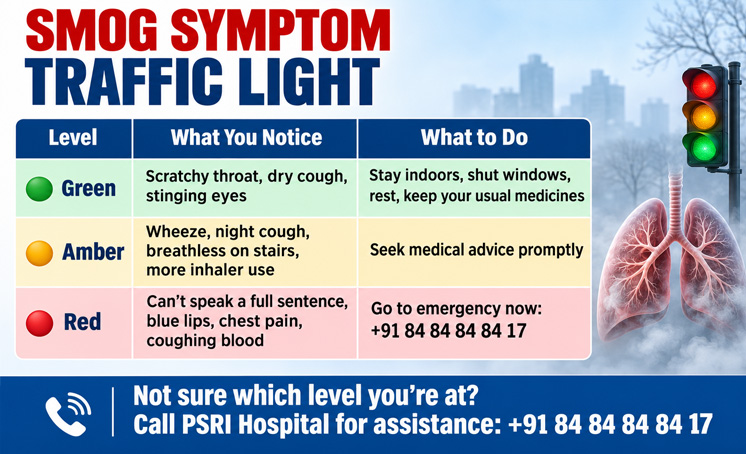
Early signs are a dry or scratchy cough, throat irritation, burning eyes and mild chest tightness. Warning signs are wheezing, breathlessness on stairs, a cough that keeps you awake or extra inhaler use. Emergency signs are struggling to speak, blue lips, chest pain or coughing up blood.
Manage at Home and Cut Your Exposure:
A dry cough, scratchy throat, stinging eyes or mild chest tightness that eases indoors. Stay in, shut the windows and rest. Sip water and try saline gargles for a sore throat. Keep taking prescribed medicine. Don’t stop or change medicines on your own.
See a Doctor This Week:
- Wheezing or a whistling chest
- Breathlessness on stairs that wasn’t there last month
- A cough that wakes you at night
- Needing your inhaler more often than usual
- Fever with cough
Get Emergency Help Now:
- Struggling to speak a full sentence
- Blue or grey lips
- Chest pain or pressure
- Fainting or confusion
- Coughing up blood
- A child breathing fast with the ribs pulling in
For these signs, call +91 84 84 84 84 17 or reach our 24×7 emergency service at PSRI Hospital.
Is It Smog Cough or Something More Serious?
A smog cough is irritation. It flares on bad-air days and eases when the air improves. A cough lasting beyond two to three weeks needs a lung check. So does one that wakes you at night or comes with wheeze, fever, weight loss or blood. Smog can also hide asthma, COPD or pneumonia.
A chest surgeon at Medanta told India TV in January 2026 that a cough beyond two weeks needs a specialist. Three weeks is the more common cut-off. Many people wait far longer, because everyone around them is coughing too.
COPD, which includes chronic bronchitis, is a lasting lung disease that makes breathing hard. Pneumonia is a lung infection.
| What It Could Be | Clues | Next Step |
|---|---|---|
| Smog Irritation | Dry cough, scratchy throat, stinging eyes. Worse on bad-air days, better indoors. | Cut exposure and watch for change |
| Asthma Flare | Wheeze, tight chest, night cough, more inhaler use | See a doctor this week |
| COPD Flare | More breathlessness and phlegm than your usual | Call your doctor early. Go to emergency if severe. |
| Pneumonia | Fever, chest pain, fast breathing, tiredness | Same-day medical review |
| Needs Further Tests | Cough beyond two to three weeks, weight loss, blood in phlegm | See a pulmonologist. Blood needs urgent care. |
These clues can’t diagnose you. Only an examination and tests can tell the conditions apart. To see how asthma and COPD differ, read our explainer.
Who Is at Higher Risk From Winter Smog in Delhi?
Children, adults over 60, pregnant women and people with asthma, COPD, heart disease or diabetes face the highest risk. So do people who work outdoors, like traffic police, delivery riders and auto drivers. Hospital numbers show admissions rising even when visit numbers stay flat.
- Children: They breathe faster and their lungs are still developing. If your child wheezes, read about asthma in children.
- Adults Over 60 and Pregnant Women: Avoid outdoor activity when pollution is high.
- People With Lung or Heart Disease: Pulmonologists told India TV in November 2025 that flares worsen fast and hospital stays run longer.
- Outdoor Workers: A doctor quoted in Business Standard in October 2025 advises spirometry every one to two years. That includes traffic police, factory and construction workers. Spirometry is a breathing test that measures how much air you blow out and how fast.
Admissions at the six central hospitals rose from 9,878 in 2022 to 10,819 in 2024. Emergency visits stayed near 67,000 to 69,000 a year. That pattern suggests the cases are getting more serious.
Which Winter Smog Prevention Tips Work, and Which Don’t?
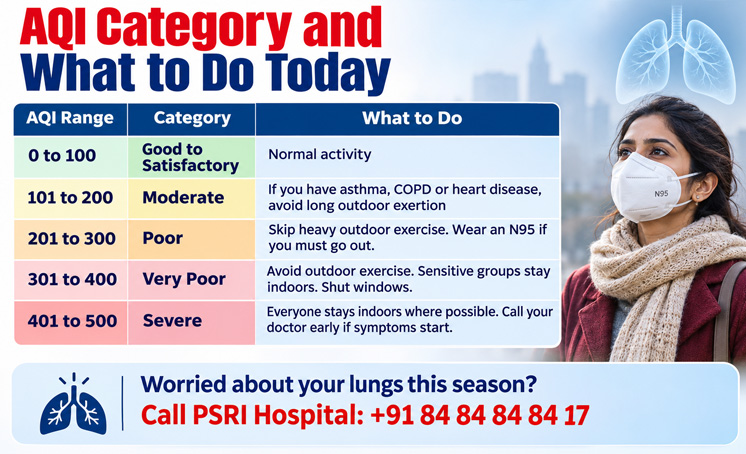
Five habits cut your exposure. Check the AQI, wear a snug N95 and keep windows shut on bad days. Run a HEPA purifier sized for the room and follow your doctor’s plan. None removes the risk, and cloth masks and lung detox drinks don’t protect you.
What Works to Cut Your Exposure:
- Check the AQI and Time Your Day: AQI is the air quality index. India’s Central Pollution Control Board (CPCB) sets its categories. Above 200 means Poor air, so skip outdoor exercise. Delhi’s Graded Response Action Plan (GRAP) adds curbs as AQI rises, but your own precautions still matter.
- Wear a Fitted N95: A genuine, certified N95 or equivalent, like KN95, filters at least 95% of airborne particles. It works only with a tight seal, and you can’t wear one all day. Beards and loose straps leak. Fit is harder on children.
- Keep Windows Shut on Bad Days: Open them when the air improves.
- Use a HEPA Purifier Sized for the Room: It lowers fine particles in a closed room. It doesn’t remove every gas, and studies haven’t proven it prevents flare-ups.
- Cut Indoor Smoke: Avoid smoking, candles, mosquito coils and heavy cooking fumes indoors.
- Follow Your Doctor’s Plan: Keep your inhaler handy and follow your asthma or COPD action plan. Ask whether flu and pneumococcal vaccines suit you.
What Doesn’t Work:
- Cloth and Surgical Masks: A University of Massachusetts Amherst study found cloth masks removed only 15% to 57% of diesel-combustion particles. Surgical masks don’t filter PM2.5 well.
- Lung Detox Drinks: A Medanta chest surgeon told India TV in January 2026 that no drink can flush the lungs.
- Relying on One Fix: Even a properly fitted N95 doesn’t give complete protection. Reduce your time outside too.
If you feel dizzy or very short of breath in an N95, remove it in cleaner air. See a doctor if it doesn’t settle.
When Should You See a Lung Specialist Instead of Waiting for the Air to Clear?
See a pulmonologist if your cough lasts beyond two to three weeks. Also go if you wheeze, get breathless on tasks that were easy last month or use your inhaler more often. Go sooner with fever, chest pain or weight loss. Go to emergency for severe breathlessness or coughing blood.
- A night cough or breathlessness that disturbs your sleep
- Asthma, COPD or heart disease that feels harder to control this season
- A cough that’s fading but leaves you breathless on stairs
A pulmonologist starts with your history and listens to your chest. Spirometry, a lung function test, shows how well your lungs move air. DLCO checks how well oxygen passes from your lungs into your blood. A chest X-ray looks for infection or other changes. Bronchoscopy, a thin camera tube that views the airways, is only for unclear cases.
Our pulmonology, critical care and sleep medicine care at PSRI Hospital covers asthma, COPD, chronic cough and breathlessness.
What Should You Look for When Comparing Top 10 Hospitals in Delhi for Lung Care?
Compare what each hospital can do. A ranking won’t tell you whether it can handle a severe flare-up. A good lung care hospital has pulmonologists, an on-site lung function lab and bronchoscopy. It also needs 24×7 emergency and critical care, plus specialist backup in heart and ENT care.
Searching for the best hospital in Delhi, the best hospital in New Delhi or a top 10 hospital in Delhi? Use this checklist on each one. You can also browse these top hospitals in Delhi NCR.
- Pulmonologists on Staff: A named department, so you aren’t relying on a general physician alone.
- A Lung Function Lab: Spirometry and DLCO on site.
- Bronchoscopy and EBUS: EBUS uses ultrasound through a bronchoscope to examine lymph nodes near the lungs.
- 24×7 Emergency and Critical Care: Severe flare-ups don’t wait for clinic hours.
- Specialist Backup: Cardiology, ENT and oncology under one roof.
About PSRI Hospital and Our Pulmonology Team
You’d want to know who’s behind this advice, so here it is. We opened in 1996 and run over 35 specialties. NABH and NABL accredit our hospital, and you’ll find us in Sheikh Sarai, New Delhi.
Dr. Gopi Chand Khilnani, Chairman, and Dr. Neetu Jain, Senior Consultant, lead our Pulmonology, Critical Care and Sleep Medicine team. We treat asthma, COPD, chronic cough, breathlessness, pneumonia and interstitial lung disease, and we evaluate sleep apnea. Our lung function lab runs spirometry and DLCO, and we perform bronchoscopy and EBUS.
We built this guide on named sources, including a Union Health Ministry reply in Parliament and a Lancet Planetary Health study. It gives general awareness, so it can’t diagnose you.
Book a Pulmonology Consultation at PSRI Hospital Now
Is your cough lasting longer than it should? Don’t wait for the air to clear.
Our lung specialists can test your breathing and work out what’s behind your symptoms. Critical care support and 24×7 emergency help are here if a flare-up turns serious.
You may be searching for the best hospital in Delhi or the best hospital in New Delhi. Comparing a top 10 hospital in Delhi? Judge us on what we can do for your lungs, and use the checklist above.
We’re at Press Enclave Marg, Sheikh Sarai II, near Saket Court. Patients reach us easily from Malviya Nagar, Panchsheel Park and Hauz Khas.
Call +91 84 84 84 84 17 to book your appointment at PSRI Hospital.
Frequently Asked Questions
How long does a smog cough last?
There’s no fixed time. Irritation can last for days after the air improves. If your cough lasts beyond two to three weeks, or comes with breathlessness, get a lung check.
Can smog cause permanent lung damage?
Years of exposure can reduce lung function and raise the risk of chronic lung disease. Damage often builds silently, so don’t wait for symptoms. Spirometry shows where your lungs stand.
Can smog cause asthma-like symptoms if I’ve never had asthma?
Yes. Smog can cause wheeze, cough and chest tightness even without an asthma history. If these keep returning or wake you at night, get tested for undiagnosed asthma.
Why do I cough more in the morning during smog?
Cool, still air traps pollutants near the ground overnight, so levels often peak in the early morning and late evening. That’s why you should skip outdoor walks at those times.
Is smog cough contagious?
Irritation from smog isn’t contagious. But viral and bacterial chest infections are common in the same season. A cough with fever needs checking, because it could be infectious.
Is it safe to walk outside when AQI is above 300?
AQI above 300 is Very Poor. Avoid outdoor exercise, and people with lung or heart disease should stay indoors. If you must go out, wear a fitted N95.
Which mask works best against Delhi smog?
A fitted, certified N95 or equivalent works best. Cloth and surgical masks filter little PM2.5. Beards and loose straps break the seal, so check the fit every time.
Where can I find a pulmonologist near Saket?
Our pulmonology team sees patients at Press Enclave Marg, Sheikh Sarai II, near Saket Court. Call +91 84 84 84 84 17 to book an appointment.