Book An Appointment
 Virtual Consultation

Nearby Hospital in My Location: What to Check First

FACT CHECKED
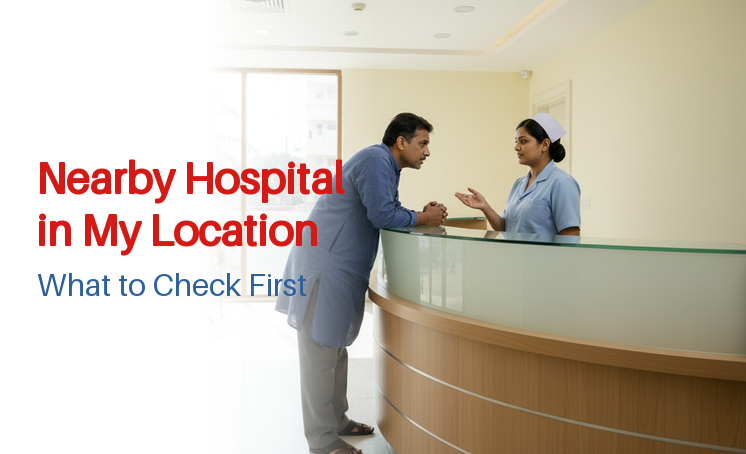
Nearby hospital in my location is a search people make when distance, symptoms, or family pressure leaves little time for guesswork. The closest building may not offer the emergency service, specialist, or critical care your situation needs. Choose by matching the hospital’s services to the problem, then confirm emergency access, specialist availability, diagnostics, intensive care, payment support, and follow-up arrangements. PSRI hospital advises families to check these details before travelling, especially when a condition may need coordinated care rather than a single consultation. Established in 1996, the hospital began as South East Asia’s first institute dedicated to digestive diseases and now has Centres of Excellence across major specialties. The checklist below shows what to verify, what to carry, and when to call the emergency department instead of waiting for an appointment.
Key takeaways
- The nearest hospital is useful only if it can provide the level of care your symptoms may require.
- Check emergency access, intensive care, specialist services, diagnostics, pharmacy, blood bank, and payment arrangements before travelling.
- PSRI hospital has a 24×7 emergency department, advanced life support ambulances, and separate critical care units.
- Bring previous reports, prescriptions, identity documents, insurance details, and a list of current medicines.
- Consult a qualified healthcare professional for medical decisions.
How do I choose a nearby hospital in my location?
Choose a hospital by matching its emergency and specialist services to your immediate medical need, not by distance alone. For chest pain, severe breathing trouble, sudden weakness, major bleeding, loss of consciousness, or a serious injury, call emergency services or go to the nearest emergency department. Do not delay urgent care while comparing websites.
For a planned consultation, check whether the hospital has the relevant Centre of Excellence, diagnostic support, critical care backup, and follow-up pathway. A hospital that can coordinate consultation, testing, admission, surgery, and review may reduce avoidable transfers.
| What to check | Why it matters |
|---|---|
| 24×7 emergency department | Urgent symptoms need assessment without waiting for OPD hours. |
| Relevant specialist service | The right department directs the next clinical step. |
| Critical care units | Serious illness may need monitored care after emergency assessment. |
| Payment support | Knowing insurance and cashless options can reduce delays at admission. |
For kidney concerns, you can review the guide the next steps in treatment before a planned consultation. Patients seeking transplant information can also read about a Kidney Transplant Hospital in Noida, then discuss suitability with a qualified specialist.
What emergency facilities should a hospital provide?
A suitable hospital for urgent care should provide a 24×7 emergency department, access to advanced life support ambulances, and critical care units matched to serious conditions. These services matter when a patient may need rapid monitoring, specialist review, or transfer to a dedicated intensive care area.
PSRI hospital has separate Medical ICU, Neuro and Stroke ICU, CCU, CTVS ICU, liver transplant, and renal transplant units. Its Medical ICU has 14 beds, including a dedicated isolation bed. These details help families ask a clear question: can the hospital manage the likely level of care after the first assessment?
Do not drive a person with severe symptoms if safe transport is uncertain. Call for emergency help, describe the symptoms, and follow the instructions given by qualified professionals. A family member can prepare documents while another person stays with the patient.
What should you carry to the emergency department?
- Carry previous discharge summaries, scan reports, laboratory results, and the names of current medicines.
- Keep identification and insurance or government health scheme documents available if admission becomes necessary.
- Write down the symptom start time, especially for sudden weakness, speech trouble, severe chest discomfort, or breathing difficulty.
- Tell the emergency team about allergies, long-term conditions, prior surgery, and recent hospital visits.
PSRI hospital also provides a Best Private Hospital in Delhi page with information that can support planned hospital selection. Consult a qualified healthcare professional for medical decisions.
Which specialist service should I look for?
Choose the department that matches the main concern, then ask how consultation, testing, treatment, and follow-up will be coordinated. PSRI hospital runs Centres of Excellence in cardiac sciences, oncology, neurology and neurosurgery, nephrology and kidney transplant, liver transplant and gastroenterology, urology, orthopaedics, and pulmonology.
For heart-related symptoms or a planned cardiac opinion, the Cardiologist service page explains the relevant access point. People comparing specialist options may also search for a best cardiologist in India, but the final choice should depend on the patient’s symptoms, clinical findings, and required treatment.
Kidney stone symptoms, kidney failure, and transplant questions need different pathways. A search for the Best Hospital for Kidney Stone Treatment in India may help with planned research, while transplant care requires a separate specialist assessment. Information about Kidney transplant surgery in India can help families prepare questions before consultation.
For cancer-related concerns, use the Oncologist service page to identify the relevant consultation route. Do not assume that a single symptom confirms a diagnosis. A qualified healthcare professional must assess the patient.
Which hospital facilities should I verify before admission?
Before a planned admission, verify that the hospital has the facilities needed for the expected care pathway, including testing, surgery, dialysis, blood support, pharmacy access, and laboratory services. PSRI hospital lists specific facilities that families can ask about during enquiry.
| Facility | What to ask |
|---|---|
| Multislice CT scanner | Ask whether the treating department will arrange this scan as part of the evaluation. |
| MRI | Ask whether MRI is available through the hospital’s diagnostic pathway. |
| NABL-accredited laboratory, 24×7 | Ask how laboratory testing is arranged during emergency or inpatient care. |
| 24×7 blood bank | Ask the treating team about blood support requirements before a procedure. |
| 24×7 dialysis | Ask whether dialysis support is relevant to the patient’s planned care. |
The hospital also has Versius Robotic System (CMR) for robotic surgery and Modular Intra Connected Operation Theatres. Ask the surgeon whether either facility is relevant to the proposed procedure. Do not treat a machine name as a treatment recommendation.
PSRI hospital’s laboratory has been NABL-accredited since 2010 to ISO 15189:2012 and operates 24×7, 365 days. The hospital is NABH-accredited, and its blood bank is separately NABH-accredited. These accreditation details are useful questions to include during hospital comparison.
How can I confirm payment and follow-up arrangements?
Confirm payment routes before a planned admission, while remembering that emergency treatment should not be delayed for paperwork. PSRI hospital supports cashless treatment through insurance, TPA, CGHS, and ECHS. It also has an in-house pharmacy, which can make medicine collection part of the hospital visit.
Ask the admissions team which documents are required for your scheme, whether pre-authorisation is needed, and which costs may remain outside approval. Keep copies of identity documents, insurance cards, referral letters, and previous reports.
Before leaving a consultation, ask who will review test results, what symptoms require urgent return, and when follow-up should occur. The correct next step may be another consultation, admission, a procedure, or monitoring. Only the treating professional can decide that after examining the patient.
Families needing cancer information can review Best Cancer Hospital in India before discussing the diagnosis and treatment plan with an oncologist. For a second service route, the affordable chemotherapy in India page may help frame questions about financial planning, but it cannot replace an individual medical assessment.
A nearby hospital should match the patient’s urgency and likely care needs. Check its 24×7 emergency access, specialist departments, intensive care units, diagnostics, blood bank, dialysis, pharmacy, accreditation, and payment support. PSRI hospital provides these services alongside Centres of Excellence across major specialties. For a planned consultation, contact PSRI hospital, bring previous reports and insurance documents, and ask which department should review the problem. If symptoms are severe or sudden, call emergency services or go to the nearest emergency department. Consult a qualified healthcare professional for medical decisions.
FAQs
How do I find a nearby hospital in my location?
Find a nearby hospital by checking distance, 24×7 emergency access, relevant specialist services, critical care, diagnostics, and payment support. The closest facility may not provide the level of care the patient needs.
What should I check before choosing a hospital?
Check the emergency department, specialist department, intensive care units, laboratory, imaging, blood bank, dialysis, pharmacy, accreditation, and insurance or government scheme support. Ask how follow-up will be arranged after consultation or discharge.
Does PSRI hospital have a 24×7 emergency department?
Yes, PSRI hospital has a 24×7 emergency department and advanced life support ambulances. It also has separate Medical ICU, Neuro and Stroke ICU, CCU, CTVS ICU, liver transplant, and renal transplant units.
What documents should I take to a hospital appointment?
Take previous reports, discharge summaries, scan results, laboratory reports, current medicine details, identification, insurance documents, and referral letters. Note when symptoms began and tell the clinician about allergies and past surgery.
Does PSRI hospital support cashless treatment?
Yes, PSRI hospital supports cashless treatment through insurance, TPA, CGHS, and ECHS. Confirm document and pre-authorisation requirements with the admissions team before a planned admission.
When should I go to the emergency department?
Go to an emergency department for severe breathing trouble, chest pain, sudden weakness, loss of consciousness, major bleeding, or serious injury. Call emergency services when transport may be unsafe or the patient needs urgent support.