Book An Appointment
 Virtual Consultation
HbA1C Test: Purpose, Procedure, Normal Value & Results

FACT CHECKED
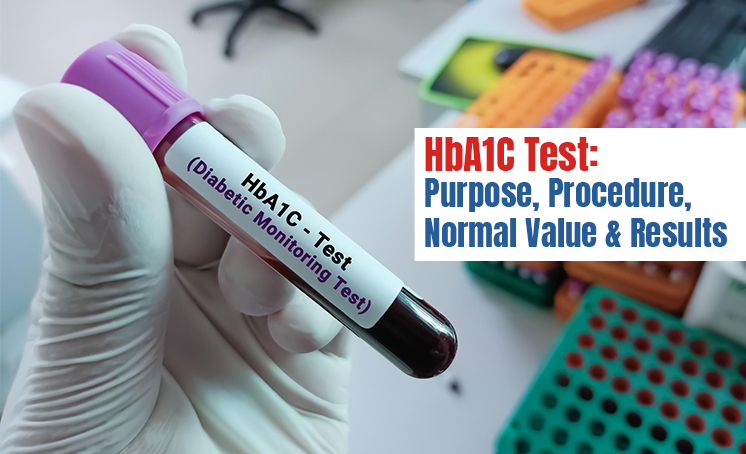
Millions of people get an HbA1c test every year, look at the number and then sit with the same worry. Is something wrong? What exactly is this test checking? What does the number actually mean? Does it confirm diabetes, or does it simply mean the body needs closer monitoring?
The HbA1c test is not just another blood test result. It gives a picture of how your blood sugar has been behaving over the last two to three months. It helps doctors understand how your body is handling glucose over time. That makes it useful for diagnosing diabetes, tracking control, and spotting future risk early.
At PSRI, the best hospital in Delhi, HbA1c results are not looked at in isolation but in context of the full clinical picture, especially when there is concern about diabetes-related effects on the kidneys, heart, eyes, or nerves. With endocrinology support and multispeciality access under one roof, patients can move from a lab number to a clearer treatment direction without unnecessary delay.
This blog explains the HbA1C test purpose, how the test is done, what the normal value means, and what your next step should be.
What Is the HbA1C Test?
Think of it as your blood sugar’s three-month report card. When glucose enters your bloodstream, it sticks to haemoglobin — the protein inside your red blood cells that carries oxygen. The more glucose in your blood over time, the more it sticks. Since red blood cells live for roughly 90 to 120 days, the HbA1c test purpose is to measure how much glucose has accumulated on them, giving your doctor a reliable average of your blood sugar. You may hear it called glycated haemoglobin, glycosylated haemoglobin, A1c, or the three-month sugar test.
Purpose of the HbA1C Test — Why Is It Ordered?
HbA1C test results are one of the primary tools for confirming or ruling out diabetes. Each situation has a specific reason behind it, your doctor did not order the HbA1C test randomly. Frequent urination, unexplained fatigue, blurred vision, tingling in the hands or feet are the symptoms prompting this test.
If you are on medication, following a diet, or taking insulin, this test tells your doctor whether it is actually working, to adjust your treatment before complications develop. Research confirms that keeping HbA1c at or below 7% reduces the risk of nerve damage, kidney disease, and eye damage by 35 to 76 percent.
Who Should Get an HbA1C Test?
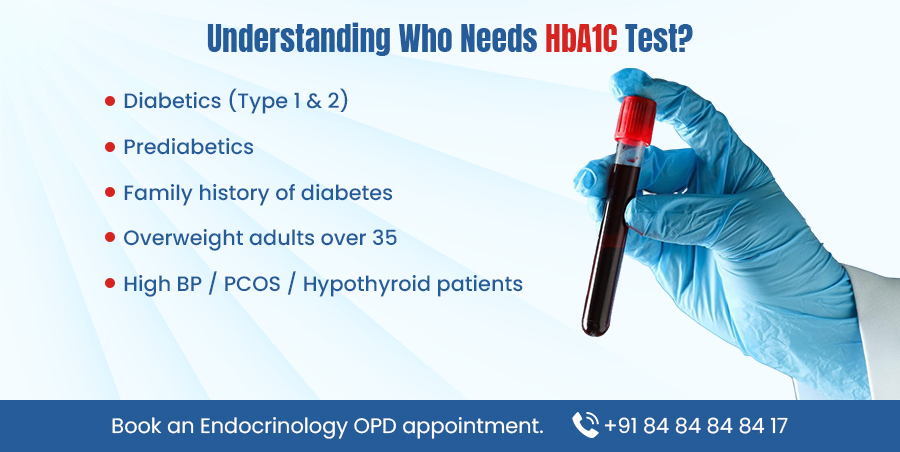
This test is not just for people already diagnosed with diabetes but it is for anyone whose health profile puts them in the risk zone, before they even realise it. You need this test if you have a parent or sibling with Type 2 diabetes, if you are overweight and above the age of 35, or if a previous blood test flagged your fasting sugar as borderline. If you are already living with Type 1 or Type 2 diabetes, this is a routine test your doctor will schedule every three to six months.
How Is the HbA1C Test Done?
One thing that surprises most people: this test does not require fasting. Eat your normal breakfast. Come in whenever it is convenient. A phlebotomist cleans the inner arm near the elbow, inserts a small needle, and draws a blood sample into a K2-EDTA tube. Most people describe it as a small pinch. The whole process takes under five minutes.
The sample then goes to the laboratory where the percentage of glycated haemoglobin is measured using validated methods. At a best hospital in Delhi, NABL-accredited laboratory, these results are standardized. HbA1C test results are typically ready within 24 hours.
Some clinics offer a point-of-care result in minutes using a capillary sample. These are useful for a quick check but any result used to diagnose diabetes should be confirmed with a proper venous sample from a certified lab.
Also before your test, tell your doctor about all medications you take. Certain drugs including some antiretrovirals, dapsone, and ribavirin can interfere with results.
HbA1C Normal Value: Reference Ranges Explained
HbA1C test normal value ranges are in percentage and are applicable to most adults. For elderly patients or those managing multiple conditions, the target is sometimes set slightly higher because aggressive blood sugar control carries its own risks in certain cases. Your endocrinologist sets the right target for you specifically. Here is the standard reference chart used by endocrinologists:
| HbA1c Result | Category | Clinical Meaning |
|---|---|---|
| Below 5.7% | Normal | No evidence of diabetes |
| 5.7% – 6.4% | Prediabetes | Higher risk; act now |
| 6.5% and above | Diabetes | Confirmatory of diabetes mellitus |
| Below 7% (in diabetics) | Target range | Good long-term control |
| 7% – 8% | Suboptimal | Treatment review required |
| Above 8% | Poor control | Elevated complication risk |
| Above 9% | Very high | Urgent clinical review needed |
How to Read Your HbA1C Test Results?
Getting a result is one thing. Understanding what it is actually telling you and what to do next is important. Here is how HbA1c test results translate into real clinical decisions.
- Normal result: Below 5.7% means your blood sugar control is currently healthy. But if you fall into a risk category, family history, obesity, hypertension your doctor will still advise a retest schedule.
- Prediabetes result: Between 5.7% and 6.4% is not diabetes but it is a clear warning. The good news is that this stage is reversible for many people. Dietary changes, regular physical activity, and weight management can bring HbA1c back into the normal range without medication.
- Diabetes confirmed: A result of 6.5% or above on two separate occasions confirms diabetes. But this number alone does not define your treatment plan. Your doctor will look at it alongside kidney function, lipid profile, blood pressure, and urine microalbumin before deciding the next step.
- HbA1c and glucometer not matching: This is more common in India than most people realise. Iron-deficiency anemia, which affects over 50 percent of people in some Indian regions, can cause HbA1c to read falsely high. Conditions like thalassemia or G6PD deficiency can push it falsely low, meaning some patients go undiagnosed for years. If your numbers do not match your symptoms, do not dismiss it. Ask your doctor to run a full blood count alongside your HbA1c. A good lab and an experienced endocrinologist interpret both together.
Consult PSRI Hospital Delhi for Endocrinology, Diagnostics & Diabetes Care
An HbA1c result should not leave you with more questions. Whether the number falls in the normal, prediabetes, or diabetes range, the next step should be proper interpretation based on your symptoms, medical history, and overall risk profile.
At PSRI a multispeciality hospital in Delhi , patients can get HbA1c testing through a standardised, validated laboratory process along with specialist endocrinology review in the same care pathway. That matters because diabetes management is rarely about one number alone. It often needs correlation with kidney health, cardiovascular risk, haemoglobin levels, medicines, and long-term monitoring goals.
Book an Endocrinology OPD appointment and get a clearer plan for what to do next. Call +91 84 84 84 84 17.
Frequently Asked Questions
What HbA1c level confirms diabetes?
A 6.5% or above HbA1C result on two separate occasions confirms a diabetes diagnosis. A single elevated result with no symptoms requires a confirmatory second test.
What does a prediabetes result mean?
Prediabetes means your blood sugar is higher than normal but has not yet crossed the diabetic range. It is a reversible stage with lifestyle changes, diet, exercise, and weight management .
Why does my HbA1c not match my glucometer reading?
Your glucometer measures blood sugar at one moment. HbA1c reflects a three-month average. They measure different things. Additionally, conditions like iron-deficiency anaemia can cause HbA1c to read higher than your actual glucose control.
How often should I get the HbA1c test done?
Every three months if your diabetes is uncontrolled or you have recently changed your treatment. Every six months if your levels are stable and within your target range. Annually for high-risk individuals who have not yet been diagnosed.