Book An Appointment
 Virtual Consultation
Chandipura Virus: Symptoms, Causes, Treatment, Prevention and Warning Signs

FACT CHECKED
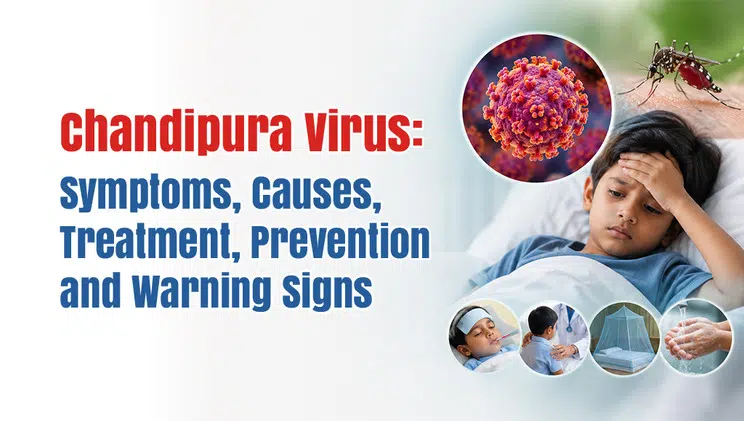
A child with a sudden high fever during monsoon usually means nothing more than a common viral illness. Once in a while, in parts of western and central India, it’s something far more serious, and that’s the case worth knowing about. Chandipura virus is a rare infection spread by sandfly bites, and it mostly affects children under 15.
The 2024 outbreak in Gujarat was the largest of its kind in two decades, with the World Health Organisation confirming 245 cases and 82 deaths. Gujarat is seeing another outbreak this monsoon season, and the numbers are still being confirmed as cases come in.
PSRI multispeciality hospital in Delhi pediatrics and internal medicine teams treat the fevers and complications this virus can cause, and speed matters more here than with almost any other seasonal illness.
What Are The Symptoms Of Chandipura Virus?
Chandipura virus: symptoms start suddenly, usually with a high fever that a parent might first mistake for an ordinary bug. Within 24 to 48 hours, the illness often moves toward:
- Repeated vomiting
- Seizures
- Confusion or altered awareness
- Loss of consciousness
That speed’s what sets this apart from most childhood fevers. A fever that seems ordinary at breakfast can turn into a medical emergency by evening.
What Causes Chandipura Virus, And How Does It Spread?
Chandipura virus causes traces back to a single source: the bite of an infected sandfly, a tiny insect far smaller than a mosquito. It doesn’t spread from one person to another. Coughing and touch play no part in it, and neither does simply sharing a room.
- Sandflies breed in cracks in old walls and damp soil.
- Areas near animal shelters attract them too, and their numbers rise sharply during monsoon.
- Children playing outdoors in the evening, when sandflies are most active, face the highest exposure.
How Is Chandipura Virus Treated?
Chandipura virus treatment doesn’t include a specific antiviral medicine or vaccine, since none currently exists for this infection. Care instead focuses on managing what the virus does to the body.
- Doctors control fever and seizures, support breathing if it’s affected, and manage swelling around the brain in the hospital’s intensive care setting.
- Blood tests and sometimes a spinal fluid sample confirm the diagnosis.
None of this treatment can happen from home. A child showing these symptoms needs a best hospital in New Delhi observation.
How Can Chandipura Virus Be Prevented?
Chandipura virus prevention and warning signs go hand in hand, since reducing sandfly exposure is the only real prevention available and there isn’t a vaccine to rely on instead.
- Spraying insecticide in and around the home cuts down sandfly numbers directly.
- Repairing wall cracks and damp corners removes their breeding spots.
- Keeping children indoors during early evening hours, when sandflies are most active, lowers exposure during the riskiest part of the day.
- Insect repellent on exposed skin adds another layer of protection, especially for children playing outside near dusk.
What Are The Warning Signs Of Chandipura Virus?
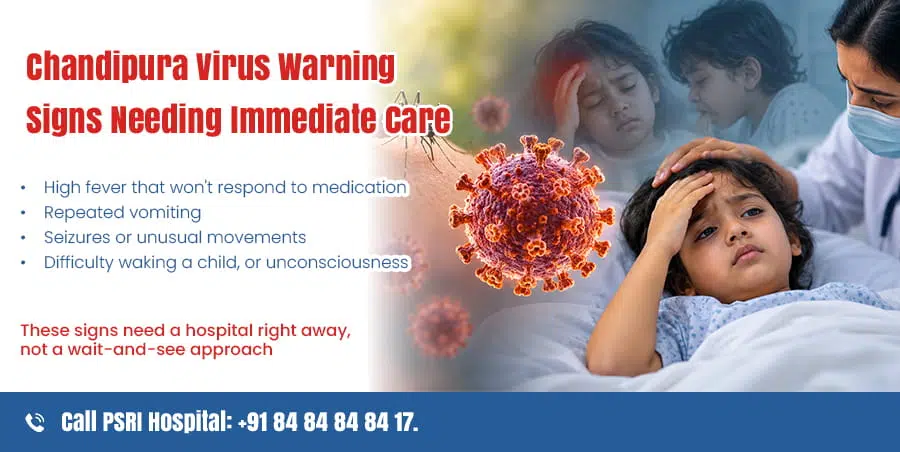
The clearest warning sign is a sudden high fever in a child that doesn’t behave like an ordinary illness, especially one that starts shifting toward confusion or vomiting within a day.
A fever alone doesn’t usually mean Chandipura virus. It’s the combination and the speed that matters.
- Vomiting that won’t stop is one reason to go to a hospital immediately.
- Unusual drowsiness or a seizure
- A child is becoming hard to wake up.
None of these should wait through the night. In an active outbreak area, any of these signs deserves urgent evaluation by the best hospital in Delhi NCR the same day.
Emergency Pediatric Care At PSRI Hospital.
Chandipura virus is rare, and most childhood fevers during monsoon have nothing to do with it. What matters is recognizing the small set of warning signs and acting immediately rather than waiting.
PSRI Hospital Pediatrics department, working alongside Internal Medicine and Critical Care, manages fevers and neurological symptoms in children with the coordination this kind of illness actually needs.
As one of the best hospital in New Delhi for pediatric emergencies, PSRI can move a child from the emergency department straight into intensive care without a transfer between facilities, which matters when hours decide the outcome. Reports and history stay with the same team throughout.
Pediatric ICU beds and ventilator support stay available year-round, not just during an active outbreak. Round-the-clock monitoring doesn’t get scaled back once the season passes either.
If a child develops a sudden high fever alongside vomiting or confusion, go to a hospital immediately. The same goes if a seizure happens, waiting through the night isn’t worth the risk. Call +91 84 84 84 84 17 to reach PSRI Hospital’s emergency pediatric team.
Frequently Asked Questions
Is Chandipura virus contagious from person to person?
No. Only a sandfly bite spreads the virus. Being near an infected person, or even caring for them directly, carries no risk at all.
Is there a vaccine for Chandipura virus?
None exists yet. Avoiding sandfly bites and clearing their breeding spots around the house remains the only real protection available right now.
How quickly does Chandipura virus progress?
Fast, and that catches most families completely off guard. A fever that looks ordinary at breakfast can turn into a neurological emergency by dinner.
Which parts of India are most affected by Chandipura virus?
Gujarat and Maharashtra report the bulk of cases. Central India sees its share too, mostly clustering around the monsoon months each year.