Book An Appointment
 Virtual Consultation
Brain Fog: What It Is, Causes, Symptoms & Treatment!

FACT CHECKED

Have you been struggling to concentrate, forgetting simple things, or feeling mentally slow even after a full night’s sleep? If your thinking feels cloudy, unfocused, or unusually exhausting, you’re not alone. This mental lapse has no scientific term, but brain fog is a non-medical term used to describe mental cloudiness or cognitive slowness.
At PSRI Hospital, the best hospital in New Delhi, patients receive comprehensive and accurate evaluation for cognitive and neurological concerns. We have experienced neurologists, advanced diagnostic technology, and a patient-centric approach which helps us focus on identifying the root brain fog causes and delivering personalised brain fog treatment plans that aim for lasting mental clarity not temporary relief.
In this blog you will learn about the symptoms, causes and the treatment for brain fog.
What Is Brain Fog?
Brain fog is mental cloudiness during which thinking feels slower than usual, everything is unclear and unfocused. It affects how your brain processes information and makes everyday work a task.
Brain fog is not a disease. It is usually a symptom of an underlying physical, emotional, or lifestyle-related issue.
As simple as forgetting what you were speaking, or trouble multitasking, or making decisions, forgetfulness is what can be used to draw an outline to brain fog.
Brain Fog Symptoms and Signs
Your mental cloudiness does not appear suddenly. There are brain fog symptoms and warning signs you can watch for.
You may notice difficulty with
- Short-term memory.
- Attention.
- Concentration.
- Learning.
- Difficulty in multitasking.
- Difficulty in finding the right words.
- Low self-esteem.
- Poor performance at school and work.
- Depressed mood.
- Unable to execute a plan, solve a problem, or organize stuff.
These symptoms may come and go or continue for weeks, depending on the cause.
What Are The Causes Of Brain Fog?
There can be multiple factors that can cause brain fog. There is no one such trigger that you need to look for, but here are some of the most common reasons that are considered to be the cause of brain fog.
Stress and Mental Overload:
Stress can raise cortisol levels, which can interfere with memory, focus, and decision-making. Mental exhaustion is one of the leading brain fog causes today
Hormonal Changes:
Pregnancy, menopause, or pre menopause can cause changes in the hormones. These hormone changes can cause confusion, disorientation, and fogginess, which lead to behaviors such as putting things down in odd places, misplacing belongings, and forgetting simple work tasks.
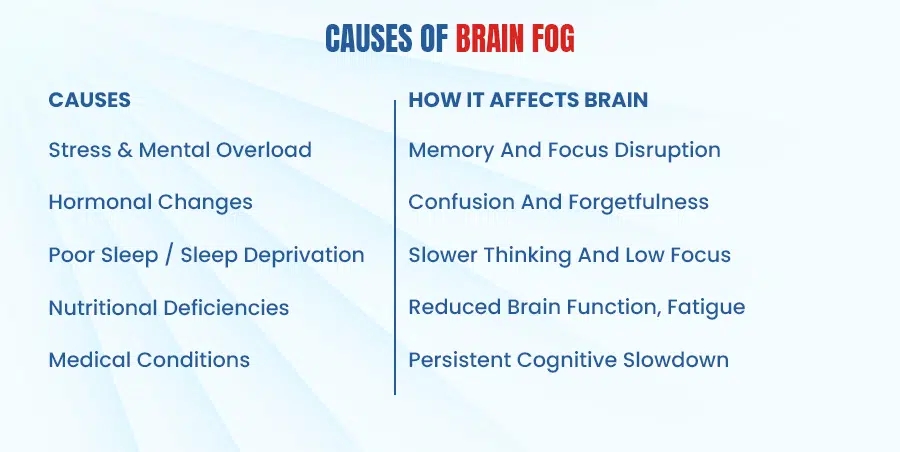
Poor Sleep And Sleep Deprivation:
Many scientific studies have revealed that sleep has a direct effect on the brain. So when you do not get enough sleep, or you are sleep-deprived, it can mess up your brain. You will have slower responses, reduced concentration, and slower cognitive performance.
Deficiencies:
When you have a restricted diet, it can lead to nutritional deficiencies. Deficiencies in nutrients such as vitamin B12, iron, and omega-3 fatty acids can impair brain function and contribute to mental fatigue.
Medical Conditions:
Brain fog is commonly reported in conditions like:
- Chronic fatigue syndrome,
- Autoimmune disorders,
- Diabetes,
- Mild cognitive impairment.
Brain fog can also be seen in neurological conditions such as dementia and Parkinson’s disease. In these cases, symptoms like mental slowness, memory difficulty, and reduced focus may be part of the underlying condition.
However, experiencing brain fog does not mean a person has dementia or Parkinson’s. Many people develop brain fog due to stress, sleep issues, or lifestyle factors. A proper neurological evaluation helps identify the exact cause.
Brain Fog Treatment
Brain fog can be temporary, but if it begins to affect your quality of life, professional medical guidance is essential. At PSRI Hospital also known as the best hospital for brain tumor surgery in Delhi, patients receive comprehensive neurological evaluation and customised brain fog treatment plans.
There are certain lifestyle changes that can help you with the symptoms.
Regular Exercise
Any form of physical exercise; it can be a walk in the park, yoga, deep breathing exercise, or meditation. It can help you get clarity in your head, and with time, it will help you get back in control of your brain fog.
Eating Balanced Diet
By avoiding eating junk and processed food and ensuring a diet that is full of nutrients, you can get back on track. All the deficiencies can be covered up. If brain fog is caused by a lack of nutrients, it can be handled well.
Stress Management
Pick your favorite stress-management strategy. For example, you could hike in nature on the weekends, download books to read for pleasure, pick up a new hobby, or watch reruns of your favorite sitcom. You might also consider taking longer breaks and more vacations, as research suggests these tactics may improve focus and well-being.
Moderate Or Avoid Drinking And Caffeine
It’s up to you if you want to include caffeine or alcohol in your life. But it’s also important to pay attention to how much and when you choose to drink these beverages. Caffeinated coffee intake is associated with a reduced risk of cognitive decline.
Book Your Appointment for Brain Fog Treatment at PSRI Hospital Now!
When you’re struggling with persistent brain fog symptoms, choosing the right healthcare provider is very important in order to get the right diagnosis and effective treatment.
PSRI Hospital stands out as the best hospital for brain tumor surgery in Delhi, and a premier destination for brain fog treatment in New Delhi, offering comprehensive care that addresses both the symptoms and underlying causes of cognitive dysfunction.
Book your appointment with the experts now at 084848 48417, open 24 hours, Monday to Sunday.
Frequently Asked Questions
What food is good during Brain Fog?
Foods rich in Omega 3, green vegetables and nuts are considered to be good for the brain.
What food should be avoided during Brain Fog?
Avoid eating excess sugar and processed food during Brain Fog.
Can brain fog be a symptom of anxiety?
Yes brain fog can be a symptom of anxiety and depression. Mental health conditions can consume cognitive resources, making it difficult to concentrate and think clearly.