Book An Appointment
 Virtual Consultation
What Is Bloating? Warning Signs and Medical Advice

FACT CHECKED
You’ve blamed the dal, the fizzy drink, the late dinner. But the bloating keeps coming back. Same tightness. Same uncomfortable fullness after every meal. You’ve tried antacids. You’ve skipped certain foods for a week. You’ve waited it out. Nothing is fixing it.
Bloating that comes back every day, lasts more than a week, or shows up with pain or other symptoms isn’t normal digestion. It’s your gut telling you something needs attention, not another antacid.
PSRI Hospital, Delhi is India’s first dedicated gastroenterology institute, with three advanced endoscopy suites. Our specialist team is led by Dr Maneesh Paliwal, Gastroenterologist and Hepatologist, who specialises in IBS, SIBO, GERD, and every condition that causes persistent bloating.
This blog covers the bloating causes, which warning signs need a doctor, and how to get lasting relief.
What Are the Most Common Bloating Causes?
Bloating happens when gas or fluid builds up in the digestive tract faster than the body can clear it. It’s not always food. When it keeps coming back without a clear trigger, a digestive condition is usually driving it.
Everyday Triggers:
- Eating too fast or EXCESS in one sitting
- Fizzy drinks and carbonated water
- High-gas foods like lentils, cabbage, onions
- Swallowing air while eating or talking
- Constipation
Underlying Conditions (When Bloating Keeps Coming Back):
- IBS (irritable bowel syndrome) where the gut becomes oversensitive to food and stress affects up to 11% of people worldwide, as per research cited in the Rome Foundation’s global prevalence studies.
- SIBO (small intestinal bacterial overgrowth) when bacteria grow in the wrong section of the gut and ferment food, producing excess gas. A study published in the Indian Journal of Gastroenterology found SIBO present in 37.5% of IBS patients in India.
- GERD (acid reflux, where stomach acid travels back up the food pipe, causing bloating and burning)
- Lactose intolerance (the body can’t break down dairy sugar properly, so it ferments in the gut and makes gas)
- Celiac disease (an immune reaction to gluten, the protein in wheat, that damages the gut lining and disrupts digestion)
Both IBS and SIBO are treatable. But they’re only fixable after a confirmed diagnosis. IBS needs dietary and gut-brain management. SIBO needs a short course of antibiotics. They look the same from the outside. They need different tests to tell apart, and different plans to treat.
What Are the Bloating Warning Signs You Should Not Ignore?
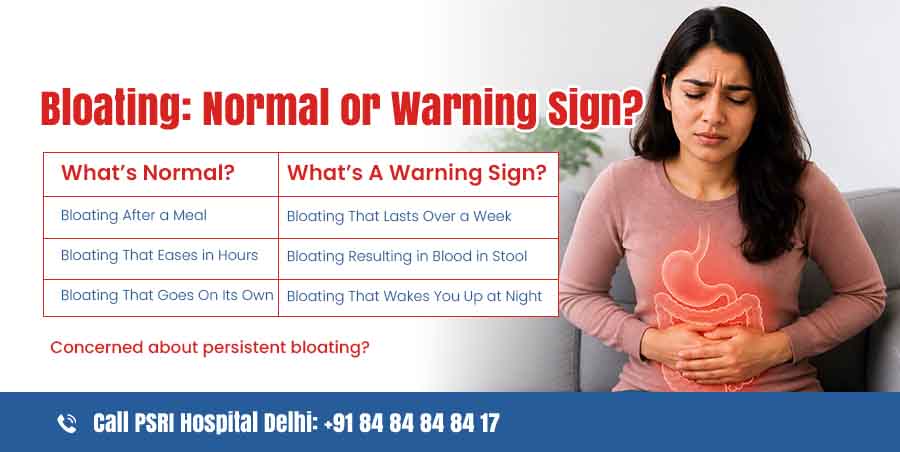
Most bloating clears up in a few hours. These signs mean it won’t, and it needs a doctor.
See a doctor if bloating comes with any of these:
- Lasts more than one week without a clear food cause
- Blood in the stool
- Unexplained weight loss with no diet changes
- Severe belly pain
- Vomiting alongside the bloating
- Wakes you up from sleep
- Fever with a swollen stomach
- Pain that stays in one place, instead of moving around.
If two or more of these apply, don’t manage it at home, get tested.
How Do You Get Rid of Bloating Fast and Stop It Coming Back?
Quick bloating relief and lasting bloating prevention work differently. One stops the discomfort right now. The other stops it from returning.
For Quick Relief:
- Take a 10-minute walk after eating. It moves gas through the gut faster.
- Sip warm water or ginger tea slowly
- Sit upright after meals. Don’t lie down for at least 30 minutes.
- Gentle clockwise stomach massage to ease trapped gas
For Lasting Bloating Prevention:
- Eat slowly and chew properly before swallowing
- Smaller meals more often, instead of two or three large ones
- Cut fizzy drinks for two weeks and see if bloating eases
- Keep a food diary for two weeks. Write what you ate, when the bloating started, and how long it lasted. Most people spot their triggers within a week.
- Manage stress. The gut and brain talk to each other constantly. When you’re stressed, the gut reacts. Chronic stress is a known IBS trigger.
What Doesn’t Actually Help:
- Antacids treat stomach acid but they won’t fix bloating from SIBO or IBS.
- Lying down after meals can push gas upward and makes it worse.
- Skipping meals backfires. An empty stomach makes more acid and gas.
When Should You See a Gastroenterologist at PSRI Hospital, Delhi?
“Most people who come to me have been managing bloating with antacids for months. By the time they book a consultation, the cause has often been sitting there untreated.”
Dr Maneesh Paliwal, Gastroenterologist and Hepatologist, PSRI Hospital Delhi
See a gastroenterologist when bloating is persistent, unexplained, or comes with pain, weight loss, or blood in the stool. Bloating treatment works best when the cause is confirmed, not guessed at. A single consultation with the right tests finds what months of self-management couldn’t. Most patients leave with a clear diagnosis the same week they walk in.
Diagnosis at PSRI Includes:
- Breath tests to find food intolerances like lactose and bacterial problems like SIBO. They’re non-invasive (no needles, no scope) and done as an outpatient, with results the same day.
- Endoscopy (a thin, flexible camera passed gently into the gut to see the lining from the inside)
- Ultrasound to check the organs around the digestive tract: liver, gallbladder, pancreas
- Capsule endoscopy for the small intestine (a tiny camera in a swallowable capsule that takes pictures as it moves through)
- Colonoscopy (a camera used to check the large intestine, which is the lower part of the gut) when blood or changed bowel habits are present
As a 24 hours emergency hospital near me for patients across Delhi NCR, PSRI handles acute abdominal (stomach area) symptoms that can’t wait for a scheduled appointment. NABH and NABL accredited, and named One of the Best Multi-Speciality Hospitals at the Times Health Conclave 2024, PSRI is a hospital where the standards are verified, not just claimed.
Call +91 84 84 84 84 17 or book at psrihospital.com.
Frequently Asked Questions
What Is Bloating and What Causes It?
Bloating is a feeling of fullness, tightness, or swelling in the stomach caused by trapped gas or fluid in the digestive tract. Common causes include eating too fast, constipation, high-gas foods and fizzy drinks. When it keeps coming back conditions like IBS, SIBO, or lactose intolerance may be involved.
When Is Bloating a Warning Sign of Something Serious?
If bloating lasts more than a week, along with signs like blood in the stool, unexplained weight loss, vomiting, or fever with stomach swelling, you must see a doctor.
How Do You Stop Bloating Quickly?
Go for a 10-minute walk, have warm water or ginger tea, and sit upright after eating, all help fast. For lasting bloating prevention, eat slowly, cut fizzy drinks, and keep a food diary.
What Is the Difference Between IBS and SIBO?
IBS means the gut is oversensitive, causing bloating, and changing toilet habits. SIBO means bacteria are in the wrong part of the gut, fermenting food and making excess gas. Both cause bloating. But the tests and the treatment are completely different, which is why diagnosis matters.
Can Bloating Point to Something Outside the Gut?
Yes. Persistent bloating with weight loss or fluid build-up can point to conditions beyond the gut. These include ovarian, kidney, or liver problems. That’s why ongoing unexplained bloating needs a clinical check, not just a diet change.