Book An Appointment
 Virtual Consultation
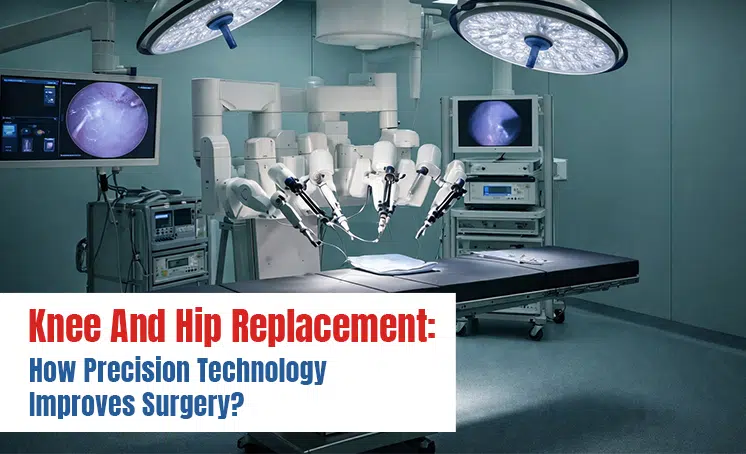
Knee And Hip Replacement: How Precision Technology Improves Surgery?

FACT CHECKED
Knee or hip arthritis can slowly take over daily life. Walking becomes painful. Climbing stairs feels harder. Even sitting, standing, or sleeping can become uncomfortable. Many people keep delaying treatment because they fear joint replacement surgery, post-surgery pain, or a long recovery.
That is where robotic joint replacement changes the discussion. It helps surgeons plan the procedure in greater detail and perform it with more precision. At PSRI Hospital, robotic precision knee and hip replacement supports advanced orthopaedic care with better implant planning, controlled execution, and recovery-focused treatment. For people exploring robotic knee replacement surgery in Delhi or trying to understand whether advanced joint replacement is worth considering, this guide explains what the technology does and how it may help.
What Is Robotic Knee And Hip Replacement Surgery?
Robotic knee and hip replacement is a joint replacement procedure performed with the support of robotic surgical technology. Depending on the patient’s condition, this may include partial knee replacement, total knee replacement, or hip replacement.
The robot does not perform the surgery on its own. The surgeon remains in control throughout the procedure. The technology helps the surgeon plan the operation with more detail and carry it out with better guidance.
What The Robotic System Helps With?
- Planning the surgery using a 3D model of the joint.
- Studying the patient’s anatomy before the procedure.
- Positioning the implant more accurately.
- Guiding the surgeon within the planned surgical area.
In simple terms, robotic surgery helps make joint replacement more precise and more personalised. This is one reason patients researching robotic assisted hip replacement often want to know how the machine improves actual treatment, not just how advanced it sounds.
Who Needs Knee Or Hip Replacement Surgery?
Knee or hip replacement is usually considered when pain and joint damage start affecting normal daily life. In some cases, when damage is limited to one part of the knee, partial knee replacement may be considered instead of total knee replacement.
It often becomes an option when medicines, physiotherapy, injections, and lifestyle changes no longer provide enough relief. At that stage, patients are not just looking for pain control. They want better movement and a longer-term solution.
Common Conditions Include
- Osteoarthritis. Wear and tear gradually damages the joint cartilage.
- Rheumatoid Arthritis. Inflammation can damage the joint over time.
- Joint Degeneration. Long-term damage can reduce smooth movement.
- Severe Joint Pain. Pain can affect walking, sleep, stairs, and routine activity.
Signs You May Need An Orthopaedic Evaluation
- Persistent Pain despite treatment.
- Joint Stiffness after rest.
- Difficulty Walking or standing for long periods.
- Reduced Movement in the knee or hip.
- Pain During Daily Tasks such as sitting, rising, or climbing stairs.
This is usually the stage where people begin comparing robotic knee replacement vs traditional methods and searching for trusted treatment options.
How Robotic Technology Improves Joint Replacement Accuracy?
Robotic technology improves joint replacement accuracy by helping the surgeon plan the surgery in detail and follow that plan more precisely.
That matters because implant alignment and positioning can affect movement, comfort, joint balance, and long-term function after surgery.
How Robotic Technology Supports Accuracy?
- 3D Planning Before Surgery – A detailed scan helps create a 3D model of the patient’s joint. This allows the surgeon to study the anatomy and plan the procedure before entering the operating room.
- Better Implant Positioning – The technology supports more accurate implant placement based on the patient’s joint structure.
- Surgical Guidance During The Procedure – The robotic platform helps the surgeon work within the intended surgical plan during bone preparation and implant placement.
- Controlled Surgical Boundaries – The system supports more controlled execution, which can help avoid unnecessary disruption to surrounding areas.
This becomes especially important in mako robotic total hip replacement, where component position can influence stability, motion, and recovery. It is also one of the reasons readers search for the benefits of robotic knee replacement surgery before making a decision.
The precision is also helpful in partial knee replacement, where accurate planning and implant positioning are important because only the damaged part of the knee is treated.
Robotic Surgery Vs Traditional Joint Replacement
Robotic surgery and traditional joint replacement aim for the same result, but robotic surgery adds more planning support and precision during the procedure.
Many patients do not just want to know which method is newer. They want to understand whether one approach may offer better accuracy and confidence in treatment.
| Aspect | Robotic Surgery | Traditional Surgery |
|---|---|---|
| Planning | Uses detailed pre-surgical planning based on the patient’s joint. | Relies more on standard planning and manual judgement. |
| Implant Positioning | Supported by technology-guided precision. | Implant placement is done manually. |
| Surgical Guidance | Provides real-time guidance during the procedure. | No robotic guidance is used. |
| Execution | More controlled within the planned surgical area. | Fully dependent on manual technique. |
| Patient Consideration | Often preferred by people comparing robotic knee replacement vs traditional approaches. | Common conventional option. |
For many readers, the real value is not the technology alone. It is whether better planning and execution may support a more confident treatment journey.
Benefits Of Robotic Knee And Hip Replacement
The benefits of robotic knee and hip replacement come from more precise planning and more controlled surgical execution. For selected patients, robotic support in partial knee replacement can also help preserve more of the natural knee while treating the damaged area with better precision.
Patients searching for the benefits of robotic knee replacement surgery usually want practical answers that relate to their recovery, comfort, and long-term movement.
Key Benefits Patients Often Want To Know About
- Better Implant Placement. This can support better alignment and smoother joint movement.
- Less Pain. More controlled surgery may reduce tissue disruption.
- Minimal Blood Loss. Precision may help reduce unnecessary surgical trauma.
- Faster Recovery. Better planning may support smoother recovery in suitable patients.
- Personalised Treatment. The surgical plan is based on the patient’s own anatomy.
- More Confidence In Treatment. Many patients feel reassured when surgery is planned in greater detail.
For hip procedures too, robotic assisted hip replacement is often discussed because accurate component placement can affect how the joint feels and functions after surgery.
Recovery After Robotic Joint Replacement
Recovery after robotic joint replacement usually focuses on early movement, physiotherapy, and a gradual return to routine activities.
The exact pace is different for every patient, but readers usually want a simple idea of what recovery may look like. This is also why many patients specifically search for robotic knee replacement surgery in Delhi when comparing hospitals and treatment pathways.
A Simple Recovery Timeline After Robotic Joint Replacement
| Recovery Stage | What Patients Can Expect |
|---|---|
| Soon After Surgery | Walking may begin with support. Pain management starts immediately. Early movement is encouraged under supervision. |
| In The First Few Days | Supervised walking continues. Basic exercises are introduced. Confidence in movement gradually improves. |
| In The First Few Weeks | Physiotherapy becomes more important. Strength and flexibility start improving. Daily activities become easier. |
| Over Time | Routine movement becomes more comfortable. Walking ability usually improves steadily. Joint function depends on healing and rehabilitation. |
Recovery is not only about the surgery itself. It also depends on follow-up care, rehabilitation, and how well the patient sticks to the advised plan.
Why Robotic Surgery Is Changing Orthopaedic Treatment?
Robotic surgery is changing orthopaedic treatment because it brings together better planning, better precision, and more personalised execution.
This matters because joint replacement is not only about removing a damaged joint. It is also about placing the implant accurately and supporting better long-term function.
Why This Matters In Modern Orthopaedics?
- Better Planning before surgery.
- More Personalised Treatment for each patient.
- Improved Implant Accuracy during the procedure.
- More Controlled Execution in the operating room.
For many patients exploring robotic hip replacement surgery in Delhi, the appeal is not just that the treatment is advanced. It is that the process may feel more carefully planned and more tailored to their condition.
Why Choose PSRI Hospital For Robotic Joint Replacement?
PSRI Hospital brings together specialist orthopaedic expertise, advanced robotic technology, and rehabilitation support for joint replacement care.
That matters because good results do not depend on the machine alone. They depend on the full treatment pathway, from evaluation to surgery to recovery.
Why Patients May Consider PSRI?
- Orthopaedic Specialists. Joint replacement care is guided by experienced orthopaedic experts.
- Advanced Robotic Technology. Precision tools support detailed planning and surgical accuracy.
- Rehabilitation Support. Recovery care helps patients regain movement with confidence.
- Multispeciality Hospital Care. Broader clinical support is available when needed.
This becomes especially relevant for people looking for robotic hip replacement surgery in Delhi or comparing advanced centres for joint replacement treatment.
Should You Seek A Second Opinion Before Joint Replacement?
Yes, seeking a second opinion before joint replacement can help you make a clearer and more informed decision.
It is especially useful if you feel unsure about the diagnosis, the timing of surgery, or whether robotic treatment is the right choice in your case.
A Second Opinion Can Help You Understand
- Whether Surgery Is Needed Now.
- Whether Non-Surgical Treatment Is Still Possible.
- Whether robotic knee replacement vs traditional surgery should be considered.
- Whether mako robotic total hip replacement may be suitable for your condition.
Conclusion
Robotic knee and hip replacement gives surgeons better planning and more precise guidance during surgery. That can support better implant placement, less tissue disruption, and smoother recovery in suitable patients. It also gives patients more clarity about how their procedure is planned and performed.
If knee or hip pain is affecting your daily life or if you’re searching for the benefits of robotic knee replacement surgery, the next step is to understand your options clearly and choose care that combines specialist orthopaedic expertise, advanced technology, and rehabilitation support. To learn more about treatment options or about mako robotic total hip replacement, book an appointment with PSRI hospital now. Call us at +91 84 84 84 84 17.
FAQs
Is Robotic Knee Replacement Better Than Traditional Surgery?
Robotic knee replacement can offer more detailed planning and more precise implant positioning than traditional manual methods. For many patients, the decision depends on whether that extra precision may support better comfort, alignment, and recovery in their case.
How Long Does Robotic Knee Surgery Take?
The duration can vary depending on joint damage, the patient’s condition, and the complexity of the procedure. The exact timing is best discussed with the orthopaedic surgeon after evaluation.
Is Robotic Hip Replacement Painful?
The aim of joint replacement is to reduce long-term pain caused by joint damage. Recovery discomfort can still happen, but many patients asking about robotic assisted hip replacement want to know whether more precise surgery may support a smoother recovery.
How Soon Can You Walk After Surgery?
Many patients begin walking with support soon after surgery, depending on their condition and the surgeon’s advice. Physiotherapy then helps improve strength, balance, and mobility over the following days and weeks.
Can Robotic Surgery Be Used For Partial Knee Replacement?
Yes, robotic technology can also be used for partial knee replacement in selected patients. It helps the surgeon plan the procedure more precisely when damage is limited to one part of the knee.