Book An Appointment
 Virtual Consultation
CMR Robotic Surgery System: Advanced Technology For Precise Surgical Procedures

FACT CHECKED
Complex surgery requires clear visualisation, precise instrument control, and minimal disruption to surrounding tissue. When people explore CMR robotic surgery in Delhi, one of the first questions they ask is how this technology improves surgical accuracy.
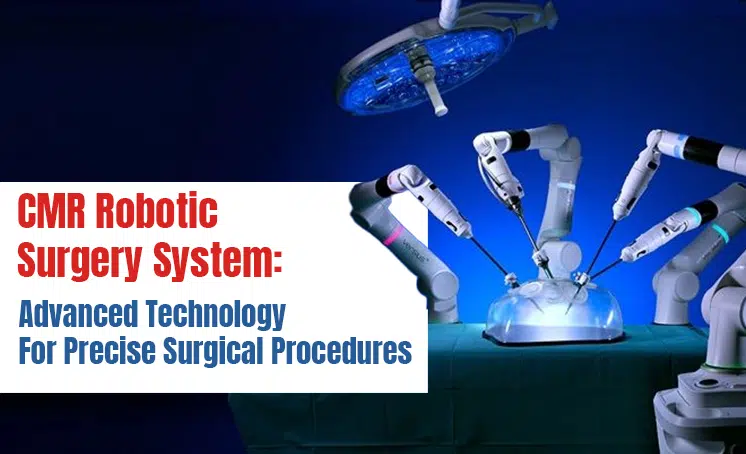
At PSRI Hospital, we use advanced robotic surgery as part of our minimally invasive surgical care. The CMR Surgical platform, known as Versius, is a next-generation robotic-assisted system designed for minimal access surgery (MAS). It combines a surgeon-controlled console, modular robotic arms, an endoscopic camera attachment, and high-definition 3D vision to support precise surgical movements through small incisions. This helps us perform complex procedures with greater precision, flexibility, and control.
In this blog, we explain how the system works, which surgeries it supports, and why it matters in modern surgical care.
What Is The CMR Robotic Surgery System?
Complex surgery requires clear visualisation, precise instrument control, and minimal disruption to surrounding tissue. When people explore CMR robotic surgery in Delhi, one of the first questions they ask is how this technology improves surgical accuracy.
At PSRI Hospital, we use advanced robotic surgery as part of our minimally invasive surgical care. The CMR Surgical platform, known as Versius, is a next-generation robotic-assisted system designed for minimal access surgery (MAS). It combines a surgeon-controlled console, modular robotic arms, an endoscopic camera attachment, and high-definition 3D vision to support precise surgical movements through small incisions. This helps us perform complex procedures with greater precision, flexibility, and control. In this blog, we explain how the system works, which surgeries it supports, and why it matters in modern surgical care.
Key Components Of The Robotic System
- Surgeon Console. We control the robotic system from a dedicated console.
- 3D High-Definition Camera System. This gives us a magnified three-dimensional view of the surgical area.
- Endoscopic Camera Attachment. This supports clear visualisation inside the body during minimal access surgery.
- Modular Robotic Arms. Independent bedside units allow flexible positioning around the patient.
- Articulated Instruments. Wristed instrument movement helps us work with refined control in confined spaces.
- Instrument Bedside Units. Up to three bedside units can be connected to wristed instruments for procedural flexibility.
This is one reason many patients exploring a CMR robotic surgery hospital in Delhi look for centres with advanced robotic infrastructure and trained surgical teams.
Which Surgeries Can Be Performed Using CMR Robotics?
We use robotic-assisted surgery across specialties where minimal access surgery and fine instrument control are important.
Common Surgeries We Perform Using Robotic Assistance
- Gastrointestinal Surgery. This includes selected upper GI, colorectal, abdominal, and digestive tract procedures.
- Urology Procedures. These may include pyeloplasty, nephrectomy, prostatectomy, and other procedures involving the kidney, bladder, and pelvic structures.
- Gynecology Surgery. This includes selected hysterectomy and other pelvic procedures.
- Hernia Surgery. Robotic assistance supports controlled dissection and suturing in selected hernia repairs.
- Gallbladder Surgery. Robotic systems may also be used in selected minimally invasive gallbladder procedures.
- Appendicitis Surgery. Robotic assistance may support selected minimally invasive appendicitis procedures.
- Fibroid Surgery. Selected gynecologic fibroid procedures may also benefit from robotic precision.
- Weight Loss Surgery. Robotic systems may support selected bariatric procedures where minimally invasive access is preferred.
This range is one reason patients searching for a CMR robotic surgery hospital in Delhi often want to understand not only the machine, but also the type of surgeries it supports.
How Robotic Surgery Improves Surgical Precision?
Robotic surgery improves surgical precision by helping us operate with stable instrument movement, high-definition 3D visualisation, and greater articulation inside the body.
Our surgeon controls every movement. The system does not operate independently. Instead, it converts the surgeon’s hand movements into precise instrument actions. This helps reduce unintended tremor, improves stability, and supports refined movement in confined anatomical areas. With robotic surgery, we are able to work with greater precision, flexibility, and control than many conventional approaches.
How The Technology Supports Precision?
- Surgeon-Controlled Robotic Arms. Every movement is directed by our operating surgeon.
- High-Definition 3D Vision. Magnified imaging improves anatomical clarity during surgery.
- Stable Instrument Movement. The system supports controlled and refined motion.
- Tremor Filtration. Robotic control helps minimise the effect of unintended hand tremor during delicate movements.
- Greater Range Of Motion. Wristed instruments help us work more precisely in narrow surgical spaces.
- Better Dexterity. The system improves visibility and manipulation compared with conventional laparoscopy in suitable cases.
This is one reason patients researching CMR robotic surgery in Delhi often compare robotic systems with standard minimally invasive options before deciding on treatment.
What Benefits Does Robotic Surgery Offer Patients?
The main benefits of robotic surgery come from minimally invasive access, controlled instrument movement, and more precise tissue handling.
- Smaller Incisions. We perform robotic procedures through small access points.
- Less Blood Loss. Controlled surgical movement may reduce tissue trauma and bleeding in suitable cases.
- Reduced Pain. Smaller incisions and less tissue handling may improve post-operative comfort.
- Shorter Hospital Stay. Many minimally invasive robotic procedures support earlier discharge.
- Quicker Recovery. Patients may return to routine activity sooner than after open surgery.
- Smaller Scars. Small incisions may also improve cosmetic outcomes.
- Smaller Chance Of Infection. Minimally invasive access may help reduce infection risk in suitable cases.
These are some of the main reasons patients compare options for CMR robotic surgery in Delhi when evaluating advanced minimally invasive surgical care.
How Does Robotic Surgery Compare With Laparoscopic Surgery?
Both robotic and laparoscopic surgery are minimally invasive, but robotic surgery gives us console-based control, 3D visualisation, and greater instrument articulation.
Laparoscopic surgery has well-known strengths, but it also has limitations such as two-dimensional imaging, restricted instrument movement, and less ergonomic surgeon positioning. Robotic surgery was developed to reduce these limitations by improving visualisation, dexterity, stability, and control.
| Aspect | Robotic Surgery | Laparoscopic Surgery |
|---|---|---|
| Instrument Control | We control robotic instruments from a console. | The surgeon directly manipulates laparoscopic tools. |
| Vision | High-definition magnified 3D view. | Usually a two-dimensional camera view. |
| Range Of Motion | Wristed instruments support greater articulation. | Instrument movement is more limited. |
| Stability | Robotic movement is highly stable and controlled. | Stability depends fully on manual handling. |
| Ergonomics | Console-based setup supports more ergonomic working positions. | Surgeon posture can be less comfortable in longer procedures. |
| Surgical Agility | Better suited to precise movement in confined spaces. | Effective, but with less robotic assistance. |
Both approaches use small incisions and a camera. The difference is that robotic surgery gives us greater precision and agility, along with better control in suitable procedures.
What is Recovery Like After Robotic Surgery?
Recovery after robotic surgery is often smoother than recovery after open surgery because the procedure is performed through smaller incisions and with less tissue disruption.
- Shorter Hospital Stay. Many patients spend fewer days in hospital.
- Earlier Mobility. Walking and basic movement often start sooner.
- Reduced Discomfort. Smaller incisions may reduce post-operative pain.
- Faster Return To Daily Activity. Recovery may be quicker in suitable minimally invasive procedures.
This recovery advantage is one reason people comparing options for a CMR robotic surgery hospital in Delhi often focus not only on the operation, but also on the expected recovery pathway.
Why Advanced Surgical Technology Improves Patient Outcomes?
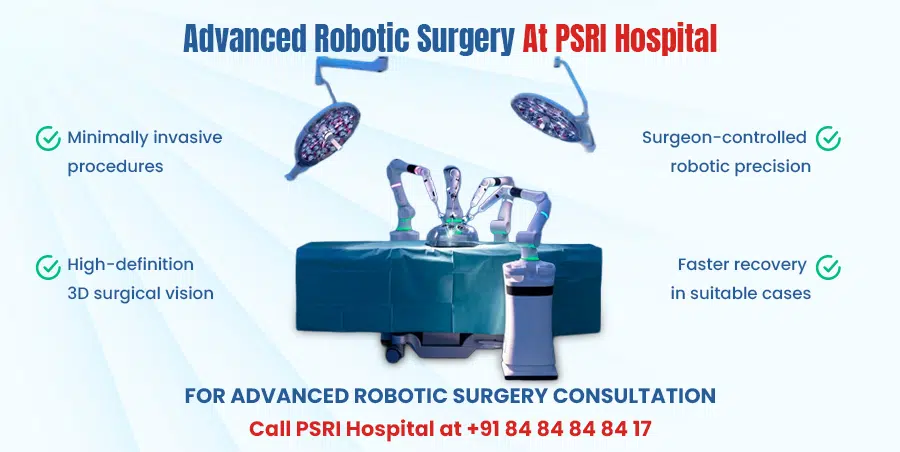
Advanced surgical technology improves patient outcomes by helping us operate with better visualisation, better control, and a more precise minimally invasive working environment.
Modern robotic platforms are designed to support complex procedures through improved imaging, refined instrument movement, and structured surgical control. In practice, this can help reduce unnecessary tissue handling and improve execution during delicate procedures. The Versius system also offers easy-to-adopt instrument control and ergonomic working positions that can help support surgeon comfort during longer procedures.
Why Technology Matters In Modern Surgery?
- Better Visualisation of anatomy and tissue planes.
- More Precise Instrument Control during dissection and suturing.
- Minimally Invasive Access with less tissue disruption.
- Improved Surgical Planning for complex procedures.
- Better Ergonomics for sustained surgical focus during longer cases.
Why Choose PSRI Hospital For Robotic Surgery?
At PSRI Hospital, we combine advanced robotic technology, specialist surgical expertise, and coordinated patient care for minimally invasive surgery.
- Advanced Robotic Surgical Infrastructure. We use robotic-assisted systems to support complex minimally invasive procedures.
- Specialist Surgical Teams. Our surgeons perform robotic procedures across relevant disciplines.
- Precision-Based Visualisation And Control. High-definition imaging and robotic instrument control support surgical accuracy.
- Structured Recovery Care. We integrate robotic surgery with post-operative monitoring and follow-up.
- Broad Procedure Support. Our robotic surgery approach supports multiple specialties and selected complex abdominal, pelvic, and urological procedures.
When patients evaluate CMR robotic surgery in Delhi and look for a CMR robotic surgery hospital in Delhi, they usually want this combination of technology, specialist expertise, and patient-focused care.
When Should You Seek A Second Opinion Before Surgery?
A second opinion is useful when the diagnosis, procedure choice, or surgical plan needs additional review.
You should consider it if:
- The Diagnosis Needs Confirmation.
- More Than One Surgical Approach Is Possible.
- You Want To Compare Robotic And Conventional Options.
- The Expected Risks Or Recovery Plan Need Clarification.
Conclusion
The CMR Surgical platform, Versius, is an advanced robotic system that supports minimally invasive surgery through surgeon-controlled precision, high-definition 3D vision, and modular robotic assistance. These features help us improve instrument control, reduce tissue disruption, and support smoother recovery in suitable procedures.
At PSRI Hospital, we use robotic surgery across multiple specialties as part of advanced surgical care backed by specialist teams and structured patient support. If you are comparing minimally invasive options or exploring a CMR robotic surgery hospital in Delhi, understanding the technology behind the procedure is an important part of making an informed surgical decision. To know more, call PSRI Hospital at +91 84 84 84 84 17.
FAQs
Is Robotic Surgery Safe?
Robotic surgery is designed to improve surgical precision and control, but our surgeon remains fully in charge throughout the procedure. Safety depends on the patient’s condition, the procedure type, and the experience of the surgical team.
What Surgeries Use Robotic Systems?
We commonly use robotic systems in gastrointestinal surgery, urology, gynecology, hernia repair, and selected colorectal or gallbladder procedures.
Does Robotic Surgery Reduce Recovery Time?
Many robotic procedures use smaller incisions and controlled tissue handling, which may support faster recovery than open surgery in suitable cases.
Is Robotic Surgery Available In Delhi?
Yes. Advanced robotic surgical systems are available at PSRI in Delhi. Patients comparing CMR robotic surgery in Delhi often look for hospitals with robotic infrastructure, experienced surgeons, and multidisciplinary surgical support.