Book An Appointment
 Virtual Consultation

How Does Poor AQI Affect Your Health? Symptoms You Should Watch For

FACT CHECKED
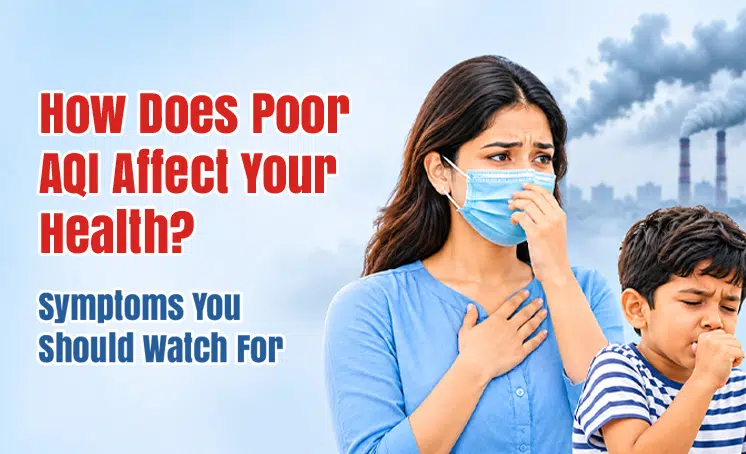
It’s a poor AQI day. Your eyes sting, your throat feels scratchy and your chest feels tight. Is it the air, or something else?
So how does poor AQI affect your health? Your eyes, nose and throat react first. With longer exposure, even healthy people can develop breathing problems, and people with heart or lung conditions can fall ill fast. Knowing which symptoms to watch for tells you when to stay indoors and when to call a doctor.
At PSRI Hospital, Sheikh Sarai, New Delhi, our pulmonology team treats asthma, pneumonia and other chest diseases, and an emergency call reaches a 24 hour helpline. We’ve cared for patients since 1996, and NABH and NABL accredit us. Read on for the AQI bands, the symptoms to watch for and what to do.
What Does a Poor AQI Mean for Your Body?
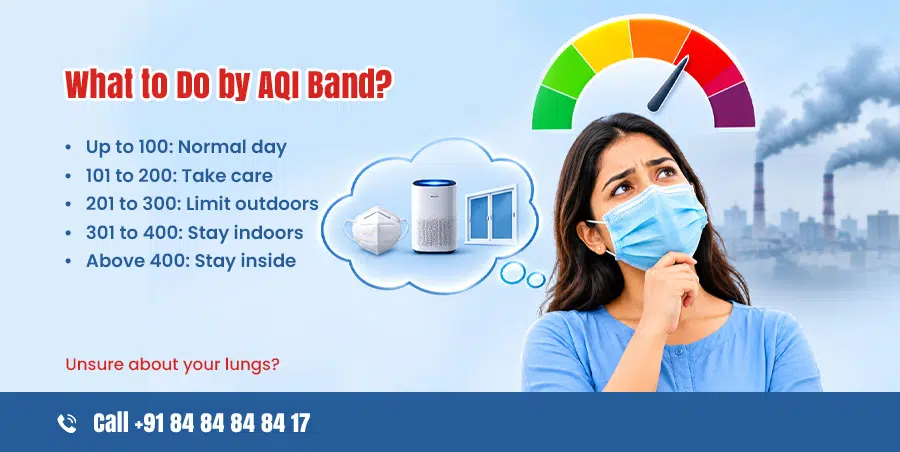
A poor AQI, a reading of 201 to 300, can cause breathing discomfort in healthy people after long exposure. Vulnerable people can feel it after a short time. AQI, the Air Quality Index, is a 0 to 500 scale that turns air pollution readings into one number. These bands come from India’s national index, as listed in the health ministry’s advisory on air pollution and health.
| AQI | Category | What It Can Do to You |
|---|---|---|
| 0 to 50 | Good | Low risk |
| 51 to 100 | Satisfactory | Minor breathing discomfort in vulnerable people |
| 101 to 200 | Moderate | Breathing or other discomfort in vulnerable people |
| 201 to 300 | Poor | Breathing discomfort in healthy people after prolonged exposure |
| 301 to 400 | Very Poor | Respiratory illness in healthy people after prolonged exposure |
| 401 to 500 | Severe | Serious illness in vulnerable people, even after short exposure |
Delhi’s own data shows why the bands matter. A 2024 study in The Lancet Planetary Health looked at 10 Indian cities. It found PM2.5 above the WHO limit accounted for 7.2% of daily deaths overall and 11.5% in Delhi. PM2.5 means particles smaller than 2.5 micrometres, small enough to reach deep into your lungs.
The same study found daily deaths rose 1.42% for every 10 µg/m³ increase in PM2.5 over two days. Nationally, the Health Effects Institute’s State of Global Air 2025 report counted more than 2 million air pollution deaths in India in 2023.
Which Symptoms Should You Watch For?
Irritated eyes, nose and throat, cough, wheezing, chest discomfort and giddiness are the main symptoms the health ministry lists. Here’s how they sort by body area:
- Eyes, Nose and Throat: Red or watery eyes, a scratchy or sore throat, a runny or blocked nose and a dry cough.
- Chest and Lungs: Wheezing, which is a whistling sound when you breathe out, along with breathlessness, chest discomfort and repeat upper respiratory infections.
- Head and Heart: Giddiness and chest pain.
Longer exposure is linked to bigger problems. The advisory names asthma flare-ups, bronchitis, COPD, heart disease and stroke. Asthma is a condition where the airways narrow and swell. Bronchitis is inflammation of the airways, and COPD is a long term lung disease that blocks airflow.
Is It the AQI or Something More Serious?
Symptoms alone can’t tell you. Pollution and illness can look the same, so the pattern matters. Pollution symptoms usually follow the air: worse on high AQI days, better indoors or when the air clears.
Get checked if symptoms don’t follow that pattern. That includes a cough that lasts for weeks, fever, or chest pain that comes with effort. A doctor can sort out the cause. Don’t guess, and don’t wait for the AQI to drop.
Who Is at Higher Risk on Poor AQI Days?
Children under five, older adults, pregnant women and people with heart or lung conditions face the highest risk. The health ministry advisory also names people whose work or home puts them in dirty air:
- Outdoor workers, such as traffic police, construction workers, road sweepers, auto drivers and roadside vendors
- People who cook on wood, dung or other biomass fuel
- People who sweep dust during housework
- People with poor nutrition or housing
What Can You Do on a Poor AQI Day?
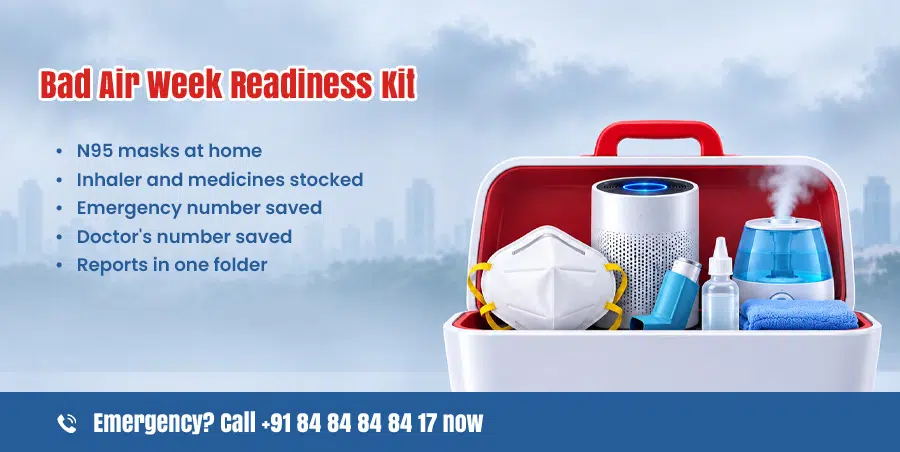
Cut your exposure first. These steps come from the health ministry’s advisory:
- Check the AQI Before You Go Out: Skip outdoor exercise in the early morning and late evening.
- Time Your Fresh Air: Open windows mainly between 12 pm and 4 pm.
- Wear a Fitted N95 or N99 Mask: It can help for short exposures. Cloth, paper masks and scarves don’t work.
- Clean Without Raising Dust: Wet mop instead of sweeping, and don’t burn incense, mosquito coils or waste indoors.
- Look After Your Eyes and Throat: Rinse your eyes with running water and gargle with warm water.
- Keep Your Medicines Handy: If you have asthma or a heart condition, follow your doctor’s plan and limit hard exercise.
For indoor air, the advisory suggests purifiers that don’t produce ozone.
When Do Symptoms Need a Doctor, and When Is It an Emergency?
See a doctor for breathlessness, dizziness, a cough that won’t go away, chest pain or eye irritation that persists. That’s the health ministry’s advice.
Treat these signs as an emergency:
- Severe breathlessness, or trouble speaking in full sentences
- Chest pain with sweating or pain spreading to the arm
- Fainting or sudden confusion
- Weakness on one side or slurred speech
Save +91 84 84 84 84 17 in your phone before the next bad air week. For a 24 hours emergency hospital near me, call it or go to the nearest emergency department. Our 24×7 emergency service handles these calls.
At the visit, the doctor asks about your symptoms and listens to your chest. They may order spirometry, a breathing test that measures how much air you can blow out and how fast. A chest X-ray, a quick image of your lungs, may follow.
Book a Chest and Breathing Check at PSRI Hospital, New Delhi
Start with the right specialist, not a hospital list. If your cough won’t clear and you’ve been looking up the best hospital in New Delhi or a top 10 hospital in Delhi, first decide which doctor you need. A pulmonologist, a lung specialist, handles cough, wheeze and breathlessness. A cardiologist handles chest pain.
Book a lung check if your symptoms return every bad air season, you’re using your inhaler more often, or a child or parent with asthma struggles on poor AQI days. Our pulmonology, critical care and sleep medicine department treats asthma, COPD, pneumonia and tuberculosis. It offers spirometry and bronchoscopy, a test that uses a thin camera tube to look inside the airways, plus intensive care. A preventive health check-up gives you a baseline before the next bad air week.
Patients from Saket, Malviya Nagar and Hauz Khas can reach us at Press Enclave Marg, Sheikh Sarai II, near Saket Court.
Call +91 84 84 84 84 17 to book an appointment at PSRI Hospital.
Frequently Asked Questions
What AQI Is Harmful to Health?
Harm starts at lower numbers for vulnerable people. The health ministry’s bands show minor discomfort at 51 to 100 and discomfort at 101 to 200 for vulnerable people. From 201, healthy people can feel breathing discomfort after prolonged exposure.
Can Poor AQI Affect Healthy People?
Yes. At 201 to 300, healthy people can have breathing discomfort after prolonged exposure. At 301 to 400, prolonged exposure can cause respiratory illness even in healthy people.
Do N95 Masks Protect You From Poor AQI?
A properly fitted N95 or N99 mask can help for short exposures, according to the health ministry’s advisory. Paper masks, cloth and scarves aren’t effective. A loose fit lets polluted air leak in.
Can Poor AQI Affect Your Heart?
Yes. The health ministry advisory links air pollution to heart disease and stroke, along with chest discomfort and pain. If chest pain comes with sweating or breathlessness, treat it as an emergency.
Which Doctor Should You See for AQI Symptoms?
Start with a general physician or a pulmonologist for cough, wheezing or breathlessness. A cardiologist, a heart specialist, can check chest pain.
Should Children and Older Adults Stay Indoors on Poor AQI Days?
The advisory names children under five and older adults as vulnerable groups. It advises limiting exposure and staying indoors on poor to severe days.