Book An Appointment
 Virtual Consultation
Monsoon Allergies vs Chest Infection: Symptoms, Causes & Differences

FACT CHECKED
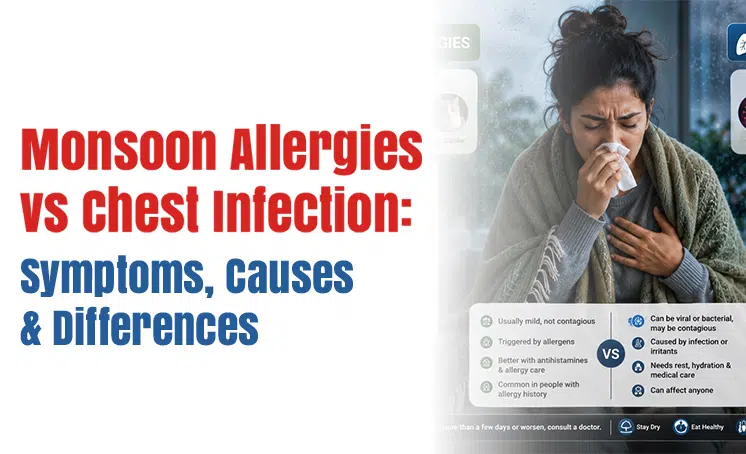
A runny nose and a nagging cough show up every monsoon, and it’s never quite clear if this is just seasonal allergies again or something turning into a proper chest infection.
The two conditions share enough symptoms to confuse almost anyone standing in a pharmacy, unsure whether to reach for an antihistamine or something stronger. Fever is usually the giveaway. Allergies rarely cause one, and a chest infection almost always does.
PSRI Hospital ENT and Pulmonology teams see this confusion every rainy season, since 1996. And telling the two apart early changes the entire treatment path. Let’s understand the monsoon allergies vs chest infection in detail.
Monsoon Allergies Vs Chest Infection: Symptoms, Causes & Differences
The core difference comes down to one thing: monsoon allergies are the immune system overreacting to something harmless, while a chest infection means a virus or bacteria has actually settled into the airways. That distinction explains almost everything else, including symptoms, causes & differences, and why one clears up the moment the trigger disappears while the other doesn’t.
None of this is obvious at first glance, but the signs show up clearly.
- Allergies bring itching and a clear runny nose that can drag on for weeks.
- A chest infection brings fever first. The cough that follows usually carries thicker mucus and gets worse before it gets better.
What Are The Symptoms Of Monsoon Allergies Vs A Chest Infection?
Monsoon allergy symptoms tend to be itchy and persistent, without making a person feel truly unwell overall.
- Sneezing and a runny or blocked nose
- Itchy, watery eyes
- An itchy throat or scratchy feeling at the back of the mouth
- A dry cough that lingers without much mucus
Chest infection symptoms don’t creep in the same way. They feel heavier and usually come on faster.
- Fever, sometimes with chills
- A cough that brings up yellow or green mucus
- Chest tightness or genuine discomfort when breathing
- Fatigue that goes beyond the usual tiredness of a cold
Allergy vs Chest Infection
| Feature | Monsoon Allergy | Chest Infection |
|---|---|---|
| Fever | Rare | Common |
| Mucus | Clear, watery | Thick, yellow or green |
| Duration | Persists while trigger is present | Usually resolves in 1 to 2 weeks |
| Other signs | Itchy eyes, nose, throat | Body aches, fatigue, chest discomfort |
What Causes Monsoon Allergies?
Damp conditions during monsoon don’t just feel unpleasant, they create ideal breeding grounds for the things that trigger allergic reactions.
- Mould grows fast on walls and damp furniture once humidity climbs.
- Dust mites multiply just as quickly in that same moisture.
- Pollen doesn’t disappear just because the rain’s started. It still circulates during breaks between showers, catching people off guard.
For someone already prone to allergies, any one of these triggers can set off the familiar sneezing and itching within minutes of exposure.
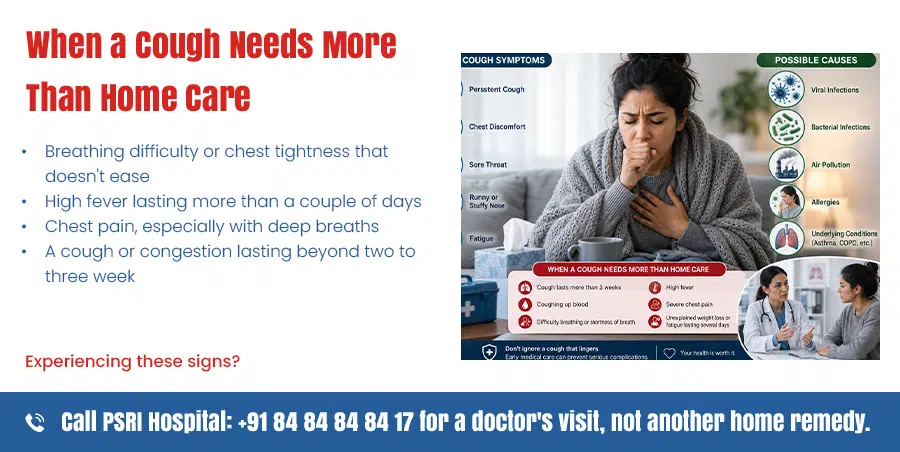
What Causes A Chest Infection During Monsoon?
Cold, damp air weakens the airway’s natural defenses. Viruses spread more easily indoors too, since everyone’s stuck avoiding the rain in the same closed rooms. Most chest infections start as a viral cold that moves down into the airways.
A smaller share turns bacterial, and that shift usually isn’t subtle, worsening fever or mucus that changes color partway through the illness gives it away.
Left untreated, a chest infection can progress into bronchitis or, in more serious cases, pneumonia. Children and older adults face a higher risk of that progression, and so does anyone with an existing lung condition. PSRI Hospital, a multispeciality hospital, New Delhi, ENT and Pulmonology teams can settle it a lot sooner, often in a single visit.
Why Does Delhi’s Air Feel Even Harder To Breathe Once Monsoon Hits?
Delhi’s pollution doesn’t take a break for the monsoon, it just changes shape. Humid air makes fine particulate pollution heavier and slower to clear, so it lingers closer to the ground instead of dispersing the way it might on a dry, windy day. That means
- Someone with allergies is breathing in more irritants at once
- Someone fighting a chest infection is doing it with air that’s already working against healing lungs.
It’s part of why Delhi doctors see both conditions spike together during the rains. Staying indoors during peak traffic hours and using an air purifier on the most humid days helps more here than it would in a drier city.
Where Can You Get Treatment In Delhi?
PSRI Hospital ENT department evaluates allergy-driven symptoms like a blocked nose or itchy throat, while Pulmonology handles chest infections that need a closer listen and, when necessary, a chest X-ray.
As one of the best hospital in Delhi for this kind of seasonal overlap, PSRI doesn’t leave a patient guessing which department to see first. A quick evaluation sorts out whether the issue’s sitting in the nose and throat or has already moved into the chest, and the right specialist takes it from there.
Being a multispeciality hospital in New Delhi families already trust for other conditions. A parent dealing with allergy-driven sinus pressure and a child running a fever from a chest infection can both get seen on the same visit, rather than booking two separate appointments across two different clinics.
For anyone specifically searching for the best ENT doctor in Delhi NCR because of a persistent blocked nose or throat irritation this season,
Call : +91 84 84 84 84 17
Visit: Press Enclave Marg, Sheikh Sarai II, Near Saket Court, New Delhi – 110017 and book a consultation with PSRI Hospital.
Frequently Asked Questions
Can monsoon allergies turn into a chest infection?
Not directly, but it can set the stage for one. It’s the constant congestion building up, not the allergy itself, that lets a secondary infection take hold.
How can you tell if a cough is an allergy or infection?
Fever usually points to infection. An itchy throat with clear mucus and no fever points toward allergy instead.
Do antihistamines help with a chest infection?
Not much, no. They’ll ease sneezing and itching, but they won’t touch a genuine infection underneath it.
When should a persistent cough see a doctor?
See a doctor if a cough drags on, past two weeks. A fever alongside it, or mucus that’s turned colored, is reason enough to go sooner.