Book An Appointment
 Virtual Consultation
Heatstroke vs. Heat Exhaustion: When Should You Rush to the Emergency Room?

FACT CHECKED
Heat-related illness can begin with a rash, cramps, dizziness, or unusual tiredness after too much sun exposure. If the body keeps heating up and loses its ability to cool itself properly, the condition can worsen from heat exhaustion to heatstroke.
That is why understanding heatstroke vs. heat exhaustion matters. One may improve with early cooling and fluids. The other can become life-threatening within a short time.
At PSRI, a multispeciality hospital in New Delhi, patients with dehydration, weakness, vomiting, confusion, or other heat-related symptoms can access 24×7 emergency evaluation. This blog explains the difference between heat exhaustion and heatstroke, what symptoms to watch for, when to rush to the emergency room, and what to do before medical help arrives.
What Is The Difference Between Heatstroke And Heat Exhaustion?
The difference between heatstroke vs. heat exhaustion is not only the severity of symptoms. It is the point at which the body stops coping with heat.
Heat exhaustion usually happens when the body loses too much water and salt through heavy sweating. The person may feel weak, dizzy, nauseated, or heavily fatigued. Circulation becomes strained, and the body starts struggling to maintain stability.
Heatstroke is more dangerous because the body’s temperature-control system begins to fail. Body temperature rises quickly, cooling becomes ineffective, and the brain may start getting affected. This is why heatstroke can lead to confusion, slurred speech, collapse, seizure, or unconsciousness.
| Feature | Heat Exhaustion | Heatstroke |
|---|---|---|
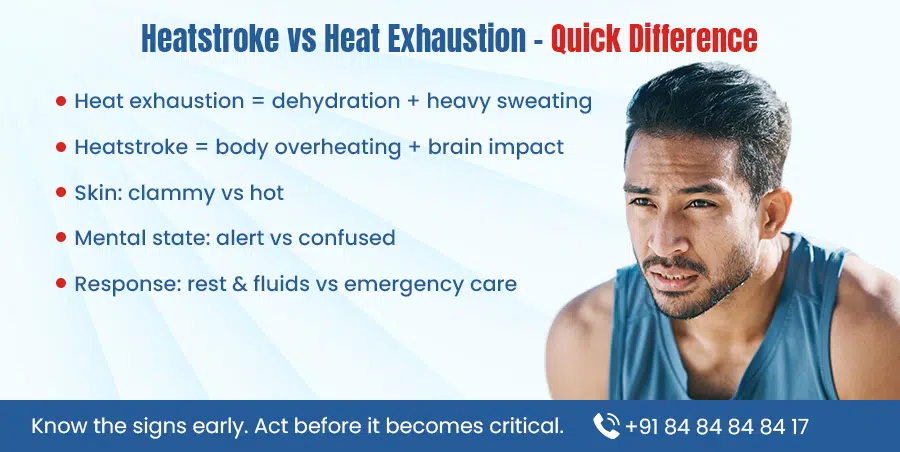
| What it means | Body is losing too much water and salt | Body can no longer control temperature |
| Common symptoms | Heavy sweating, weakness, dizziness, headache, nausea, thirst | Confusion, slurred speech, collapse, seizure, very high body temperature |
| Skin | Often cool, pale, clammy | Hot skin, dry or sweaty |
| Mental state | Usually tired, weak, dizzy | Altered, confused, irritable, unconscious |
| Can it improve with cooling? | Often yes, if treated early | No, this needs emergency care |
| Emergency level | Urgent if worsening | Medical emergency |
| First action | Cooling, rest, fluids if alert | Emergency care and rapid cooling |
A simple way to understand it is this:
- Heat exhaustion mainly affects fluid balance, circulation, and physical stability
- Heatstroke affects temperature control, mental status, and can quickly threaten vital organs such as the brain, kidneys, heart, and liver
Heat-related illness may also begin with earlier warning signs such as heat rash or heat cramps. Heat rash appears as small red or blister-like bumps, often in skin folds. Heat cramps are painful muscle spasms that usually affect the arms, legs, or abdomen.
What Are The Symptoms Of Heat Exhaustion?
Heat exhaustion usually develops after long exposure to heat, especially when dehydration, physical activity, or poor cooling are involved.
Symptoms of heat exhaustion may include:
- Heavy sweating
- Headache
- Dizziness
- Weakness or unusual tiredness
- Nausea or vomiting
- Thirst
- Muscle cramps
- Fast but weaker pulse
- Cool, pale, or clammy skin
- Reduced urine output
Heat exhaustion may improve with quick cooling, fluids, rest, and a cooler environment. Even then, it should not be ignored, because worsening symptoms can progress to heatstroke.
What Are The Symptoms Of Heatstroke?
Heatstroke is a medical emergency. It is not safe to monitor at home once brain-related or collapse-type symptoms begin.
Symptoms of heatstroke may include:
- Confusion
- Slurred speech
- Irritability or unusual behaviour
- Fainting or collapse
- Seizure
- Unconsciousness
- Very high body temperature
- Hot skin
- Fast breathing or a strong, rapid pulse
This is the most important part of heatstroke vs. heat exhaustion: once mental confusion, collapse, seizure, or reduced consciousness appears, urgent emergency care is needed.
When Should You Rush To The Emergency Room?
You should rush to the emergency room when heat illness is no longer limited to tiredness, sweating, or cramps and starts showing signs of neurological involvement, persistent vomiting, or failure to improve with cooling.
Urgent medical evaluation is needed if symptoms worsen, vomiting begins, or the person does not improve after active cooling.
Go to the ER Immediately If the Person Has:
- Confusion or disorientation
- Slurred speech
- Fainting or collapse
- Seizure
- Inability to stay awake
- Repeated or continuous vomiting
- Very hot skin with worsening condition
- No improvement after cooling
- Breathing difficulty, severe weakness, or rapidly worsening symptoms
Why are These Signs Dangerous?
These signs suggest the body may now be facing:
- Brain dysfunction
- Falling blood pressure
- Severe dehydration
- Electrolyte imbalance
- Kidney stress
- Multi-organ complications
Do not wait for every red flag to appear together. In hot weather, even one major neurological or collapse-type symptom is enough to treat the situation as an emergency.
Who Is Most At Risk During Extreme Heat?
Extreme heat does not affect everyone in the same way. Some people become unwell earlier because they lose fluids faster, tolerate heat poorly, or have less reserve when body temperature rises.
Higher-risk groups include:
- Older adults
- Infants and young children
- People with heart, lung, kidney, or other chronic medical conditions
- Outdoor workers
- Athletes and manual labourers
- People with fever, diarrhoea, or vomiting
- People who are already dehydrated
- People who are not yet acclimatised to hot weather
- People taking medicines that affect fluid balance or heat tolerance
Risk also rises when heat exposure is combined with:
- High humidity
- Direct sun for long hours
- Strenuous physical effort
- Poor hydration
- Tight or non-breathable clothing
- Delayed cooling or delayed rest
That is why the clinical setting matters as much as the symptom list. A frail older adult may mainly show weakness or confusion. A younger person working outdoors may first present with cramps, dizziness, or dark urine.
What Should You Do Before Medical Help Arrives?
First aid should begin immediately, but it should also match the severity of the condition. The goal is to stop further heat exposure, start cooling quickly, and avoid doing anything unsafe while waiting for medical care.
If it Looks Like Heat Exhaustion
- Stop physical activity immediately
- Move the person to shade, a cool room, or an air-conditioned space
- Loosen or remove extra clothing
- Apply cool wet cloths to the skin
- Wash the head, face, and neck with cool water if possible
- Offer frequent small sips of cool water only if the person is fully awake and not vomiting
If symptoms do not improve quickly, or if vomiting, worsening weakness, or altered alertness begins, do not continue home care. Move to urgent medical evaluation.
If Heatstroke is Suspected
- Call emergency medical help immediately
- Move the person to the coolest available place
- Remove excess clothing
- Cool the body aggressively with cool water, wet cloths, or ice packs
- Place cold wet cloths or ice on the head, neck, armpits, and groin
- Fan the person to improve evaporative cooling
- Stay with the person until help arrives
Do not:
- Force water or oral fluids if the person is confused, drowsy, vomiting, or unconscious
- Leave the person alone
- Delay hospital transfer while trying repeated home remedies
Where To Get Emergency Care For Heatstroke In Delhi?
If someone has confusion, collapse, seizure, severe vomiting, or no improvement after cooling, emergency evaluation should not be delayed.
At PSRI, a multispeciality hospital in New Delhi, the 24×7 Emergency Care Department supports patients with monitored beds, ventilator facility, and emergency evaluation for critically ill cases. The emergency team is backed by multispeciality support when complications need broader medical management.
This matters because severe heat-related illness is not only about cooling. In more serious cases, patients may need IV fluids, oxygen support, close monitoring, and escalation to critical care.
For families looking for the best hospital in Delhi during a heat emergency, access to emergency physicians and multispeciality backup under one roof can make a real difference.
Conclusion
The difference between Heatstroke vs. Heat Exhaustion comes down to severity, brain involvement, and urgency. Heat exhaustion may improve with cooling and fluids, but heatstroke is a medical emergency that needs immediate treatment.
If there is confusion, collapse, seizure, repeated vomiting, or no improvement after cooling, do not wait. Seek emergency care.
At PSRI, a multispeciality hospital in New Delhi, patients with serious heat-related symptoms can access 24×7 emergency care and specialist evaluation when needed. For many families, that level of readiness is exactly what they expect from the best hospital in Delhi in an emergency. Call to book an appointment: +91 84 84 84 84 17.
Frequently Asked Questions
Is Heat Exhaustion The Same As Heatstroke?
No. Heat exhaustion is serious but less severe. Heatstroke is a medical emergency in which the body overheats dangerously and brain function may be affected.
Can Heat Exhaustion Turn Into Heatstroke?
Yes. If heat exhaustion is not treated quickly, it can worsen and turn into heatstroke.
When Should I Go To The ER For Heat Illness?
Go to the ER if there is confusion, fainting, seizure, slurred speech, repeated vomiting, or no improvement after cooling.
What Should I Do First For a Suspected Heatstroke?
Move the person to a cooler place, start cooling immediately, and seek emergency medical care without delay.
Who Is Most At Risk During Extreme Heat?
Older adults, infants, young children, outdoor workers, athletes, dehydrated people, and those with chronic medical conditions are at higher risk during extreme heat.