Book An Appointment
 Virtual Consultation
Heat Stroke vs Exhaustion: Symptoms, Risk and Prevention

FACT CHECKED
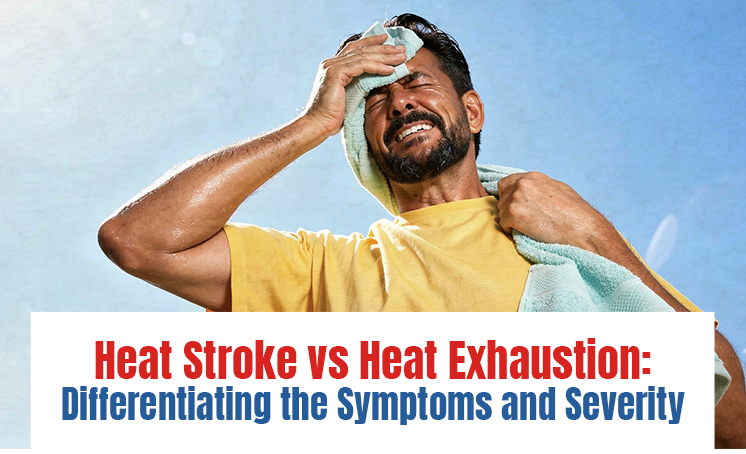
It is peak summer in Delhi. Someone near you comes back from outside looking pale, dizzy, and unsteady. You give water and make them sit. But now you are wondering; Is this something that will settle in a few minutes, or is dangerous?
That is the difference between heat stroke vs heat exhaustion. One is the body under serious heat stress and the other is a life-threatening emergency. The problem is that they can look similar and people often lose time trying to guess.
At PSRI Hospital, heat emergencies are handled with the seriousness they deserve, because once the body starts losing control of temperature, the effects may go beyond weakness and dehydration. Emergency care, ICU support, and lab services are all in-house, which matters when heat illness starts affecting more than one organ.
This blog sets heat stroke and exhaustion apart, makes you understand the warning signs, know what to do immediately, and when home care is not enough.
What Is The Difference Between Heat Stroke And Heat Exhaustion?
Heat exhaustion is a serious heat illness where the body is trying to cool itself. Whereas heat stroke is a medical emergency where the cooling system starts failing and the brain gets affected.
The difference is not just temperature, but also mental state. A person with heat exhaustion feels awful but can still answer questions. A person with heat stroke may be confused, aggressive, or unconscious.
| Feature | Heat Exhaustion | Heat Stroke |
|---|---|---|
| Body temperature | Usually 38°C to 40°C | Usually above 40°C |
| Skin | Cool, pale, clammy | Hot, red, dry or flushed |
| Sweating | Heavy sweating | Sweating may stop in classic cases |
| Mental state | Alert, tired, can respond | Confused, disoriented, unconscious |
| Pulse | Fast but weaker | Fast and stronger |
| Severity | Serious | Life-threatening |
Think of it this way.
Heat Exhaustion is the body’s warning. Heat Stroke is the body starting to lose control.
What Symptoms Of Heat Exhaustion Should You Watch For?
Heat exhaustion is when the body is overheating, losing water and salt, but still trying to protect itself. It needs fast action, but there is a chance to reverse before it becomes an emergency. The symptoms are:
- Heavy sweating
- Cool or pale skin
- Dizziness
- Nausea or vomiting
- Muscle cramps in the legs or abdomen
- Tiredness
- Headache
- Body temperature <40°C
Cool skin does not mean the person is fine, but it means the body is still sweating hard to cool down. Which is better than hot, dry skin, that means the person is under real heat stress.
If symptoms start improving within a short time after cooling it can be heat exhaustion. If they do not, the situation is not mild.
What Symptoms Of Heat Stroke Mean It Is Already An Emergency?
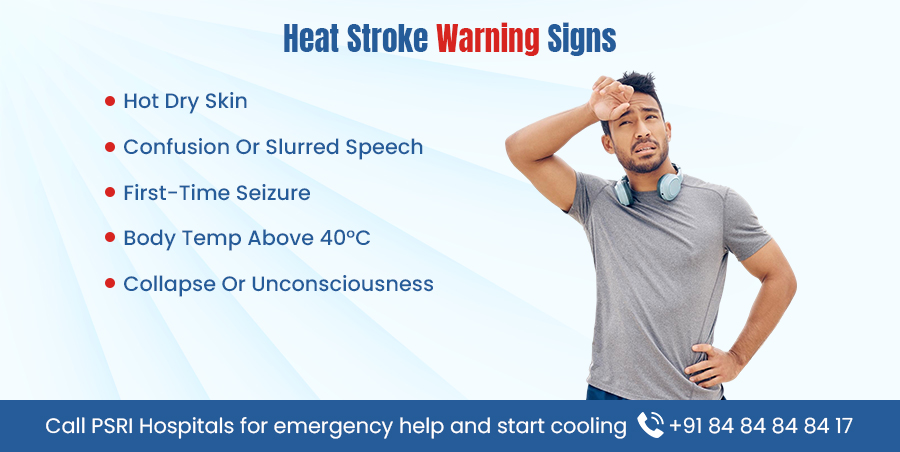
Heat stroke is a high level of heat illness where body temperature rises extremely and the brain starts getting affected. That is why the best hospital in Delhi is needed. Watch for these signs:
- Body temperature above 40°C
- Hot, red, dry skin in classic heat stroke
- Rapid, strong pulse
- Slurred or incoherent speech
- Seizures
- Collapse or unconsciousness
If the person does not know where they are, cannot answer clearly, or passes out, treat it as Heat Stroke unless proved otherwise.
Who Is At Higher Risk During Delhi Summer?
Some people move from heat exhaustion to heat stroke faster than others. In Delhi summer, risk is higher in older adults, young children, outdoor workers, people with diabetes, heart disease, kidney disease, and those taking certain medicines.
Classic heat stroke can build over hours or even days, in elderly people staying in hot rooms without enough airflow or cooling.
People taking diuretics, antihistamines, antipsychotics, or some blood pressure medicines need extra care because such medicines can reduce the body’s ability to regulate heat. This is why one person recovers with rest while another may crash quickly in the same heat.
What Should You Do In The First Ten Minutes?
The first few minutes matter because the early response can decide whether the body cools down safely or keeps getting worse. The action is not exactly the same for heat exhaustion and Heat stroke.
If You Suspect Heat Exhaustion
- Move the person to a cooler area
- Make them lie down
- Loosen or remove extra clothing
- Give cool water or ORS
- Apply wet cloths
If You Suspect Heat Stroke
- Call A multispeciality hospital in Delhi
- Move the person to a cooler place
- Remove outer clothing
- Place ice packs on the neck
- Do not give fluids if they are semi-conscious
- Do not give paracetamol or aspirin
How Can You Prevent Heat Exhaustion And Heat Stroke?
Prevention in Delhi summer does not mean avoiding heat completely. For most people, that is not realistic. It means reducing body stress before it reaches a dangerous point. The most useful steps are simple:
- Drink water through the day
- Use ORS if sweating is heavy
- Avoid outdoor heat during peak times
- Wear loose, comfortable cotton clothes
- Take shade breaks if working outside
- Never leave children or older people in parked cars
- Ask your doctor about heat risk if you take medicines
Heavy meals and alcohol also make heat stress harder on the body. Lighter meals, better hydration, and earlier breaks can make a real difference.
When Should You Stop Home Care And Go To Hospital?
Home care should stop the moment mental state changes, the person cannot keep fluids down, symptoms are not improving, or body temperature is dangerously high. That is the line between waiting and risking too much. Go to the best hospital in Delhi if:
- Person becomes confused
- Collapse or lose consciousness
- Body temperature is above 40°C
- Vomiting continues
- Symptoms do not improve within 30 minutes
Emergency Heat Care At PSRI: Multispeciality Hospital in Delhi
If the person has a high temperature, or does not improve after early cooling steps, it is time to move beyond home care. Heat emergencies can affect the kidneys, liver, brain, and heart at the same time, so one-department care is not enough.
PSRI Hospitals treat heat stroke vs heat exhaustion by providing 24-hour emergency support, along with nephrology, neurology, cardiology, and NABL-accredited lab support. If you are dealing with a serious heat emergency, get medical help without delay. Call: +91 84 84 84 84 17
Frequently Asked Questions
What is the difference between heat stroke and heat exhaustion?
The main difference is in the level of severity and mental state. Heat exhaustion causes heavy sweating, weakness, dizziness, but the person stays alert. Heat stroke is a situation when body temperature rises dangerously high and the person becomes confused, or unconscious.
Can heat exhaustion turn into heat stroke?
If heat exhaustion is not treated quickly, the body can stop cooling itself properly and the condition may progress to heat stroke. That is why early action matters.
What is the first warning sign of heat stroke?
A change in mental state is one of the early warning signs of heat stroke. If the person becomes confused, starts talking unclearly, has a seizure, or collapses, treat it as heat stroke and get professional help.
How long should I wait before going to the hospital for heat exhaustion?
If the person does not improve from heat exhaustion within about 30 minutes after cooling, rest, and fluids, they should be taken for medical evaluation. Go sooner if they are older, very young, or have other health problems.
Can heat stroke happen indoors?
Heat stroke can happen indoors, during extreme heat when rooms stay hot for long hours without proper cooling. Older adults and people living alone are at higher risk.