Book An Appointment
 Virtual Consultation
Bronchopneumonia: Symptoms, Causes, Treatment, and Recovery

FACT CHECKED

When someone in the family has fever, cough, chest tightness, and starts feeling breathless, the worry becomes real. Many people assume it is “just a cold,” but if symptoms keep getting worse, it can point to bronchopneumonia. The biggest fear is not the name. The fear is whether breathing will get difficult and whether the infection will spread.
Here is the direct answer: bronchopneumonia is treatable, and most patients recover well when diagnosis and treatment start early. The right medicines, oxygen support when needed, and proper follow-up reduce the risk of complications and speed up bronchopneumonia recovery.
At PSRI Hospital, patients receive expert respiratory care from an experienced team, backed by advanced testing and critical care support when required. If you are searching for the best pulmonologist in Delhi NCR or a trusted best hospital in Delhi for lung infections, PSRI offers clear evaluation, timely treatment, and guided aftercare for complete recovery.
Book your appointment with our experts now at +91084848048417.
What Is Bronchopneumonia?
This is pneumonia which causes infection and inflammation in small patches in the lungs, particularly in the bronchi and surrounding tissue. In this oxygen level can drop causing the patient to feel breathless. It occurs when an infection spreads, leading to swelling, fluid buildup, and difficulty breathing.
What Are Different Stages of Bronchopneumonia ?
Bronchopneumonia typically progresses through different stages, depending on the severity of the infection and the individual’s immune response.
- Early Infection – It starts with the airways. Symptoms such as fever, fatigue, mild fever and cough may appear.
- Progression Stage – Infection starts spreading in the lungs. Symptoms include high fever, chest pain, shortness of breath, and a worsening cough with mucus.
- Severe Stage – Breathing becomes extremely difficult and symptoms such as confusion, rapid breathing, and bluish skin or lips may appear.
Who Is Most at Risk?
- Infants and kids below 5.
- Adults who are 65 or above.
- People with diabetes, heart disease, asthma, or COPD.
- Patients with weak immune systems.
- Smokers and alcohol users.
What Are The Early And Advanced Symptoms Of Bronchopneumonia ?
It starts with fever, cough, and tiredness. As the infection grows, symptoms such as breathing difficulty, chest pain and confusion, may appear in older adults. Early treatment helps prevent serious complications.
Common Early Symptoms
- Fever and cold.
- Persistent cough.
- Weakness.
- Headache and body pain.
Breathing-Related Warning Signs
- Shortness of breath.
- Rapid breathing.
- Chest pain while coughing or breathing.
- Wheezing sounds.
Symptoms In Children And Elderly Patients
- Poor feeding or vomiting in infants.
- Rapid breathing in kids.
- Confusion or drowsiness in elderly patients.
Warning Signs Of Severe Infection
- Bluish lips or nails.
- Very high fever.
- Severe breathing difficulty.
- Sudden confusion.
What Are The Causes Of Bronchopneumonia?
Bronchopneumonia can be caused by bacteria, viruses, or fungi. It is very common in young children, older adults, smokers, and people with weak immunity or chronic diseases.
- Bacterial Infection– Streptococcus pneumoniae is the bacteria which most commonly causes bronchopneumonia.
- Viral Infection- Viruses like influenza and RSV can cause bronchopneumonia in children.
- Fungal Infection- Fungal infections may occur in people with very weak immunity.
What Risk Factors Increase The Chances Of Having Bronchopneumonia?
Children below 5 and adults above 65 years are at higher risk of bronchopneumonia. Habits such as smoking and consumption of alcohol can increase the chances of getting bronchopneumonia.
- Age-Related Risk Factors
Infants and aged people are mostly at risk usually because they have weak lung systems.
- Weak Immunity System Conditions
People with cancer, HIV, or who take steroids for a long time have weak immunity. This increases the chances of having bronchopneumonia.
- Lung and Heart Diseases
People who have asthma, COPD, heart failure, and diabetes raise susceptibility.
- Lifestyle Factors
People who smoke, or consume alcohol are at risk as well.
How Is Bronchopneumonia Diagnosed ?
For bronchopneumonia diagnosis doctors conduct a physical examination, blood test and scans. These help determine the cause and severity of the infection.
Clinical Examination And Medical History
- Doctors begin with asking patients about the symptoms, any medical history or any specific chronic condition.
- Doctors check lungs through a stethoscope.
- They check oxygen levels.
Imaging Tests
- A chest X-ray is a very common way to confirm bronchopneumonia.
- Through X-rays areas of inflammation are identified.
Blood Tests
- Blood tests can help identify infection and assess the body’s response.
- A complete CBC helps in identifying the infection.
- In case of an increased number of white blood cells identifies infection.
What Are The Treatment Options for Bronchopneumonia?
Treatment for bronchopneumonia requires the cause of infection, seriousness of symptoms and how is the overall health of the patient.
Treatment for Mild Cases
- Rest at home.
- Oral medicines prescribed by the doctor.
- Plenty of fluids.
- Fever control.
Antibiotics
- Antibiotics are prescribed by the doctors. The dosage prescribed depends on the patient’s age and symptoms.
- These are usually prescribed in the early stages of the infection.
Antiviral And Antifungal Medicines
- Medicines are effective only if given in the early stages of the illness.
- If bronchopneumonia is caused because of a fungal infection, medicines prescribed are antifungal and in case its viral infection antiviral medicines are prescribed.
- These may be taken orally or intravenously.
Hospital Treatment For Severe Cases
In a severe case, patients are put on-
- IV fluids are given to maintain hydration.
- Oxygen therapy is used in cases where oxygen level drops. It’s done to reduce the stress on the heart and lungs.
- A ventilator support system is used if breathing becomes difficult for patients.
Complications – When to Be Extra Careful?
In situations where you feel difficulty in breathing, have bluish lips and major fatigue, the case can be complicated.
- Respiratory Failure
- Sepsis and Bloodstream Infection Lung Abscess
- Acute Respiratory Distress Syndrome (ARDS)
Recovery Timeline and Aftercare Requirement
Within 3-4 days of starting the treatment, patients feel better. But overall recovery depends on the age, severity of the symptoms and overall health of the patients. Aftercare includes completing prescribed antibiotics, attending follow-up visits, and maintaining good nutrition.
- While mild cases take up to 1-2 weeks for recovery, moderate to severe cases can take up to 4 weeks for recovery.
- Usually doctors suggest an X-ray post treatment to rule out any traces of infection during follow up check ups.
- Taking a full course of medications is extremely important as stopping antibiotics early can increase the chances of relapse.
- For aftercare doctors suggest avoiding smoking, drinking, consuming nutritious food and doing breathing exercises.
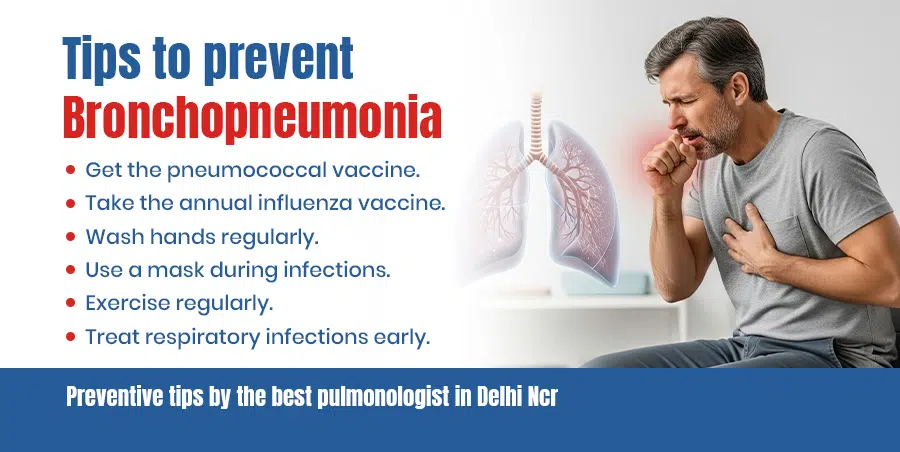
Consult The Best Pulmonologist In Delhi NCR For Bronchopneumonia Treatment
Bronchopneumonia is a condition that should never be ignored. While many cases are treatable, delaying care can lead to serious breathing problems and longer recovery. Recognising symptoms early and starting the right treatment plays a key role in preventing complications and ensuring complete recovery.
At PSRI Hospital, patients receive specialised respiratory care from an experienced team of pulmonologists. Recognised as the best hospital in Delhi, PSRI offers advanced diagnostics, well-equipped ICUs, and personalised treatment plans for bronchopneumonia and other lung infections. Our focus is not only on treatment, but also on guided recovery and prevention of future infections.
If you or your loved one is experiencing persistent cough, fever, chest discomfort, or breathing difficulty, do not wait. Call +91-84 84 84 84 17 to book your consultation with the best pulmonologist in Delhi NCR at PSRI Hospital and take the next step towards better lung health.
Frequently Asked Questions
1) Is bronchopneumonia contagious?
Bronchopneumonia itself is not “passed,” but the infection that causes it can spread through cough droplets and close contact. If you have fever and cough, avoid sharing utensils, wear a mask, and wash hands often.
2) When should I go to the hospital for bronchopneumonia?
Go urgently if you have breathing difficulty, chest pain, bluish lips, confusion, very high fever, or if symptoms worsen after 48–72 hours. High-risk patients (children, elderly, diabetes, asthma, COPD) should not wait.
3) Can bronchopneumonia be treated at home?
Mild cases may be managed at home only with a doctor’s advice. If oxygen levels drop, fever stays high, or breathing becomes hard, hospital care may be needed.
4) What precautions should I take during bronchopneumonia recovery?
Complete your full medicine course, drink fluids, rest well, avoid smoking, and attend follow-ups. Do not restart heavy exercise until your doctor confirms recovery.
5) Can bronchopneumonia come back?
Yes, it can return if immunity is low, smoking continues, or the previous infection was not fully treated. Vaccination, hygiene, and early treatment of respiratory infections help reduce recurrence.