Book An Appointment
 Virtual Consultation
Alarming Facts About Your Heart Rate You Can’t Ignore

FACT CHECKED
Most people notice their heart rate only in unusual moments, a sudden spike during a meeting, a rapid pulse while resting, or a notification from a smartwatch that feels out of place. These small signals often raise big questions: Is this normal? Why is my heart beating fast when I’m not doing anything?
For most healthy adults, the normal heart rate range at rest is 60–100 beats per minute (bpm). Athletes and very fit people may have a lower resting heart rate, around 40–60 bpm, and your pulse usually dips a little while you sleep. These patterns are usually normal.
You should start paying attention when your resting heart rate often drops below 60 bpm and you are not an athlete, stays above 100 bpm at rest, or becomes irregular without a clear reason. These changes can be early clues to rhythm problems, thyroid issues, anemia, or silent heart disease. Knowing when to take them seriously helps you seek timely care at PSRI Hospital, known as the best hospital in Delhi for heart care.
Alarming Facts About Your Heart Rate You Can’t Ignore
Your heart is designed to beat in a steady rhythm. Any major change in speed or pattern, especially if you feel unwell, is a warning sign you should not ignore.
1. Target and Maximum Heart Rate: What You Should Know
When you exercise, your pulse goes up. That is normal, but there are safe limits.
Target heart rate during exercise:
- Aim for 50-85 percent of your maximum heart rate, depending on exercise intensity.
Maximum heart rate formula:
- 220 – your age = Maximum Heart Rate.
This gives you an age-adjusted bpm zone so you do not overstrain your heart.
Stop exercising and seek help if you experience:
- Sudden heart rate spike.
- Shortness of breath arrhythmia.
- Chest pain tachycardia.
These may signal an underlying heart or rhythm problem and should be checked, especially if they happen more than once.
2. Heart Rate Warning Signs You Should Never Ignore
Some heart rate changes are part of daily life. Others need urgent attention.
Symptoms that require immediate medical attention:
- Irregular heartbeat that feels like skipping, fluttering, or pounding.
- A racing heart at rest or for no clear reason.
- Resting heart rate that stays high for several days.
- Fainting or almost fainting, with a slow or fast pulse.
- Dizziness or light-headedness with a fast pulse after mild activity.
- Tiredness that does not improve and comes with an odd heartbeat.
- Chest pain or pressure with a fast or irregular pulse.
- Sudden shortness of breath along with palpitations.
Some people have a silent heart attack, where they do not feel classic chest pain. They may just feel extreme tiredness, breathlessness, or a strange change in heart rate. That is why these signs should never be ignored.
During pregnancy, a slightly higher pulse can be normal, but a sudden jump in heart rate or new irregular pattern must be checked by a doctor.
3. Why Heart Rate Problems Happen: Hidden Causes
Your heart rate does not change without a reason. Some causes are temporary, others are serious.
Common triggers and causes include:
- Stress-induced racing heart during worry, fear, or panic.
- Dehydration, which reduces blood volume and raises heart rate.
- Caffeine, energy drinks, and some pre-workout drinks.
- Anemia, where low blood count forces the heart to pump faster.
- Overactive thyroid, which can speed up the pulse.
- Lack of sleep, which keeps the body in a “stress” mode.
- Fever or infection, especially in children and older adults.
- Smoking, which strains blood vessels and the heart.
- Obesity, which makes the heart work harder even at rest.
- Certain medicines, including some for blood pressure, asthma, or mood.
Heart rhythm problems can also follow changes in medication, heavy alcohol intake, severe stress, or lack of important minerals like potassium and magnesium.
4. Heart Rate and Health Risks: What the Numbers Really Mean
Ignoring abnormal heart rate patterns can increase the risk of major diseases.
What research and data tell us:
- Heart disease is one of the leading causes of death worldwide.
- A person dies from heart or blood vessel disease every few seconds globally.
- Heart attacks happen very frequently, day and night.
- Many adults live with blocked heart arteries without knowing it.
- Irregular heartbeat can increase the chance of stroke.
- Long-standing, uncontrolled high heart rate can weaken the heart muscle.
- High blood pressure, high cholesterol, diabetes, and smoking put extra strain on the heart.
These facts show why it is important to notice early changes in your pulse, not just wait for severe chest pain or a major event.
5. Monitoring Your Heart Rate: Simple Tools You Can Use
You no longer need to visit a clinic just to know your pulse. Technology has made monitoring easier.
Smart monitoring options:
- Wearable heart tracker devices such as smartwatches and fitness bands.
- Pulse oximeter home use to check oxygen levels and pulse together.
- ECG app detection on compatible devices for irregular rhythms.
- Fitness watch alerts for sudden spikes or drops in heart rate.
These tools cannot replace a doctor, but they help you collect useful information to share with your cardiologist at PSRI Hospital.
How to Keep Your Heart Rate Healthy
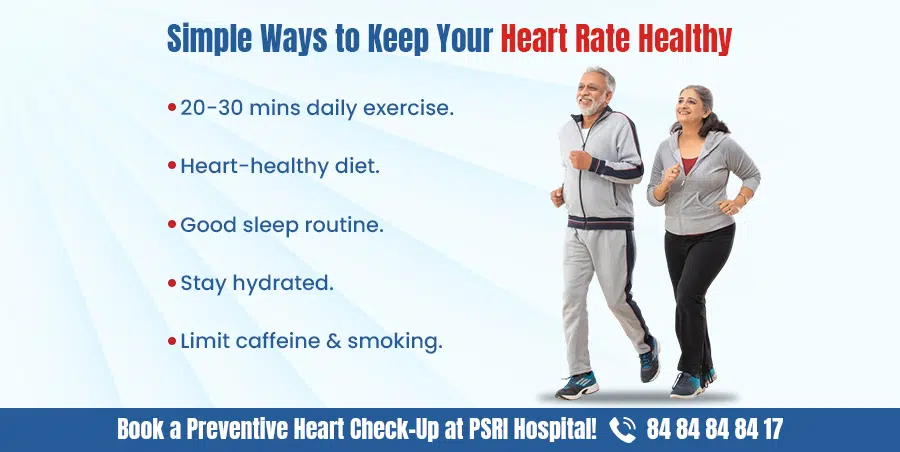
Prevention is always better than a heart emergency. Lifestyle changes that can lower resting heart rate and support heart health:
- Do 20-30 minutes of physical activity most days of the week.
- Eat a heart-friendly diet rich in fruits, vegetables, whole grains, and healthy fats like nuts and seeds.
- Include good fats like omega-3 from foods such as walnuts and flaxseeds.
- Manage stress with deep breathing, light yoga, or meditation.
- Maintain a regular sleep routine and aim for good quality sleep.
- Drink enough water and limit excess caffeine, sugary drinks, and alcohol.
- Avoid smoking and work on maintaining a healthy weight
These small, consistent changes help your heart pump more efficiently and reduce long-term risk.
When Should You See a Doctor?
You should never ignore symptoms such as:
- Frequent irregular heartbeats.
- Repeated dizziness with a fast or slow pulse.
- Resting heart rate that stays high without a clear reason.
- Fainting spells or blackouts.
- Chest pain, heaviness, or tightness.
If any of these happen, especially if you have risk factors like diabetes, high blood pressure, high cholesterol, or a family history of heart disease, you should see a heart specialist. At PSRI Hospital in Delhi, our cardiac team uses advanced tests such as:
- ECG (heart tracing).
- 2D echocardiography (heart ultrasound).
- Treadmill stress tests.
- 24-hour heart rhythm recording.
These tests help us find the cause of abnormal heart rate and guide the right treatment plan.
For anyone in Delhi looking for expert heart care, choosing PSRI, the best hospital for heart surgery in Delhi for cardiology ensures timely diagnosis and effective treatment for rhythm disorders, coronary blockages, and heart failure.
Worried About Your Heart Rate? Consult a Heart Specialist at PSRI Hospital Today!
Your heart rate is more than just a number on a screen. It is a daily signal of how well your heart is working. Understanding your Normal Heart Rate and knowing the Normal Heart Rate Range for your age helps you recognise when something feels off. A heart rate that is too fast, too slow, or irregular for your routine should never be ignored.
If you notice unusual patterns, repeated symptoms, or alerts from your wearable devices, write them down and get an expert opinion. Our cardiology team can help you understand what is happening and what to do next.
Early check-ups, simple lifestyle changes, and timely treatment can protect your heart and your future. Book an Appointment With a PSRI Heart Specialist at PSRI Hospital Today!
FAQs
1. Does heart rate change with age?
Yes. Heart rate naturally slows with age, and your maximum heart rate decreases. If age-related changes come with breathlessness or fatigue, get checked at a specialist hospital in Delhi.
2. Can weather or pollution in Delhi affect my heart rate?
Yes. Extreme heat, cold, and high pollution levels can raise your heart rate because the heart works harder to supply oxygen. Sensitive individuals should monitor their pulse closely.
3. Can heart rate vary day to day even if I’m healthy?
Minor daily changes are normal due to sleep, hydration, stress, or meals. Large or sudden changes, however, need medical evaluation.
4. Is it normal for heart rate to increase after eating?
A small rise is normal because digestion requires extra blood flow. A significant jump after meals may signal cardiac or metabolic issues and should be checked.
5. How often should I monitor my heart rate at home?
Most people can check it once a day or during exercise. If you have risk factors like hypertension, diabetes, or family heart disease, monitor it more often and consult a Delhi cardiologist if you see unusual patterns.