Book An Appointment
 Virtual Consultation
5 Effective Home Remedies For Stomach Infection

FACT CHECKED
Effective home remedies for a stomach infection include staying hydrated with plenty of fluids, eating probiotics like plain yogurt and using natural anti-inflammatory foods such as ginger and turmeric. Sipping soothing teas like chamomile or peppermint can also calm cramps and nausea.
A stomach infection happens when bacteria or viruses inflame the stomach and intestines. It usually leads to abdominal pain, diarrhea, nausea and vomiting. Most mild infections improve within a few days but early care at home plays an important role in recovery.
The gastroenterology experts at PSRI Hospital, the best hospital in Delhi recommend safe home remedies that can provide comfort while supporting your digestive health. Read more below.
5 Effective Home Remedies for Stomach Infection
These science-backed home remedies for stomach infection can help you manage mild infections and support faster recovery:
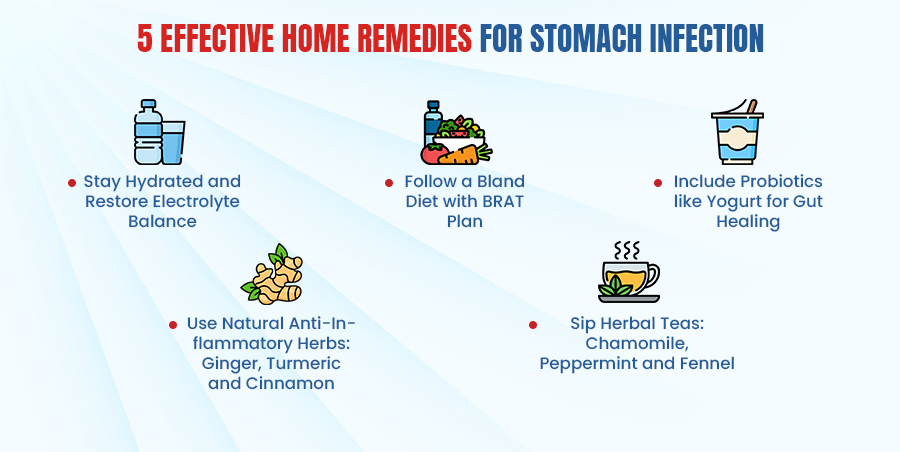
1. Stay Hydrated and Restore Electrolyte Balance
Fluid loss is the biggest risk during a stomach infection. Continuous vomiting or loose stools can lead to dehydration and make you feel weak.
Here’s what helps:
- Drink water frequently: Small and steady sips are better tolerated than large gulps.
- Use oral rehydration solutions: Replace lost salts and minerals for electrolyte replenishment with ORS.
- Try natural fluids: Coconut water, clear soups or diluted fruit juices can restore hydration balance.
- Avoid caffeine and carbonated drinks: These can irritate the stomach further.
Staying hydrated supports digestive health and allows your body to flush out harmful bacteria or viruses. If dehydration becomes severe with dizziness, dry mouth or fatigue consult the best doctor for gastroenterology in Delhi at PSRI Hospital immediately.
2. Follow a Bland Diet with BRAT Plan
During a stomach infection your digestive system needs rest. The BRAT diet offers nourishment without straining the stomach. BRAT diet includes:
- Bananas: High in potassium and gentle on the stomach.
- Rice: Easy to digest and helps firm stools.
- Applesauce: Provides pectin which absorbs excess fluid in the intestines.
- Toast: Offers energy and prevents acidity.
You can also add plain boiled potatoes or clear vegetable broth for extra nutrition. Avoid spicy foods, dairy and fried meals until digestion normalizes. Eat small, frequent meals instead of heavy portions. This bland diet helps in diarrhea relief and reduces nausea giving the stomach time to heal naturally.
3. Include Probiotics like Yogurt for Gut Healing
Probiotics can help restore the balance when an infection disrupts gut bacteria. Plain yogurt or curd introduces healthy bacteria that support faster recovery and reduce inflammation.
Benefits of probiotics:
- Improve gut flora balance after infection.
- Reduce the duration and severity of bacterial diarrhea.
- Boost immunity and digestion.
Choose unsweetened and natural yogurt to avoid sugar irritation. You can also try probiotic-rich foods such as buttermilk or fermented rice water. These foods help rebuild your intestinal flora and support long-term digestive health.
4. Use Natural Anti-Inflammatory Herbs: Ginger, Turmeric and Cinnamon
Nature provides powerful anti-bacterial and anti-inflammatory herbs that help ease stomach discomfort:
- Ginger: Acts as a natural anti-inflammatory and helps in treating nausea. You can prepare ginger tea by boiling thin slices in water and then sip slowly for relief.
- Turmeric: Contains curcumin known for its antibacterial properties and ability to support healing gut lining. Add a pinch of turmeric to warm water or soups.
- Cinnamon: A natural antioxidant that reduces intestinal inflammation and helps digestion.
These herbs are considered natural antibiotic foods that gently fight infection while soothing irritation. Use them in moderation as excessive use can upset sensitive stomachs.
5. Sip Herbal Teas: Chamomile, Peppermint and Fennel
Herbal teas are among the most effective home remedies for stomach infection because they relax the digestive tract and reduce cramping.
- Chamomile tea: Known for its anti-spasmodic and anti-inflammatory effects it helps in reducing stomach pain and promotes rest.
- Peppermint tea: A natural antispasmodic that relieves bloating, abdominal cramps and nausea.
- Fennel tea: Improves digestion, reduces gas and supports gut motility improvement.
These herbal digestive aids work best when sipped warm, not hot. Avoid adding caffeine or milk. Two to three cups daily can calm the stomach and promote gentle recovery.
These simple and natural steps show how to cure stomach infection at home safely and know when to seek medical care.
Book Appointment With The Best Gastroenterology Doctor at PSRI Hospital!
Mild stomach infections usually settle with proper rest, hydration and the right home care. By combining the BRAT diet, probiotics, anti-inflammatory herbs and herbal teas you can ease discomfort and support your body’s natural healing process.
However, if you experience:
- Continuous vomiting or diarrhea beyond two days.
- High fever or blood in stool.
- Severe dehydration or weakness.
It’s time to seek help from the best doctor for gastroenterology in Delhi to avoid any further complications.
At PSRI Hospital, the best hospital in Delhi, our Gastroenterology and Hepatology Department combine expert diagnostics, advanced endoscopy and patient-centred care to treat stomach and intestinal infections effectively.
Book your appointment today with the best doctor for gastroenterology in Delhi to receive personalised guidance and lasting relief from stomach infection symptoms.
FAQ’s
1. How long does a stomach infection last?
Ans. Most mild infections last 2-4 days. If it continues and symptoms worsen, consult a gastroenterologist immediately for proper evaluation.
2. Can I cure a stomach infection completely at home?
Ans. Home remedies help manage mild cases and support recovery but persistent or severe infections need medical supervision to treat the bacterial or viral causes.
3. What foods should I avoid during a stomach infection?
Ans. Avoid oily, spicy or dairy products, caffeine and processed snacks. Stick to a bland diet and fluids till digestion stabilizes.
4. Is yogurt safe to eat during diarrhea?
Ans. Yes, plain yogurt is beneficial. It produces healthy bacteria and shortens recovery time.
5. When should I visit PSRI Hospital for a stomach infection?
Ans. If you notice blood in stool, persistent vomiting, high fever or dehydration, visit PSRI Hospital immediately for expert evaluation and care.